Trump under pressure to contain Iran fighting as midterms near
President Trump is under pressure to avoid an escalatory spiral after launching the largest wave of strikes on Iran in weeks, with the U.S. military strained and the midterm elections rapidly approaching. Trump on Wednesday downplayed the Iran war’s negative impact on Republican candidates. The president’s approval rating has reached a record low — 33…
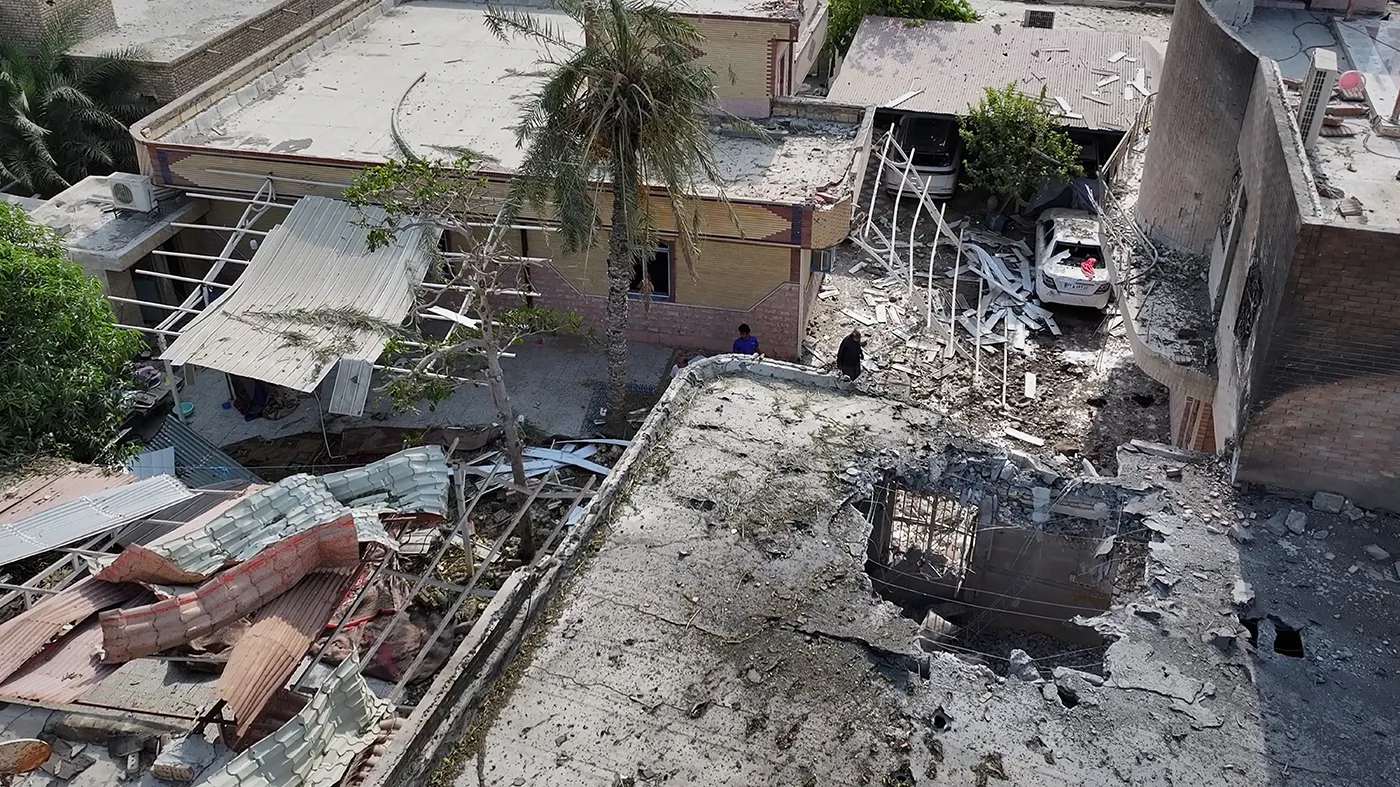
President Trump is under pressure to avoid an escalatory spiral after launching the largest wave of strikes on Iran in weeks, with the U.S. military strained and the midterm elections rapidly approaching.
Trump on Wednesday downplayed the Iran war’s negative impact on Republican candidates. The president’s approval rating has reached a record low — 33 percent — and two-thirds have a negative view of his handling of the war. Brent crude ticked up on Wednesday, with oil prices surpassing $90 a barrel.
“I don’t think it will be very much longer,” Trump said, responding to a question of what more Iranian targets the U.S. can hit, as the war drags on past the six-month mark.
“And I’m not affected by the election. Number one, I’m not running, but my party’s running, and I’m going to help my party. But I think my party respects the fact that we’re not allowing Iran to have a nuclear weapon.”
However, Reuters reported that the White House is looking to avoid ramping up military action against Iran until after the Nov. 3 election.
Trump, in a Truth Social post Tuesday, warned Iran against further strikes, claiming the U.S. was “justified.” American allies across the Middle East that host U.S. bases came under fire overnight Tuesday, with Bahrain, Iraq, Jordan and Kuwait all reporting Iranian attacks.
The back-and-forth military strikes this week marked the largest outbreak in fighting after a month of relative calm. On Tuesday, U.S. forces carried out approximately 100 strikes against Iranian targets in what they said was retaliation for maritime threats near the Strait of Hormuz.
Iranian state media said a U.S. strike hit a home in southern Iran where a wedding celebration was taking place , killing two women and two children and injuring 60 others.
Mona Yacoubian, director and senior adviser of the Middle East Program at the Center for Strategic and International Studies (CSIS), said the latest escalation “falls well within the pattern of the conflict over the past several months: unstable lulls of no-war/no-peace eventually collapse into a renewal of tit-for-tat strikes, but as long as neither side is interested in a return to all-out war, we will likely continue to see this type of low level conflict.”
“This is not a turning point in the conflict, and Trump is not ‘mowing the lawn’ which would be a strategy to pursue post-conflict — a return to occasional strikes as needed to keep Iran off balance,” she said. “We’re still very much in the conflict.”
The U.S. said this week’s strikes were a preemptive response to Iran attempting to launch rockets with sea mines into the Strait of Hormuz. And the U.S. reportedly hit two Iranian tankers in the first direct retaliation for strikes on tankers in the strait, with Axios reporting the administration describing it as a “tanker-for-tanker” policy.
Behnam Ben Taleblu, a senior fellow at the Foundation for Defense of Democracies, said the Trump administration “is adopting a very militarized form of containment, which is actually not a bad option given the preferred approach … which is economic pressure, economic coercion.”
“I think the Trump administration is comfortable with this militarized form of containment, I think it actually has a winning approach to try to back end this regime and present it with a series of hybrid crises, and to see where is it that the regime will buckle, where is it that the regime will break, where is it that the regime will bend, where is it the regime will double down, and then strike at those weak points,” he added.
The traffic in the strait dropped by 50 percent on Monday, with only five successful ship crossings compared to 10 passages each day over the weekend, according to ship-tracking firm Kpler.
Tehran is sending mixed messages on whether it is seeking to escalate or pursue diplomacy.
Iranian President Masoud Pezeshkian called for the U.S. to return to commitments of the memorandum of understanding (MOU) signed by both sides in mid-June, which was meant to impose a ceasefire, open the strait and set up talks about Iran’s nuclear program.
Trump and Secretary of State Marco Rubio have dismissed that possibility out of hand.
“That ship, in many ways, has sailed,” Rubio said in the interview on “The Brian Kilmeade Show” — arguing the Iranian regime has failed to engage in talks over its nuclear program.
“The core issue here is they’re never going to have a nuclear weapon,” he said. “And as long as they continue to endeavor or claim to want one, they’re going to pay a price for it, and that price is going to be primarily economic. But we reserve the right, as we said, to take military action when necessary — not just to protect ourselves but to prevent them from being able to threaten others as well.”
Yacoubian said a return to the MOU isn’t viable for the U.S. or Iran since the two countries “remain quite far apart on core issues.”
“The level of distrust between the two sides has only grown over the intervening months, making a return to negotiations all the more difficult,” she said. “The MOU as it was signed in mid-June largely favored Iran, so a return to the MOU would maintain several points in Iran’s favor.”
Meanwhile Mohsen Rezaei, the Iranian Supreme National Security Council secretary, warned on Wednesday that the U.S. will “fail to climb out of the infernal depths you have created for yourselves” in the face of a new Iranian “strategy on the battlefield, in diplomacy, and in countering the economic siege”.
Other than the recent rounds of strikes, the U.S. military is continuing to enforce the naval blockade in the Arabian Sea, barring ships from entering or departing Iranian ports. So far, the U.S. forces have redirected 86 commercial vessels, disabled three and boarded another two to ensure compliance, the U.S. Central Command said in an update on Wednesday.
The prolonged war with Iran is also putting a strain on the U.S. military’s stockpile of premium munitions such as long-range missiles and interceptors, undermining the president’s leverage over Iran and prompting worries among some defense officials and lawmakers on Capitol Hill .
The U.S. military has used up nearly all army tactical missile systems and precision strike missiles, along with the majority of its Terminal High Altitude Area Defense interceptors.
The U.S. forces had between 759 and 827 Patriot interceptors as of late July, a recent estimate from CSIS said, far below the more than 2,300 the military had before the Iran war started in late February.
Ben Taleblu said the strain on U.S. munitions explains, in some part, the “piecemeal approach Washington is taking.”
“It affects the actual targets, the number of strikes, the willingness to get into a more protracted spiral with the Iranians,” he said.
Topics in this story
Gathered from external sources. Rights to this text belong to whoever originally published it.