Wall Street Sees an Ominous Sign in Bond Market’s Latest Selloff
It’s one of the least understood signals in the fixed-income world, but lately, everyone on Wall Street is abuzz about what it means as it reasserts itself i...
(Bloomberg) -- It's one of the least understood signals in the fixed-income world, but lately, everyone on Wall Street is abuzz about what it means as it reasserts itself in the market.
It's known as the term premium, or the extra payout that investors demand in return for the risks of owning 10-year Treasuries instead of just rolling over short-dated securities for the same amount of time. How exactly to measure it varies. So do the explanations for its moves.
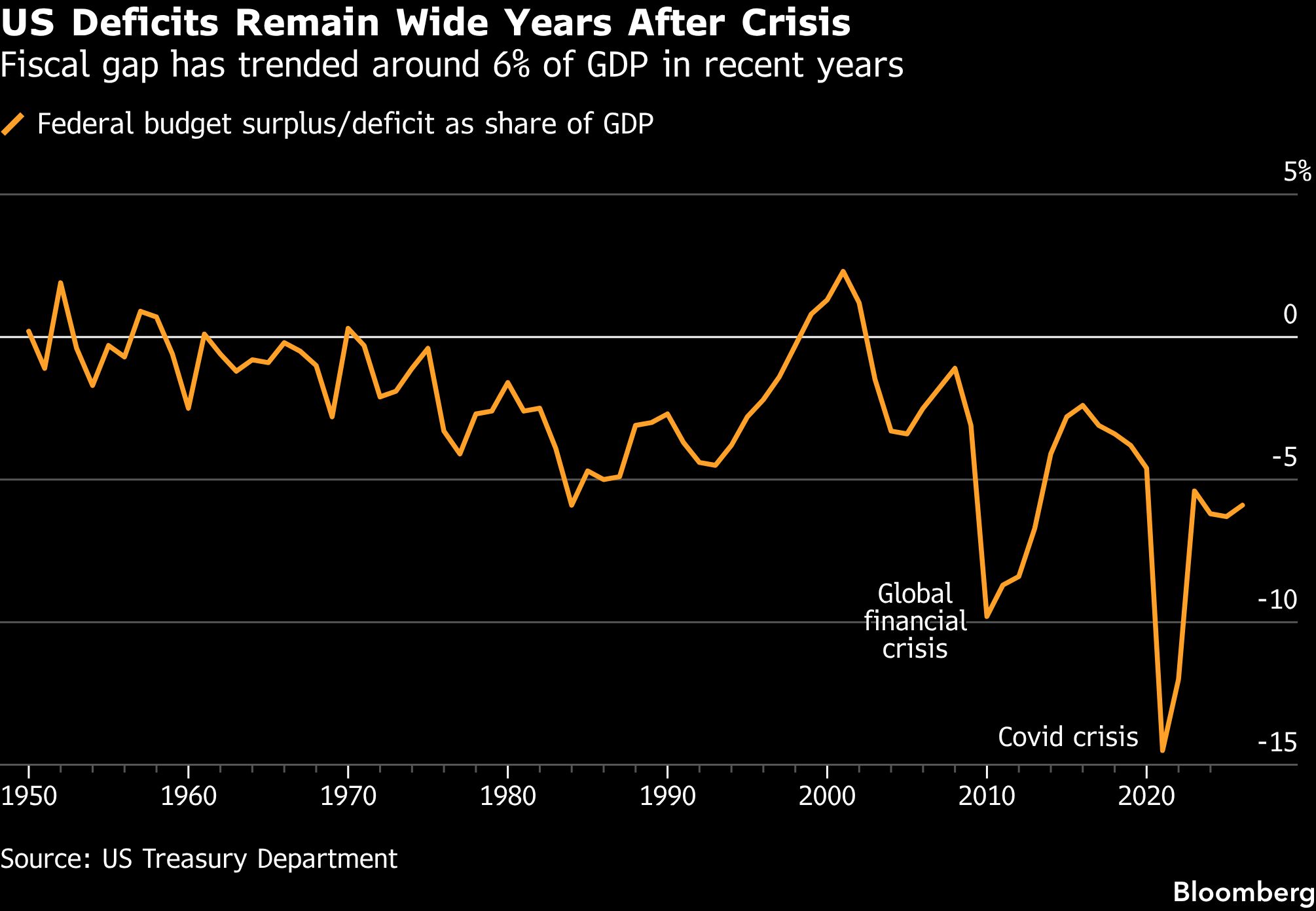
What's not in question is that during the past few weeks it spiked to levels not seen in over a decade and drove the latest leg of the bond selloff that's sent US Treasury yields to a 24-year high. And that, in turn, is fanning fears of a potential shift that will heap pressure on an already battered market and keep borrowing costs elevated across the economy.
That term premium is essentially protection against unpredictable turns, ranging from geopolitical shocks to government fiscal crises, that could hit the market before long-term bonds come due.
It's distinct from the current outlook for inflation and the direction of monetary policy, both of which are also reflected in yields. Because the premium isn't directly observable and must be inferred, Neel Kashkari, the president of the Federal Reserve Bank of Minneapolis, once likened it to dark matter, the invisible substance physicists say explains some cosmic mysteries.
"There's multiple ways to calculate it, but they're all going higher," said Frank Rybinski, head of macro strategy at Aegon Asset Management. "And what that tells me is that this move has staying power."
"The sharp repricing of term premium embedded in Treasuries — with 10-year term premium breaking out to a 12-year high — suggests investors are demanding greater compensation for holding duration amid mounting fiscal and geopolitical uncertainty."
There was no clear-cut catalyst. Barclays researchers led by Demi Hu said macroeconomic uncertainty, breakdowns in the usual correlations between stock and bond moves, the rising supply of debt and worries about fiscal policy are all things that figure into the term premium and could be playing a role.
Topics in this story
Gathered from external sources. Rights to this text belong to whoever originally published it.