Do midterms change the calculus for bipartisan permitting reform?
With the midterm elections in the rearview mirror, the Senate is barreling ahead with major energy and infrastructure legislation in the lame-duck session. The bill, which seeks to make it easier to build energy and other infrastructure projects more quickly, is slated for a procedural vote in the Senate on Monday, a key test of…
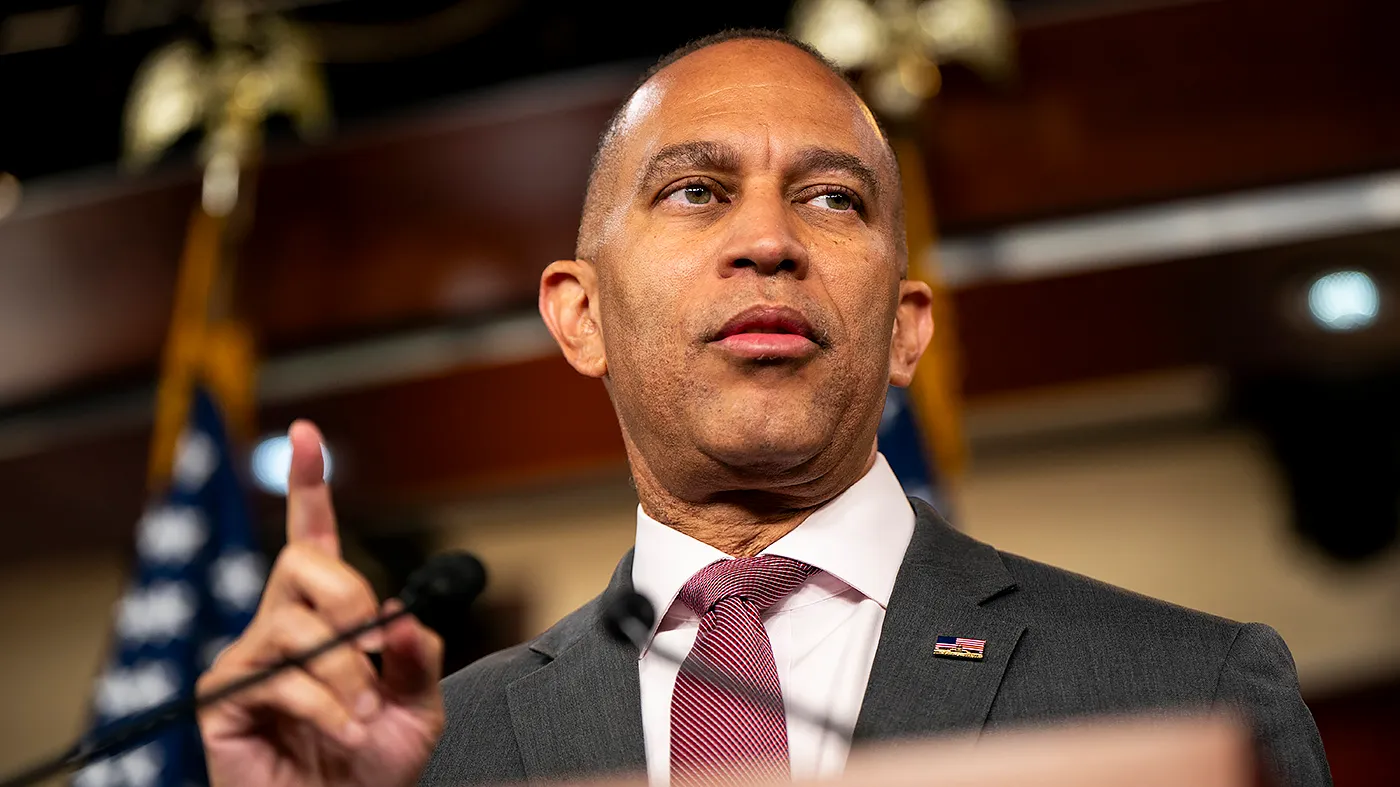
With the midterm elections in the rearview mirror, the Senate is barreling ahead with major energy and infrastructure legislation in the lame-duck session.
The bill, which seeks to make it easier to build energy and other infrastructure projects more quickly, is slated for a procedural vote in the Senate on Monday, a key test of whether it will pass the upper chamber.
It’s expected to have at least some bipartisan support and has a strong chance of passing.
But it also faces significant hurdles down the stretch, some of which may have been amplified by the midterm results that gave Democrats commanding control of the House and Senate.
“I don’t know that there’s any fundamental difference in the chances I would give it in passing, it’s still about 50-50, and that might be generous,” said Frank Maisano, senior principal at law and lobbying firm Bracewell.
The permitting reform bill is a bipartisan compromise between Democratic Sens. Sheldon Whitehouse (R.I.) and Martin Heinrich (N.M.) and Republican Sens. Shelley Moore Capito (W.Va.) and Mike Lee (Utah).
It seeks to speed up infrastructure buildout by curtailing the nation’s environmental laws and limiting lawsuits and the ability of the federal government to revoke a project’s permit.
The bill also says that large data centers have to be responsible for additional electricity costs caused by their demand, and it seeks to make it easier to build power lines.
Its supporters include various business interests, such as companies working in fossil fuels, renewable energy, construction, chemicals and more who say it will reduce longstanding bureaucratic hurdles so industry can get more done.
However, progressives, environmental advocates and tribes are among its opponents. After the election, many of those groups are doubling down, saying that Democrats have a mandate to implement more left-wing policies.
Following Tuesday’s results, House Minority Leader Hakeem Jeffries (D-N.Y.) also came out against the bill, with a spokesperson telling Politico that it “falls short in several areas.”
“Leader Jeffries will not rubber-stamp legislation that emerges from the Senate without more constructive involvement with our Caucus as we fight to make life more affordable for the American people,” the spokesperson said.
On the other hand, supporters are arguing that the Democrats’ mandate was for affordability, saying the bill could advance that priority.
“We don’t have more years to lose as clean energy projects sit on the sidelines, and there’s no guarantee Congress would ever find another compromise that would be able to pass the Senate,” Whitehouse said in a statement. “Democrats ran and won on affordability, and this bill lowers costs for families and will allow us to start delivering on our election promises. It’s a bird in the hand. We’d be fools not to take it.”
In the near-term, Monday’s vote will require at least 60 senators to approve the legislation, meaning it would take significant bipartisan support.
An industry lobbyist told The Hill on Friday they expect the bill to get enough support on the Senate side to overcome that threshold and advance to a final vote. If it survives the procedural vote, the bill is also likely to succeed on final Senate passage.
On the House side, the math could also be complicated.
Theoretically, House Democrats’ votes aren’t needed with a Republican majority, though potential lame duck absences could complicate the vote count. Still, several House Democrats are on board with the bill and have a good chance of making up for any GOP losses.
“Voters made it clear this week that Washington’s top priority needs to be lowering costs,” said Rep. Josh Harder (D-Calif.) in a written statement. “We already have a bipartisan deal that will cut red tape, get more energy projects built, and drive energy costs down. And we’re not going to get a better deal in the new Congress. Passing permitting reform should be our top priority when Congress returns next week.”
Harder’s office expressed confidence that the bill will get floor time and said that the bipartisan Build America Caucus will help get it across the finish line.
Rep. Nikki Budzinski (D-Ill.), who’s in line to lead the New Democrat Coalition in the next Congress, recently told The Hill that she wants to “be a part of helping to bring it out of the House and get it to the president’s desk.”
But other Democrats are working on fomenting a resistance.
“We know that it actually can’t come to the House for several weeks because the Senate is only in for a couple of days next week, and then they have to go through their process. So, in that meantime, if it doesn’t get stopped in the Senate, we will look to build a bipartisan opposition in the House,” Rep. Teresa Leger Fernandez (D-N.M.) told reporters Friday.
For tribes, whose concerns are echoed by a number of Democrats, changes to the nation’s historic preservation laws have been a particular problem.
The National Congress of American Indians has said provisions of the law would be in “deep conflict with federal trust and treaty obligations to engage sovereign Tribal Nations in government-to-government Tribal consultation and to protect our irreplaceable cultural heritage.”
At press time on Friday, senators were expected to be working on an amended version of the text that could aim to address some of these concerns. Ira Matt, with the National Association of Tribal Historic Preservation Officers, told reporters he expected the changes to be insufficient and that tribes were being thrown “small provisions with the hopes of making it look like they’re providing substantive concessions.”
Meanwhile, lawmakers also face a crowded calendar in the weeks ahead, with federal funding currently only slated to last through December 11 without congressional action. And Defense Secretary Pete Hegseth is now expected to face impeachment proceedings in the coming days, potentially eating up more calendar time.
Topics in this story
Gathered from external sources. Rights to this text belong to whoever originally published it.