Why doesn’t high speed rail work in America?
American railroads were once the envy of the world and the engine of its industrial age. But that hasn’t been the case for more than half a century.
American railroads were once the envy of the world and the engine of its industrial age. But that hasn't been the case for more than half a century.
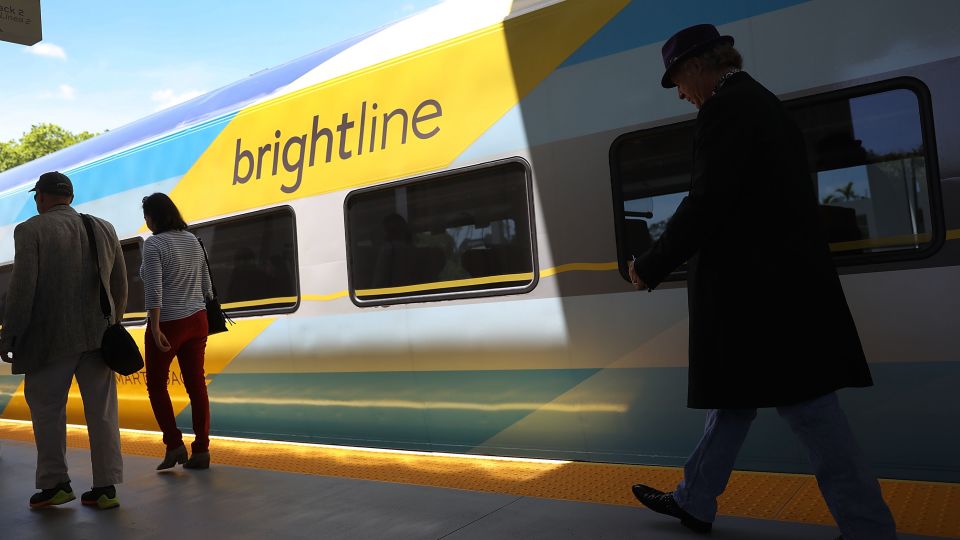
Brightline, founded in 2012, wanted to change all that. The Florida private rail company ran yellow trains at near high speed between Miami and Orlando. It has big plans to launch another line with true high speed 200 mph trains making the 200-mile trip between Las Vegas and Rancho Cucamonga, California, just outside of Los Angeles.
Then it filed for bankruptcy last month after not making enough money to cover its debts. But the railroad is still operating its Florida service and moving ahead with plans for the true high speed trains between Las Vegas and Southern California.
High speed passenger rail is common around the globe, from major countries like Japan, France and China, all the way to emerging economies like Morocco.
The United States is a glaring exception, with no passenger trains that meet the global definition of high speed, or that run at least 150 mph for extended trips.
That's partly cultural — America is a country of cars. But the main reason high speed rail hasn't happened in the United States is due to a lack of government resources, according to leading high speed rail advocate Lou Thompson.
Foreign governments "wanted high speed rail, and they were willing to pay for it," Thompson, who was involved in the formation of Amtrak in the early 1970s and served as railways advisor to the World Bank, told CNN. "Our government has never met those two conditions."
All that government support instead went to the nation's interstate highways and air traffic system. That is partly due to public need — America needed reliable ways to move people and goods across a fast- growing country after World War II.
But it's also partly due to the powerful business forces behind the highways and skyways: the auto, oil and construction industries in the case of highways, and the airlines and aerospace companies when it comes to air travel.
The lobbying from these industries essentially pushed high-speed rail "into the background in order to keep funding roads and aviation," said Andy Kunz, CEO of advocacy group US High Speed Rail.
There's also the problem of geography. The United States is large, and its major cities are further apart than many of the countries with built-out high speed rail.
"Once you get much beyond 400 miles (between destinations), then high speed rail begins to lose out to air because then air becomes faster (in the United States)," Thompson said. "It's amazing how far you can go in Europe in 400 miles. Most of the major cities are within that kind of distance. That's true in Japan as well."
Topics in this story
Gathered from external sources. Rights to this text belong to whoever originally published it.