Trump mulls Iran strikes after midterms, as mediators push for peace deal
Mediators are pushing the U.S. and Iran to reach a deal to end the war in the Middle East as President Trump mulls military strikes as early as this week. Trump has predicted the war will quickly draw to a conclusion after the midterms on Tuesday, though he’s been ambiguous about how that will happen.…
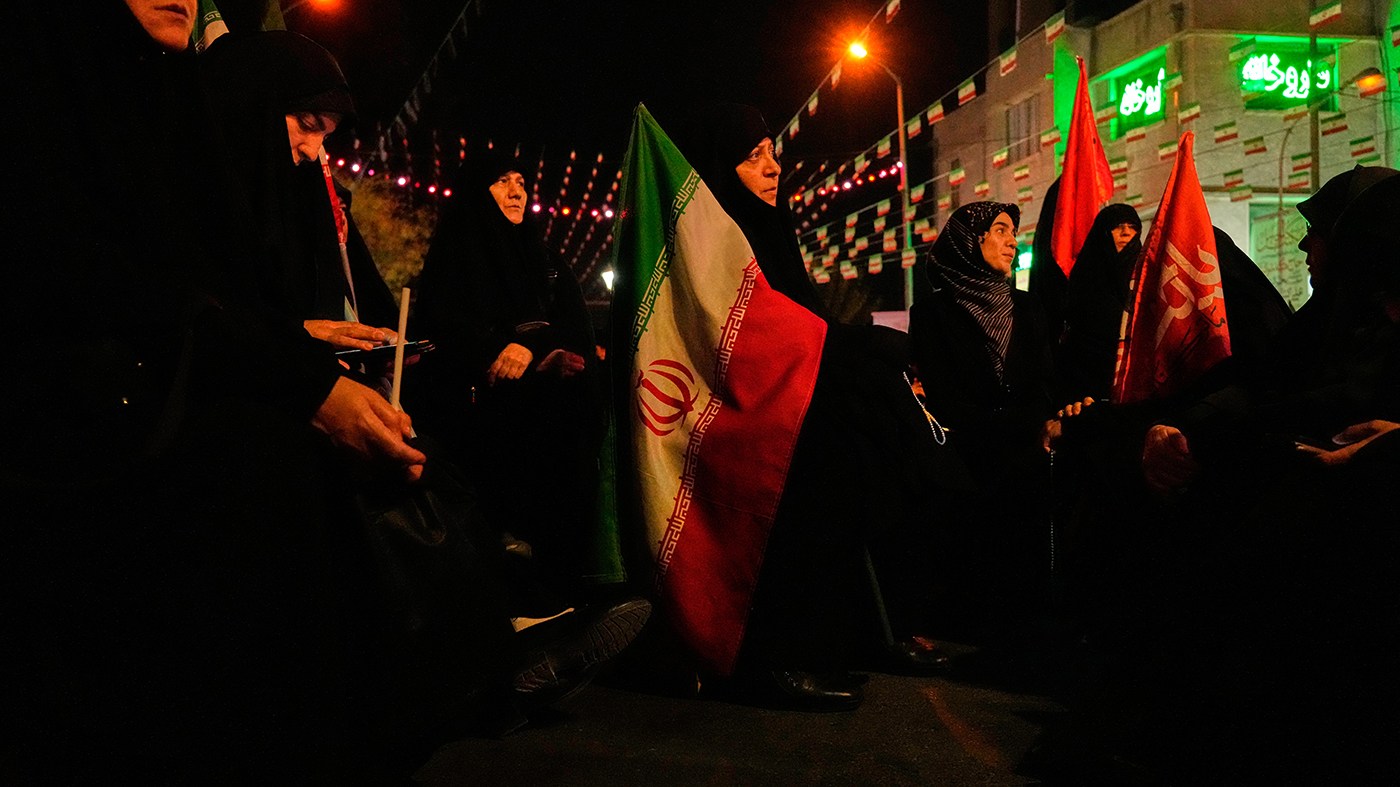
Mediators are pushing the U.S. and Iran to reach a deal to end the war in the Middle East as President Trump mulls military strikes as early as this week.
Trump has predicted the war will quickly draw to a conclusion after the midterms on Tuesday, though he’s been ambiguous about how that will happen. Iranian officials argued it is up to Washington to determine what comes next in the region.
“The ball is in the U.S. court, because our demands have been stated very clearly and transparently, and Iran’s demands are reasonable and logical,” Esmail Baghaei, a spokesperson for the Iranian Foreign Ministry, told reporters on Monday in Iran.
Qatar is leading the push for both sides to return to the negotiating table, with the backing of Egypt, Saudi Arabia, Pakistan and Turkey. Vice President Vance also sent a letter to Iranian security chief Mohsen Rezaei last week in an effort to revive peace talks, The Wall Street Journal reported.
However, regional experts say Trump appears to be leaning toward military escalation in the short term.
“That seems to be where Trump is headed,” Eric Brewer, deputy vice president for the nuclear materials security program at the Nuclear Threat Initiative (NTI), said in an interview with The Hill on Monday.
“I do think he also realizes that at the end of the day, you’re going to need some type of an agreement to end the war,” Brewer said.
Jonathan Ruhe, a fellow for American strategy at the Jewish Institute for National Security of America, said all signs are pointing to a resumption of the conflict and that the president seems to think there is a “short war” option to achieve a “decisive” result.
“Trump’s most effective strategy against the Iranians is this longer-term and more patient but painful economic warfare strategy with the blockade and the aggressive sanctions,” Ruhe said in an interview.
Trump’s cycle of aggression and diplomacy toward Iran over the past eight months has not extracted any significant concessions from the Middle Eastern country.
U.S. Central Command (Centcom), which oversees U.S. forces in the Middle East, has drawn up multiple Iran strike options — including targeting Iranian infrastructure and military sites — that could be employed if there is authorization from the White House, The Hill previously reported .
Some senators were briefed in late September on the potential U.S. military strike plans. Sen. Chris Murphy (D-Conn.), who sits on the Senate Foreign Relations Committee, slammed Centcom’s plan as “insane” and said it would lead to “devastating escalation.”
“The plan that they have developed will lead, in my view, to a prolongment and an escalation of this war that will be devastating for our security interests,” Murphy said last week during an appearance at the Middle East Institute.
Adm. Brad Cooper, commander of Centcom, provided the Senate Appropriations Subcommittee on Defense with a classified briefing about Iran on Sept. 29, a source familiar with the briefing told The Hill.
Iran has warned publicly and privately that its retaliation in case of renewed U.S. strikes would not be constrained to the region, putting America-linked targets across Europe on notice.
America’s allies in the Middle East and Europe are anxious to avoid another barrage of Tehran’s one-way attack drones and missiles.
Iran offered to open the Strait of Hormuz , through which about 20 percent of the world’s oil transits daily, on several conditions, including lifting U.S. sanctions and releasing billions of dollars in frozen Iranian assets. Tehran sent a delegation to Doha to meet with Qatari mediators this week.
“If Iran’s legitimate demands are accepted and implemented, it would be possible to put the entire plan into operation within two days, restore security to the Strait of Hormuz and initiate the negotiation process,” Baghaei told reporters in Iran.
“The realization of this depends entirely on Washington’s will and decision,” Baghaei said.
United Arab Emirates presidential adviser Anwar Gargash told a diplomatic conference in Bahrain on Sunday that the UAE and Gulf countries are hoping for a diplomatic breakthrough.
“From the perspective of the UAE and I would also say Gulf countries, we don’t really want to see another round of confrontation in the region. We want to see a diplomatic and political resolution of this protracted crisis,” he said at the Manama Dialogue on Sunday.
Trump said Monday that he is in no hurry to decide whether the U.S. should return to striking Iran.
“One way or the other, we will do something, but there is no rush. We crippled them financially. They have no money, no gasoline and their people are getting very tired of it,” the president said in an interview with Axios.
Iran’s conditions are unlikely to be accepted by the Trump administration, which has demanded concessions on Iran’s nuclear program as a condition for any economic relief.
Regional experts said the U.S. military’s potential short-term strike campaign would not likely shift the negotiating dynamics.
They said despite the U.S. and Israeli military damage, which dates back to Operation Midnight Hammer, Iran has not changed its position, and “ hitting them hard again” is not going to reach a different outcome this time around.
“Iran thinks that they’ve come out of this war with more leverage, not less, because of their ability to threaten Hormuz, because they still have a lot of missile and drone capabilities, and because fundamentally they’re, you know, they still have the ultimate option of trying to go for a nuclear weapon, even though a lot of their infrastructure has been degraded,” Ruhe said.
Brewer, of NTI, said the U.S. military could strike Pickaxe Mountain, shutting down some entrances, but airstrikes can’t destroy the facility.
“There’s not a lot to be gained from a counterproliferation standpoint militarily,” Brewer said.
“Trying to convince yourself that you can strike some energy and other civilian targets within Iran, and then that Iran is going to capitulate to U.S. terms and abandon the nuclear program, reopen the Strait of Hormuz and basically not try to assert any control over that waterway, I think is pretty unlikely,” he said.
But Israeli Prime Minister Benjamin Netanyahu is pressing Trump to strike Iran immediately after the midterm elections, Axios reported .
Netanyahu’s main political challenger, Gadi Eisenkot, has warned against the prime minister taking any offensive military action during the next few weeks, as political parties negotiate Israel’s next government.
“Until the government is formed, I will back military moves only if there are direct and immediate threats against Israel that cannot wait until the government’s swearing-in,” Eisenkot wrote in a statement on the social platform X on Saturday.
Eisenkot earlier warned the security establishment and civil service to resist any political pressure to take action that is not in the interests of the country and its citizens.
“Stand firm against any attempt to pressure you. You have my full backing,” he said in remarks on election night.
“And Netanyahu — do not dare use Israel’s security for your own political ends,” he added.
Topics in this story
Gathered from external sources. Rights to this text belong to whoever originally published it.