Ontario threatens electricity amid Trump-Canada trade war. What would that mean for US?
Ontario Premier Doug Ford is threatening to cut off Canadian power to the U.S. in retaliation for President Trump’s trade war, a move that could boost already high electricity prices in some states. On Monday, Ford told The Associated Press that “everything is on the table,” including cutting off electricity to the U.S. “We power 1.5 million…
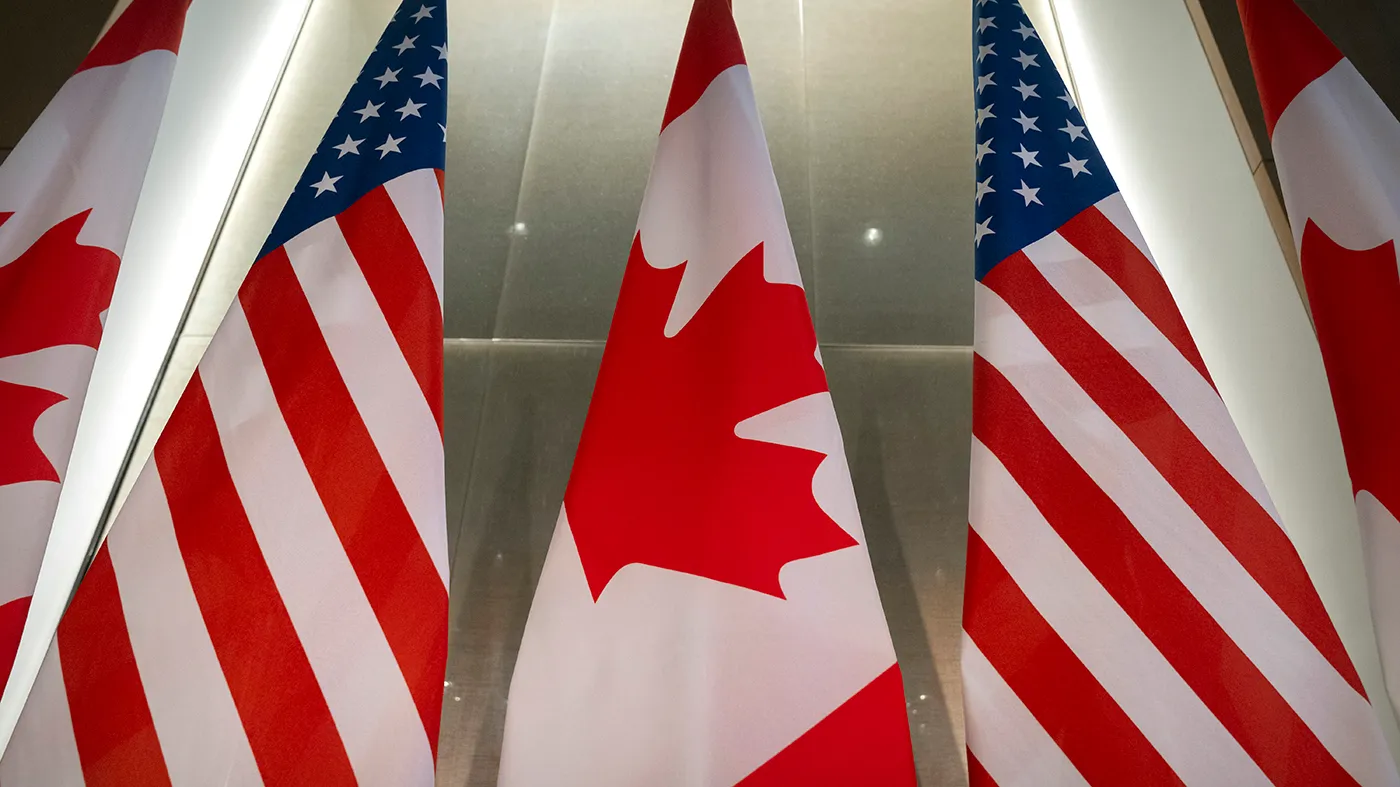
Ontario Premier Doug Ford is threatening to cut off Canadian power to the U.S. in retaliation for President Trump’s trade war, a move that could boost already high electricity prices in some states.
On Monday, Ford told The Associated Press that “everything is on the table,” including cutting off electricity to the U.S.
“We power 1.5 million homes and businesses,” he said. “Everything’s on the table. I’ll do whatever it takes.”
He made similar remarks during a Wednesday press conference, calling on other regions of Canada to join him.
“Everything’s on the table, but I can’t do it alone,” Ford said. “I’m not the only province that ships electricity down to the U.S. We need a Team Canada approach.”
Any effort to cut off electricity to the U.S. would come on top of retaliatory tariffs already announced by Canada on $27.6 billion in U.S. goods, including steel, aluminum, fish and cheese.
That move came after the U.S. imposed a 50 percent tariff on $20 billion worth of Canadian goods.
If Ford or other Canadian ministers move forward with threats to cut off electricity, that could raise already rising prices Americans are paying for power.
In total, Canada supplied less than 1 percent of the total electricity used in the U.S. last year.
However, that’s not divided evenly among states, as some in the northern U.S. get a more significant share of their power from the neighboring country.
“If we don’t receive the imports from Canada, we have to switch on more expensive plants, and we could get the power from those more expensive plants, but we would be then increasing our CO2 emissions, in addition to paying higher costs,” said John Parsons, a senior lecturer at the Massachusetts Institute of Technology’s Sloan School of Management and a researcher with its Center for Energy and Environmental Policy.
Parsons noted that this electricity could be more expensive because it runs on gas, which, unlike renewable power, would require the purchase of fuel.
In a follow-up email, he said that exact costs could be difficult to calculate but estimated that a shutoff of Canadian power could end up costing between $300 million and $600 million per year.
Doug Arent, global fellow at the Columbia University Center on Global Energy Policy, said that Ontario on its own would not likely make a material difference, saying if Ford cut off power to the U.S. unilaterally, it would be more of a “symbolic gesture.”
However, if more provinces were involved, Arent said, Americans in the Northeast U.S. could see prices rise if a shutoff lasts more than a few days.
“If it’s off for days or weeks, then in that month, there might be price impacts,” he said.
NYISO, the power grid operator for New York, a state that gets some power from Ontario, said it anticipates having enough electricity to meet its needs.
“The U.S. and Canada have one of the most integrated electric grids in the world, allowing system operators in both countries to pool resources for improved reliability and economic efficiency,” Kevin Lanahan, NYISO senior vice president of external affairs and corporate communications, said in a statement.
“We are in close and regular contact with Hydro Quebec and Ontario’s Independent Electricity System Operator. The NYISO anticipates having adequate supplies to meet expected demand on the system,” Lanahan said.
Mary Cate Colapietro, spokesperson for grid operator ISO New England, said in an email that it “would not anticipate reliability issues tied to reduced imports, at least under typical weather conditions.”
“In the event Canadian provinces reduce (or entirely cut) the amount of electricity they are sending to New England, we would expect the impact to largely be financial, in the form of higher wholesale market prices. We would also anticipate emissions in the region increasing. The potential for higher wholesale prices would be due to a change in the supply/demand balance,” Colapietro said.
She noted that her region is not connected to Ontario, where Ford has authority.
Meanwhile, Trevor Sutton, a senior research scholar at Columbia University’s Center on Global Energy Policy, said the uncertainty about how the situation will play out could make planning difficult.
“Both sides appear to be willing to use their tools but also withdraw them in a very fluid way. … And if you’re an electricity operator, planning around that is almost impossible,” Sutton said.
The potential increases come as Americans are already struggling with rising power prices as infrastructure upgrades and increasing demand drive up utility bills.
In July, U.S. electricity costs were 4.2 percent higher than they were the year before, outpacing general inflation, which sat at 3.4 percent year over year.
Parsons said that in his area, prices were increasing because of costs for new power infrastructure that transmits and distributes electricity. He noted that further south, data centers are also playing a role.
Canada’s action could be “a relatively small portion of the electric bill, but everybody is already up in arms about their electric bill, so everything that adds to it is a problem,” Parsons said.
Topics in this story
Gathered from external sources. Rights to this text belong to whoever originally published it.