The Cattle Herd Hit a 75-Year Low. USDA Will Now Insure Ranchers for Keeping Heifers, but at 63 the Payout Can Reach Social Security.
When cattle prices sit at generational highs and a rancher starts loading animals onto the trailer, one overlooked distinction between two types of livestock...
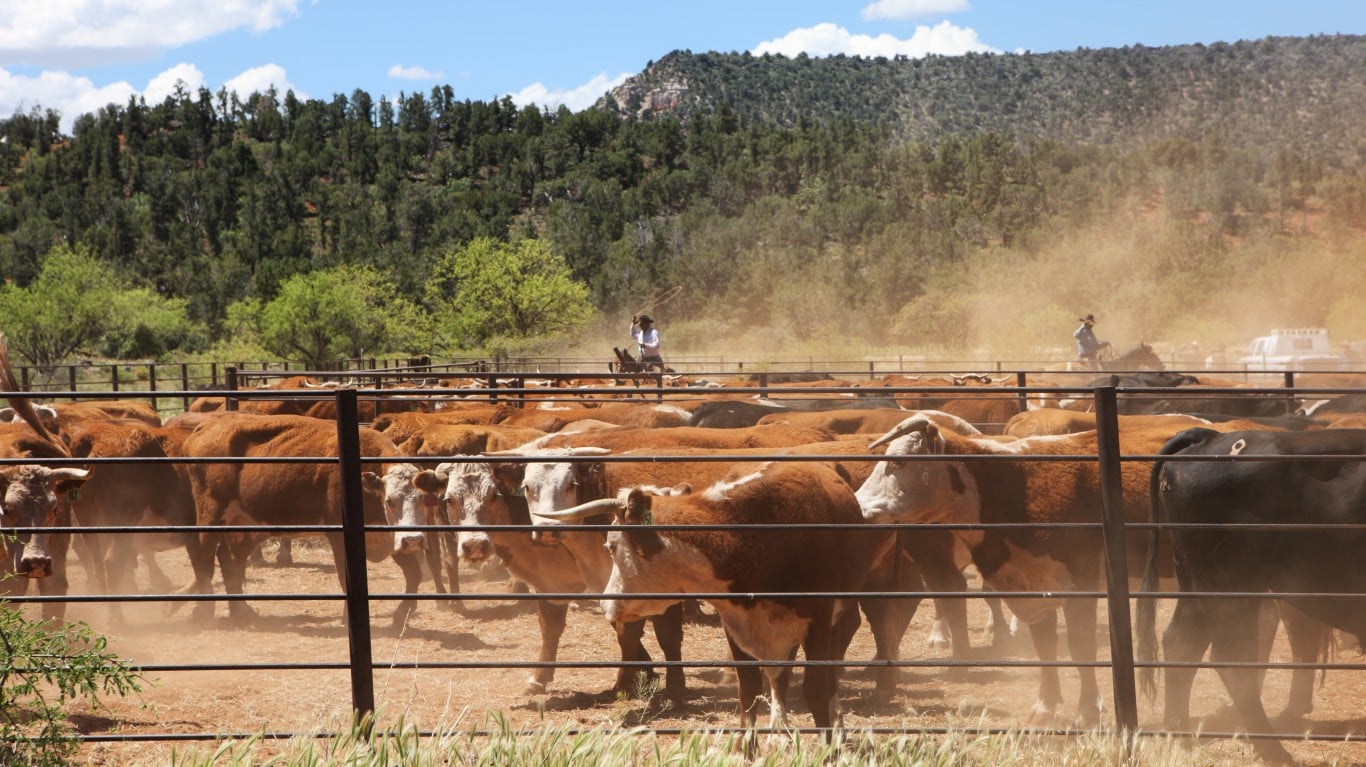
USDA's new BRAND endorsement lets ranchers insure the economic value of retaining heifers for two years as the U.S. cattle herd hits a 75-year low.
LRP insurance proceeds flow through Schedule F as self-employment earnings, potentially triggering Social Security withholding of $1 for every $2 above the $24,480 annual limit.
Withheld Social Security checks before full retirement age are recredited at 67, but cash flow disruption during heifer-retention years can still hit ranchers hard.
Two retirees, same $1 million, same 4% rule, buy one finished with $1.4 million, the other hit $0 in 12 years. Our free reader guide explains the flaw that separated them, and the income-first method built to avoid it.
Ranchers are stuck between a rock and a hard place. The U.S. cattle herd has shrunk to its smallest size in 75 years, while beef prices have climbed to record highs. For a 63-year-old rancher watching pasture rents climb and hay costs bite, the math on holding another calf crop is getting harder to justify. USDA now wants to make one part of that decision easier.
Its new Beef Retention and National Development, or BRAND, endorsement will let ranchers insure the economic value of keeping a heifer for breeding for two years. If the heifer becomes worth more for slaughter than for staying in the breeding herd, the coverage is designed to pay the difference. For a rancher already collecting Social Security, however, that insurance check introduces a wrinkle. Selling a qualifying breeding cow can generally stay outside net self-employment earnings. Keeping the heifer and later collecting a livestock-insurance payout can land somewhere very different.
The 4% Rule is Broken, Built On A World That No Longer Exists
Every retiree knows about the 4% rule, but it frames retirement as a slow liquidation and still causes retirees with seven-figure accounts to agonize over a dinner out.
There's a different way to run the math that makes more sense today. Build an income floor — dividends, interest, and Social Security that cover your essential bills every month — and you never have to sell shares into a down market just to pay them.
Our free reader guide, The 4% Rule Is Broken , walks through it in about 15 minutes. Access the report here.
USDA Is Putting Insurance Behind the Decision to Keep Her
The new BRAND coverage is being added to Livestock Risk Protection, or LRP. A rancher deciding whether to retain a heifer gives up the opportunity to sell her into a strong cattle market today. BRAND is designed to protect some of that economic value if the slaughter market later makes keeping her look like the worse financial choice. But the tax treatment of an insurance payment does not necessarily follow the treatment of the animal itself.
Topics in this story
Gathered from external sources. Rights to this text belong to whoever originally published it.