CDC director’s ‘unusual’ silence draws scrutiny
Just a month into her tenure, CDC director Erica Schwartz is missing in action. The country is heading into respiratory virus season, and public guidance on COVID-19, flu and RSV vaccines has been muddled, at best. The worst measles epidemic in more than 30 years continues unabated, while the Health and Human Services secretary is…
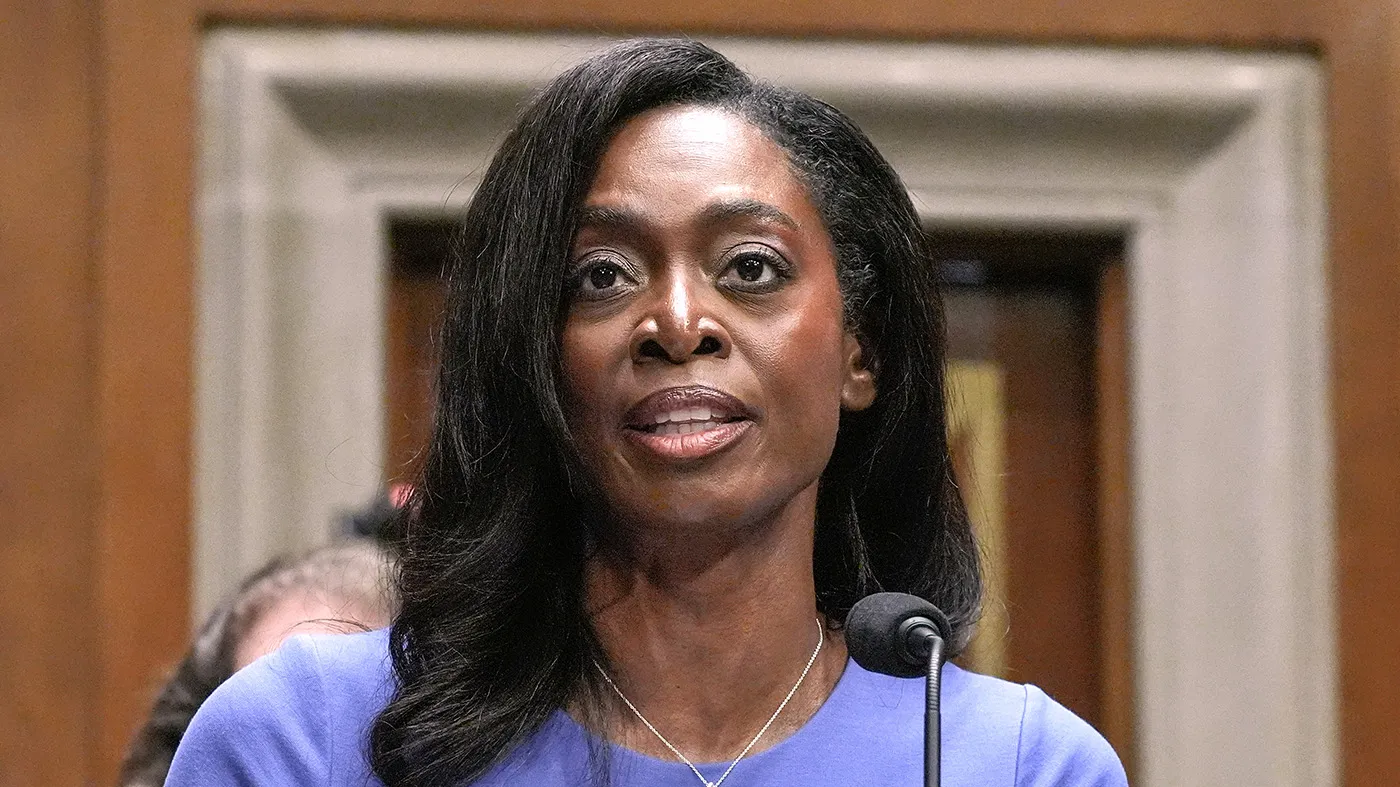
Just a month into her tenure, CDC director Erica Schwartz is missing in action.
The country is heading into respiratory virus season, and public guidance on COVID-19, flu and RSV vaccines has been muddled, at best.
The worst measles epidemic in more than 30 years continues unabated, while the Health and Human Services secretary is downplaying measles deaths and openly feuding with a sitting governor.
Through it all, Schwartz has made no public appearances or remarks.
What little official communication that has come from the agency has been from social media and overtly political.
Current CDC staff, as well as former officials and public health advocates, say they are left questioning Schwartz’s independence and the overall reliability of the nation’s public health agency.
“This is very unusual,” said Deborah Houry, a former CDC chief medical officer before she resigned last year after Schwartz’s predecessor was ousted.
“Thinking back to all of the prior CDC directors I have worked with, almost all met with media and publicly spoke during their first month. This is especially important during an outbreak and back to school when the CDC director should be talking about priorities and how to respond to an ongoing measles crisis,” Houry said.
A current veteran CDC staffer said it’s clear the public interfacing is coming from HHS Secretary Robert F. Kennedy Jr.
“There’s a noted absence of any kind of commentary from her,” the staffer said. “She could talk authoritatively off the cuff about measles if she wanted to; she has expertise. But she isn’t.”
Without directly addressing Schwartz’s role, a CDC spokesperson said the agency is “fully engaged” in the measles response.
“Under the leadership of Secretary Kennedy and Director Schwartz, CDC remains fully engaged in the measles response and has consistently communicated the importance of vaccination in preventing measles,” the spokesperson said.
Schwartz has decades of experience in public health. She was a top public health officer in the Coast Guard and deputy surgeon general in the first Trump administration.
There was hope among agency staff and outside advocates that she would bring stability to an agency in turmoil.
The workforce has been slashed by nearly 25 percent, following cuts by Elon Musk’s Department of Government Efficiency, as well as voluntary departures by career scientists.
The first Senate-confirmed CDC director was ousted after a month last year because she clashed with Kennedy over vaccine policy, and there were two acting directors in charge in the interim.
Schwartz started her job with a self-proclaimed mandate to rebuild trust and public confidence in the agency, which has been falling since the COVID-19 pandemic amid politicization worries and partisanship.
Public health experts said the best way to earn trust is to be an authoritative voice for the public.
“That’s how you build trust, getting in front of the camera and talking to folks across the country,” said David Margolius, public health director for the city of Cleveland.
Margolius, a physician, said he is worried Schwartz is squandering her chance.
“I have been hoping to hear and see her speaking to the American public about what’s going on with measles and cyclosporiasis and flu season coming up, uncertainty around the fall vaccine recommendations,” he said.
“This is an opportunity, and it’s not too late. But this is the opportunity to get in front of the American public and answer questions and talk about what we can do to prevent these outbreaks from causing more harm.”
Shortly after she was sworn in, Schwartz spoke at an internal all-hands meeting with staff. She acknowledged that morale was low and staff were struggling. Schwartz said she didn’t want people to feel unsafe asking questions and promised to earn their trust.
It was the first time most staff had heard from their new director since her Senate confirmation hearings, and there was some cautious optimism that she’d “make a good faith attempt to right the ship,” according to one career staff member.
But then came a measles outbreak in Pennsylvania, and the CDC response “dashed all hope” of a rebound, the staffer said.
Pennsylvania in August reported the deaths of two unvaccinated individuals in Lancaster County, later revealed to be children who were too young to receive the measles, mumps and rubella vaccine.
After Gov. Josh Shapiro (D) criticized Kennedy for downplaying the severity of measles and sowing doubt about the effectiveness of the vaccine, Kennedy publicly disputed the state’s report and suggested Shapiro’s office may have fabricated the deaths for political gain.
The official CDC social media account backed him up.
The following week, the agency officially disputed Pennsylvania’s reporting and refused to include the two deaths in its weekly tally, a radical departure from the agency’s normal practice of accepting a state’s own investigation.
The agency hasn’t changed its mind. For the third week in a row, the CDC has decided not to count two measles deaths in Pennsylvania in its official 2026 tally.
As of Friday, the CDC reported 160 new measles cases in the past week, bringing this year’s total to 3,294. But according to CDC, there have been no deaths.
On its website, the agency put an asterisk next to the data and noted that the National Center for Health Statistics (NCHS) hasn’t recorded any deaths this year where measles was the underlying cause.
The agency is working with the Council of State and Territorial Epidemiologists to use its established process to develop a standardized definition for a measles death.
Schwartz has not spoken about the decision to exclude Pennsylvania’s deaths.
“Director Schwartz is committed to transparent, evidence-based public health reporting,” the CDC spokesperson said. “Until that work is complete, CDC will report measles deaths if and when the National Center for Health Statistics reports measles as the underlying cause of death.”
Abbie Tighe, a former CDC public health adviser who founded the National Public Health Coalition after she was fired last year, said most of the agency’s communications staff was laid off and replaced by political appointees who are not operating in good faith.
“So you don’t have anybody at the top who’s really speaking directly to the public that is doing it for the right reasons, or is operating within the assumption that we have to do the best by the public,” Tighe said.
The agency’s response to Pennsylvania has snuffed out the little hope people had that Schwartz could be a trusted health communicator, Tighe said.
“The conversation of this case definition is frankly irrelevant to the suffering that’s happening. All it does is muddy the waters and makes it harder for people to understand on a basic level what they should and should not be doing to protect themselves.”
Topics in this story
Gathered from external sources. Rights to this text belong to whoever originally published it.