Why Nvidia’s board changed its mind on Jensen Huang
Jensen Huang returned to Nvidia as CEO on Monday, leaving Washington and Wall Street with myriad questions about how the company’s board of directors changed its mind in a matter of days. The board faced pressure on multiple fronts — from the Trump administration, Silicon Valley leaders and slumping markets — amid concerns about Nvidia’s future…
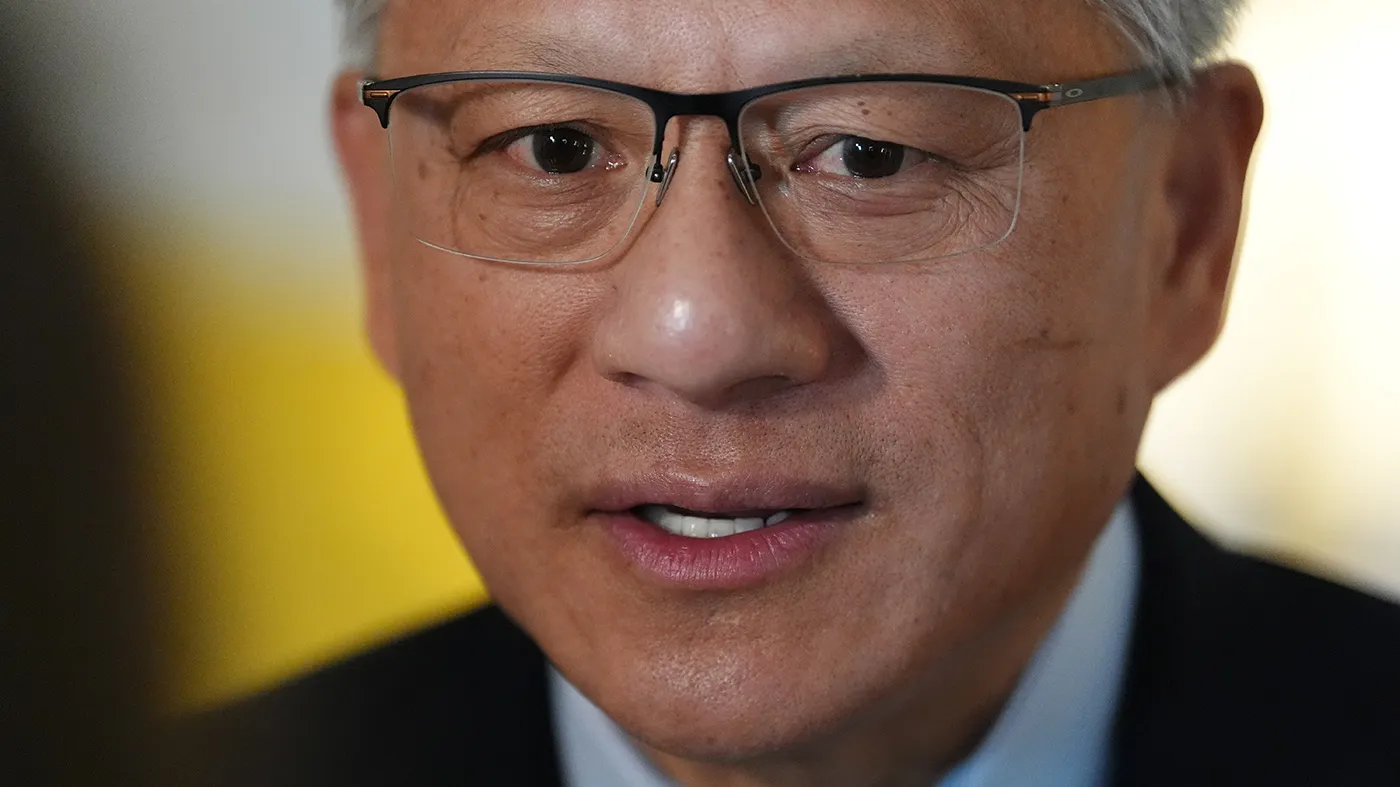
Jensen Huang returned to Nvidia as CEO on Monday, leaving Washington and Wall Street with myriad questions about how the company’s board of directors changed its mind in a matter of days.
The board faced pressure on multiple fronts — from the Trump administration , Silicon Valley leaders and slumping markets — amid concerns about Nvidia’s future without Jensen Huang at the helm.
President Trump quickly took credit for his role in Nvidia’s change of heart, which the board attributed to conversations with the company’s longtime CEO and input from “senior levels” of the U.S. government.
BestReviews is reader-supported and may earn an affiliate commission.
Jensen Huang’s reinstatement marks a drastic turn of events, less than two weeks after he resigned from the tech giant due to a scandal over an alleged affair with a suspected Chinese spy.
At the heart of the various forces working in Jensen Huang’s favor were the broader concerns about the company’s central role in the artificial intelligence boom and whether it could continue to thrive without his leadership.
“I’ve been speaking to the board directly and indirectly,” Trump told CNBC on Monday morning. “I felt very strongly about it. And I felt more strongly as I saw what was happening with the company, because that was to me, a very important part of our country.”
Nvidia’s board unanimously voted to bring Jensen Huang back as CEO and president, just days after telling investors it was not considering his return. He stepped down from the company earlier this month amid a series of affair scandals.
The move sent markets reeling. Nvidia’s chips are crucial to the AI boom, powering the technology’s development. Now one of the most valuable companies in the world, the chipmaker is a major driver of the stock market.
Jensen Huang immediately found support from a powerful contingent of Silicon Valley leaders.
SpaceX and Tesla CEO Elon Musk; Uber co-founder Travis Kalanick; Epic Games CEO Tim Sweeney; and Y Combinator CEO Garry Tan joined more than 170,000 others in signing an open letter calling for Jensen Huang’s return last week.
David Sacks, former White House AI and cryptocurrency czar, also called into question the “spy narrative” surrounding Chinese business executive Alice Huang, whom U.S. officials reportedly suspected of passing information to Beijing while allegedly having an affair with the Nvidia CEO.
Jensen Huang noted last week that he received an “outpouring of calls” from Nvidia staff, investors, business partners and customers for his return, adding he would be “honored” to come back. But the board signaled it was unwilling to play ball.
The Trump administration appears to have put its thumb on the scale in Jensen Huang’s favor.
“I spoke to them, let me just put it that way, and I convinced them,” Trump told CNBC on Monday. “And I must tell you, it was a lot easier to convince them yesterday than it was a week and a half ago.”
Vice President Vance was also personally involved with the push to reinstate Jensen Huang, a source familiar with the matter told The Hill, underscoring his long-standing ties to Silicon Valley.
Wall Street was quick to celebrate Jensen Huang’s return, following uncertainty about whether Nvidia could maintain its dominance without the longtime CEO.
“I do not believe there is another executive who could effectively replicate his vision, leadership, or understanding of where artificial intelligence is heading,” Brad Gastwirth, global head of research and market intelligence at Circular Technology, said in a statement.
Nvidia’s stock climbed more than 30 percent Monday, and the Nasdaq composite and S&P 500 shot up as well.
This followed more than a week of market whiplash for Nvidia, which hit a 52-week closing low of $125.53 last Friday. But analysts warned Jensen Huang’s departure was bigger than Nvidia and threatened the overall stability of the AI industry and market as a whole.
“This underscores that enough people believe that our economy and national security are not just dependent on one company, but on one man,” Aya Ibrahim, a senior fellow at the AI Now Institute and former senior adviser at the White House’s National Economic Council and Office of Science & Tech Policy, said in a statement Monday.
When asked by CNBC whether the significant tech sell-off in the markets last week influenced his reasoning, Trump said, “Probably so, but the biggest impact was long term.”
The president said he isn’t concerned anymore “because we have one of our great stars back in play.”
Tech analyst Dan Ives suggested the board reversed its stance “because the alternative, a founder-less Nvidia at the start of the Rubin cycle with a CEO search running into next year, was the bigger risk to shareholders.”
“At the end of the day despite this Jensen saga the Board knew it had no choice but to bring him back and for the US technology sector this was the move it had to make,” Ives wrote in a note for Yorkville Ives & Co. on Monday.
Still, Ives said he is not changing his price target on Nvidia, given the numerous factors still in play, including the independent committee’s investigation into Jensen Huang’s actions.
But not all are happy on Wall Street, warning of the implications of the move.
“When the CEO of the world’s most valuable company is infiltrated by a Chinese spy and we ignore that because the share price went down? That’s a society that is focused on its own immediate gratification ahead of logic or long-term thinking,” Bradley Tusk, founder and CEO of Tusk Ventures, said to The Hill.
“It’s just short-term optics,” Peter Ricchiuti, professor of finance at Tulane University’s Freeman School of Business, told The Hill. “If you’re a shareholder on a short-term basis, you’re very excited but it doesn’t say much.”
Jensen Huang’s reinstatement sparked an outcry from lawmakers of both parties , who vowed to continue their investigations into Jensen Huang and Commerce Secretary Howard Lutnick, who reportedly took a softer tone on the company over its stance on exporting some AI chips to China.
The Nvidia CEO is scheduled to appear for a closed-door briefing on Dec. 1 in front of three House committees — the Foreign Affairs Committee, Intelligence Committee and the Select Committee on China. Jensen Huang will then testify before the Senate Banking Committee on Dec. 3. Lutnick has also agreed to appear before Congress on the matter.
Topics in this story
Gathered from external sources. Rights to this text belong to whoever originally published it.