Waiting at a red light? It may not know you’re there
If you drive a car, you’ve likely found yourself at a stoplight. They’re hard to avoid, with roughly 320,000 estimated to be in the U.S. But getting through them is sometimes harder than you may think it should be.
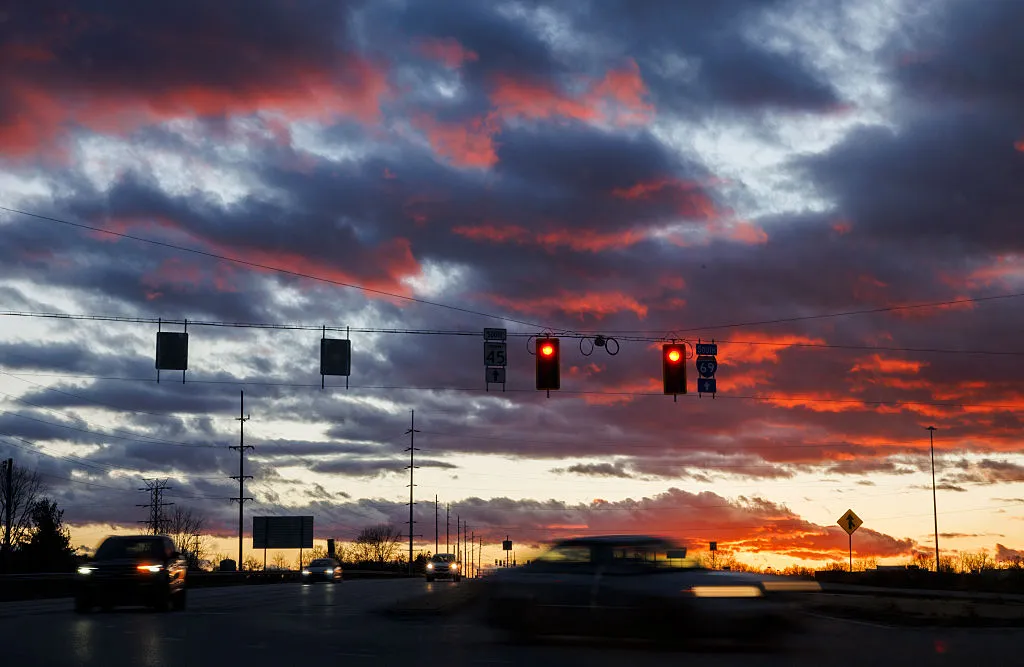
(NEXSTAR) – If you drive a car, you’ve likely found yourself at a stoplight. They’re hard to avoid, with roughly 320,000 estimated to be in the U.S. But getting through them is sometimes harder than you may think it should be.
Likely one of the most annoying situations is when you stop at the red light and wait patiently for it to turn green. You may watch cross traffic go through, or maybe it’s just you, waiting.
And no matter how well you wait, the light never seems to turn green.
It may simply be that the light doesn’t know you’re there at all.
In some cases, the traffic light may run on a timer. This may happen in areas around major event centers. In Minneapolis , the lights at the intersections near the stadiums for the Minnesota Twins and Timberwolves run on set patterns during games or other events.
There may be nothing you can do at a red light in those scenarios.
Other traffic lights, however, may rely on detection devices like cameras and underground sensors.
You may be familiar with the latter already. As you roll up to the stop line, you can frequently see a rectangle of pavement that is a different color or outlined in tar. Beneath it is the underground sensor, or the induction loop.
“A loop is simply a coil of wire that is placed underneath the pavement, usually in the shape of a rectangle,” the public works department for Neenah, Wisconsin, explains . “When a large metal object is positioned over the loop (for example, a car), it affects the loop’s magnetic field.”
That, in turn, instructs the light to change. Sometimes setting off these sensors can be difficult. Your vehicle needs to pass over or stop within the sensor’s detection area. To ensure you’re in the right spot, you’ll need to pull up to the solid white stop line at the intersection.
In a smaller vehicle, like a motorcycle, bicycle, or moped, Neenah Public Works recommends positioning your tires on the tar lines.
Magnetic detectors and magnetometers may also be controlling the light you’re at. These similarly rely on a magnetic field, according to the U.S. Department of Transportation Federal Highway Administration. Like the induction loop, you’ll need to position your vehicle over the detectors to activate the light.
Some intersections rely on overhead sensors.
Infrared sensors are triggered once a vehicle breaks a beam of light, or if it detects heat from a vehicle’s engine. Other signals may also use cameras, which can be connected to a network designed to detect traffic and adjust the signals as needed (those cameras may also be watching to catch drivers who run red lights).
You should be able to see both at the traffic light. They’ll look like a security camera you may see at a bank, often next to the traffic light. Some infrared laser sensors are contained in metal boxes hanging above the roadway.
There may be more than one sensor monitoring traffic at the intersection. In 2021, Los Angeles deployed a system using magnetic sensors, cameras, and a central computer network to control all of its 4,400 traffic lights to combat gridlock.
If your attempts to set off the sensor have failed and you’re still at the light, you can also try flashing your high-beam headlights . In some cases, that may be enough. Honking your horn, however, will not. These sensors are not searching for audio triggers.
Even if it’s taking a long time for the light to change, don’t run it. If you’re trying to turn left or go straight, you may need to look for another opportunity to get out of the intersection. If your turn is being skipped, or the light is not changing, you’ll need to figure out a way to proceed – safely.
This could include making a right turn, where legal, and rerouting yourself where you need to go. If you find yourself waiting on a left turn light, you can turn through the red signal when the light turns green for traffic traveling straight ahead, California Highway Patrol Officer Dan Olivas explained to the Press Enterprise .
He encouraged being “safe about it” and, if you are stopped, explaining the situation to law enforcement.
Topics in this story
Gathered from external sources. Rights to this text belong to whoever originally published it.