Iran puts Europe on notice as US shifts to economic warfare
Iran’s recent saber-rattling against Bulgaria has renewed questions over how much it’s willing to directly attack Europe in an effort to deter U.S. allies from aiding war efforts against Tehran. Bulgaria, among Iran’s biggest trading partners in Eastern Europe, is among the European countries Iran considered striking if President Trump escalated the war, The Financial…
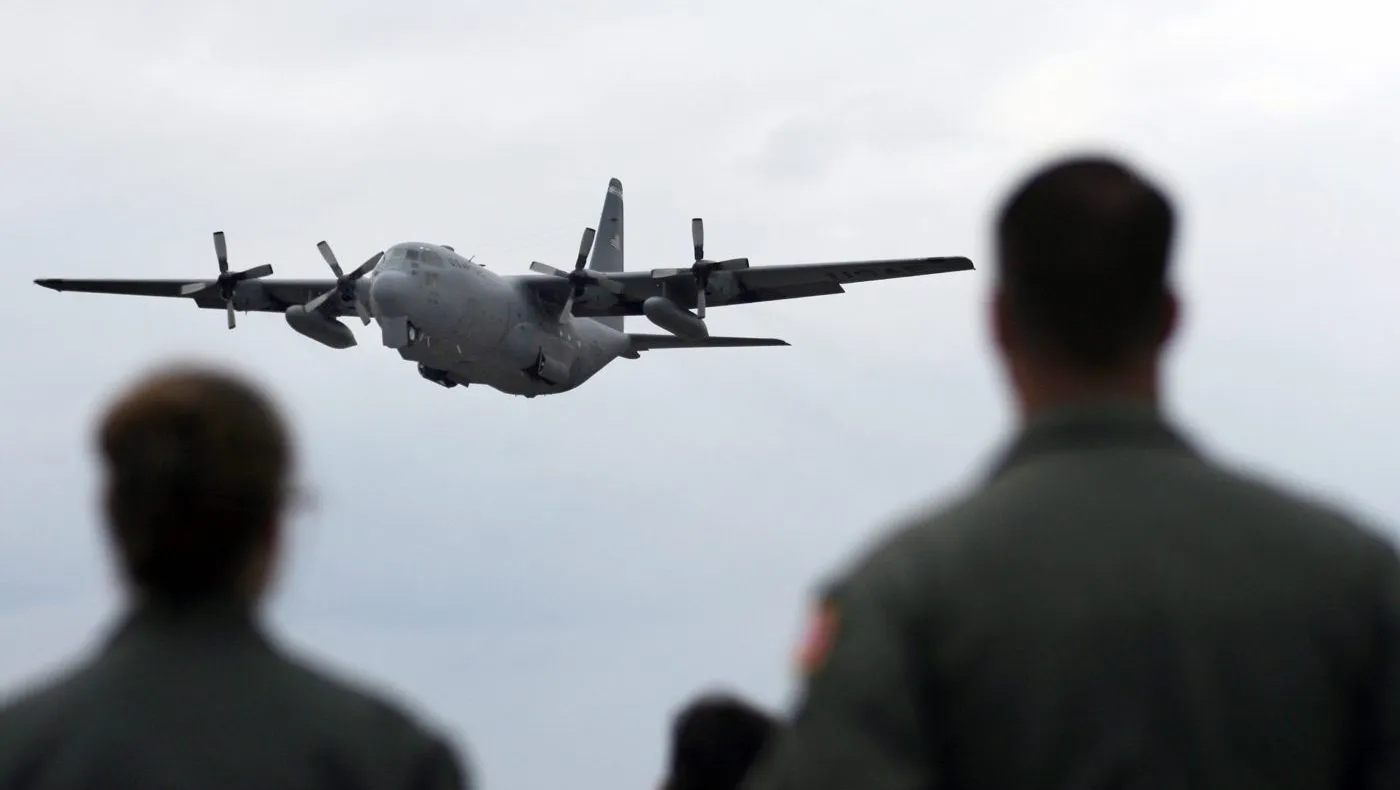
Iran’s recent saber-rattling against Bulgaria has renewed questions over how much it’s willing to directly attack Europe in an effort to deter U.S. allies from aiding war efforts against Tehran.
Bulgaria, among Iran’s biggest trading partners in Eastern Europe, is among the European countries Iran considered striking if President Trump escalated the war, The Financial Times reported last week. That’s due to both its south-eastern location on the continent and two U.S. Air Force KC-135 refueling planes using one of its bases to support Operation Epic Fury.
After Bulgarian officials announced the departure of those planes over the weekend, Iran on Monday issued its latest warning to NATO members that allow their territory to be a jumping off point for American or Israeli military action against the regime, saying it “has the right to target the point of origin and source of any act of aggression against” it.
Iran has made similar threats to the United Kingdom, with a drone striking a British airbase in Cyprus in March. That same month, Iran fired two ballistic missiles at the remote U.K.-U.S. base in the Indian Ocean known as Diego Garcia. And Turkey in March said NATO’s air defenses had intercepted several ballistic missiles launched from Iran.
While Iran clearly wants to maintain the perception that it’s willing and capable of striking Europe, analysts aren’t convinced it really wants to invite NATO more fully into the fight.
“What’s the bang they get for that buck?” said Alan Eyre, a former head of the Iran office at the
U.S. Consulate in Dubai, now with the Middle East Institute.
“Iran right now is in a fight for its life. The Islamic Revolutionary Guard Corps is leading it, and their target selection is going to be based on optimal utility, and that could well encompass targets in Europe,” he told The Hill, but added that he doesn’t think such a scenario is likely.
“I don’t think the juice is worth the squeeze in terms of antagonizing NATO. . . . I don’t think that attacking European targets gets them anything extra than attacking [Gulf] targets doesn’t get them,” Eyre said.
David Cattler, a senior fellow with the Center for European Policy Analysis, likewise said that an Iranian strike on a NATO ally would be a major escalation but a bad strategic trade for Tehran, as “that would probably transform Europeans who largely have sought distance from the Iran war into active participants against” the regime.
Trump has repeatedly complained that NATO members aren’t doing enough to help clear the Strait of Hormuz, which Iran’s military moved to close almost immediately after the U.S. and Israel launched their surprise attack in February.
Cattler said the more immediate issue is Iranian coercion.
“The reality is Tehran doesn’t need to fire a missile at Bulgaria to achieve an effect. Threatening the countries that provide the bases, logistic support, access to the United States is itself an attempt to raise the price of supporting Washington in an attempt to weaken allied cohesion,” Cattle told The Hill.
Iran’s foreign ministry on Monday declared that while it has “no issue with the Bulgarian people,” it stressed that “any action regarded as supporting U.S. and Israeli military aggression against Iran constitutes, under international law, participation in an act of aggression.”
The regime was referring to the Friday departure of two U.S. Boeing KC-135 Stratotankers, air-to-air refueling tankers from Bulgarian territory, which had been temporarily deployed to Bezmer Air Base in support of the U.S.’s Operation Epic Fury.
Al Jazeera reported this week that Bulgarians living around Bezmer were well aware of the threats, quoting a woman at a local grocery shop who said, “I pray to God that our village won’t be attacked.”
The regime previously warned the Balkan nation, which is roughly 2,000 miles from Iran and shares a border with Turkey, against allowing Washington to use its airbases during the conflict.
Bulgaria is likely within striking range for Iran, closer than the island of Diego Garcia, which is some 2,350 miles away from Iran. The targeting of Diego Garcia earlier this spring with two Iranian missiles — one that failed in flight and one shot down — changed Europe’s calculations around Tehran’s ability and willingness to hit locations outside the Gulf region, said Cattler.
“Iran’s demonstrated substantially greater reach than many Europeans had previously had to factor into their defense planning,” Cattler told The Hill. “Even though they didn’t hit, NATO did take note of that and described that development as relevant to allied security.”
He pointed to NATO helping Turkey defend against Iranian ballistic missiles earlier in the war.
“That’s, again, just a sign of both NATO preparedness and the defensive response,” Cattler said.
The U.S., meanwhile, has taken a new tactic in attempting to bring Iran to its knees, with Trump warning last week that he would hit Iran with an “Economic D-Day.” That was followed by Treasury Secretary Scott Bessent’s announcement on Monday of “Operation Economic Outcast,” in which the U.S. is asking nations across the world to sever financial ties with Tehran or risk being cut out of the U.S. dollar system.
Both Trump and Defense Secretary Pete Hegseth have said they are prepared to return to military options if necessary, though there are mounting concerns about the U.S.’s dwindling weapons stockpiles.
Iran has remained defiant in the face of the economic chokehold, with Iranian Economy Minister Ali Madanizadeh on Tuesday telling state television that Tehran was “fully prepared for the U.S. sanctions.”
“Our defense is no longer defensive; the enemies should wait for an attack,” the Iranian official said, according to Reuters .
Eyre said it’s “wildly improbable” that Operation Economic Outcast will cause Iran to recalibrate its negotiating stance to meet America’s demands.
“The fallacy the U.S. government is making is that they think that by making the lives of ordinary Iranians more wretched, that will translate into effective political pressure on the Iranian leadership. It won’t,” he said.
“If, in fact, the economic pain from the naval blockade or from Economic Outcast reaches a certain point, the Iranian leadership is not going to capitulate. They’re going to escalate.”
Trump’s latest tactic of an economic chokehold follows the June memorandum of understanding between the US and Iran, which fell apart last month after Tehran attacked shipping in the Strait of Hormuz. Both sides accused each other of violating the interim deal, leading to a shuttering of the vital waterway by Iran, a renewed U.S. blockade on Iranian ports, and a brief resumption in military strikes.
Weeks of diplomatic efforts, including negotiations between Oman and Iran to set up shipping lanes in the strait, have failed to yield a breakthrough for peace.
Eyre said the only reason he sees Iran attacking European targets is for the effect it would have on financial markets, given how the war has shifted to an economic battlefield for now.
“Not letting President Trump and the administration off the hook in terms of increasing economic pressure — the price of gasoline going up, price of diesel going up, the bond markets running over the Treasury secretary. To optimize that, they might well choose European targets,” he said.
“But then again, they get most of that anyway by attacking [Gilf] targets. Any renewal of kinetic action on the part of Iran is going to tweak the markets.”
Topics in this story
Gathered from external sources. Rights to this text belong to whoever originally published it.