US 10-Year Yield Set for Historic Run Above 5% on Fed Rate Cycle
The US’s 10-year Treasury yield is nearing its longest run above 5% in almost two decades as investors position for the Federal Reserve to hike interest rate...
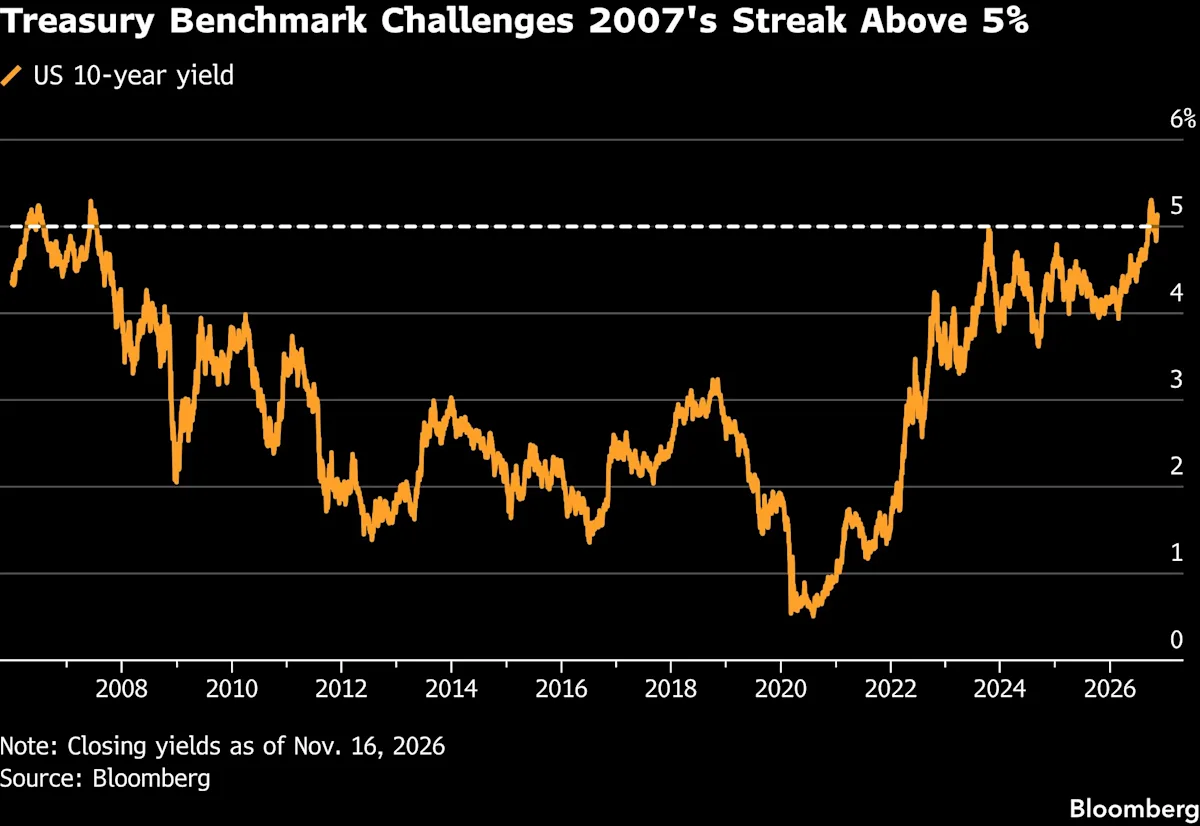
(Bloomberg) -- The US's 10-year Treasury yield is nearing its longest run above 5% in almost two decades as investors position for the Federal Reserve to hike interest rates more amid stubbornly elevated inflation.
The benchmark for borrowing costs in the world's largest economy is on pace to hold above 5% for the 27th day this year, putting 2026 within striking distance of the 29 such closes recorded in 2007. It was about one basis point higher at 5.14% after US retail sales growth moderated in October.
Upward pressure on yields comes after hotter-than-expected October inflation forced Fed policymakers to begin considering a more aggressively tightening of monetary policy than previously expected.
Traders are now fully pricing a quarter-point rate increase at the central bank's Dec. 9 meeting and see more than 80 basis points of tightening by September 2027, compared with roughly 50 basis points before last week.
Yields back over 5% reflect "risk premium due to uncertainty about the Fed," said Priya Misra, portfolio manager at JPMorgan Asset Management.
The resilient economy and lots of bond sales, from the US government as well as companies looking to invest in AI are other reasons for yields staying above 5%, she said.
The 10-year is a benchmark for the US economy as it helps set the cost of home mortgages, credit cards and business loans. Back in 2007, the 10-year yield climbed above 5% in June and peaked at 5.32% as the Fed kept rates at 5.25% they first reached in July 2006.
That set the stage for elevated rates to weigh on the housing sector, which prompted the central bank to cut rates in September.
For Ian Lyngen, head of US rate strategy at BMO Capital Markets, the current elevated yields are already a cause for concern.
"The impact on the real estate market has been to effectively freeze activity," he said. That's "a foreseeable outcome given the fact that 30-year mortgages have remained above 7% since mid-September."
The trajectory of Treasury yields this year, while not in a straight line, has generally followed an upward path, with the 10-year's rising from under 4% when President Donald Trump launched his war on Iran in late February, disrupting the supply of Middle Eastern oil and gas.
Topics in this story
Gathered from external sources. Rights to this text belong to whoever originally published it.