Hegseth ramps up US troops in Panama as Pentagon expands war on drug cartels
The Pentagon is sending more U.S. troops to Panama to participate in jungle warfare training as Defense Secretary Pete Hegseth expands the U.S. military’s war against drug cartels in Latin America. Nearly 200 Army soldiers from Fort Drum, a U.S. Army military reservation in northern New York state, are being sent to a jungle training…
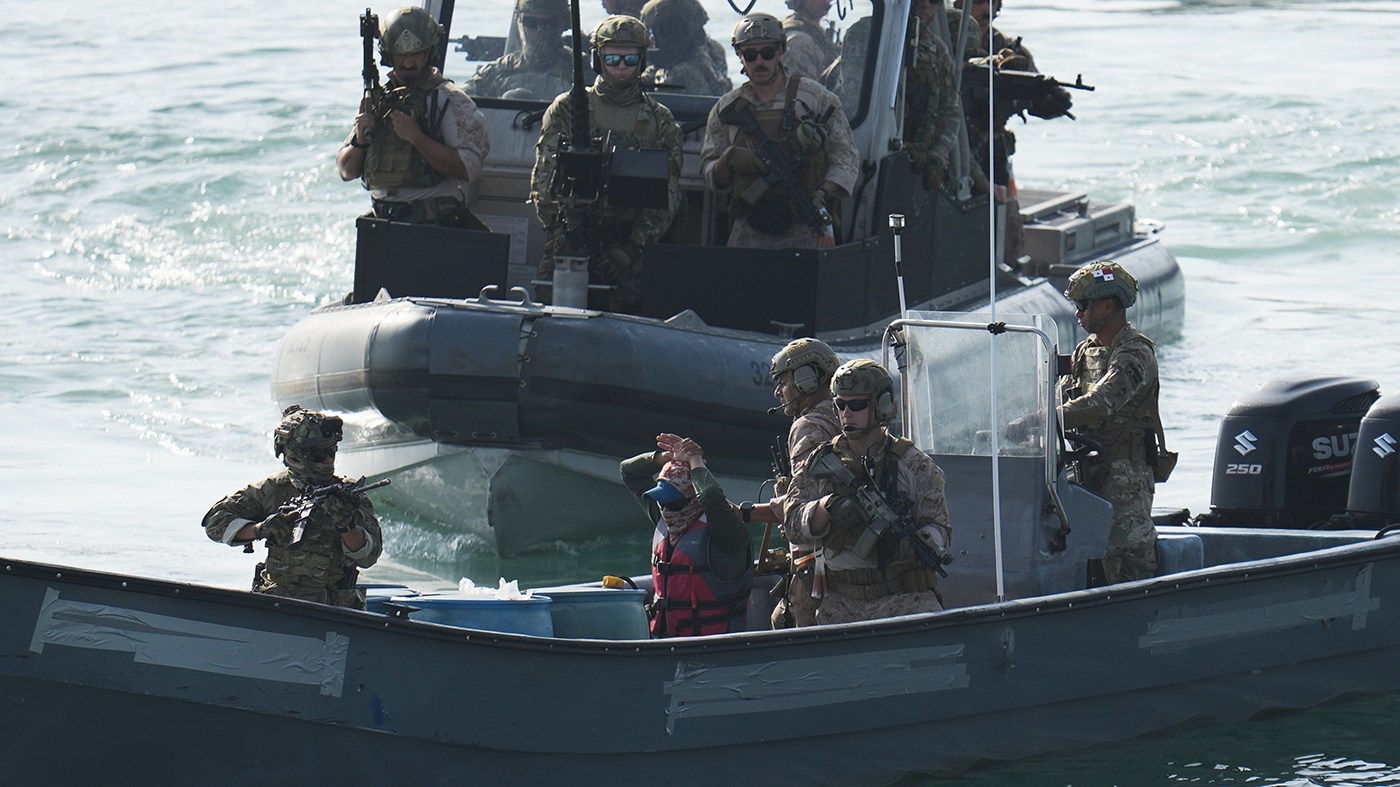
The Pentagon is sending more U.S. troops to Panama to participate in jungle warfare training as Defense Secretary Pete Hegseth expands the U.S. military’s war against drug cartels in Latin America.
Nearly 200 Army soldiers from Fort Drum, a U.S. Army military reservation in northern New York state, are being sent to a jungle training facility in the Central American nation to prepare in survival and combat tactics.
They will not be conducting counter-narcotics training, according to one U.S. official, who spoke on condition of anonymity to discuss internal military deliberations.
Upon completing the multiweek training course, the troops will return to the U.S., the official told The Hill on Thursday. The official said the troops may partake in additional training with Honduran, Colombian and Guatemalan forces.
The U.S. Southern Command (Southcom), which oversees U.S. military operations in Central and South America, declined to comment.
When The Hill reached out to Hegseth’s office for comment, a Pentagon official said the Bilateral Jungle Operations Training, a program where U.S. and Panamanian forces train together in jungle terrain, reflects the Americas Counter Cartel Coalition (A3C) “collaboration, complementary capabilities and persistent engagement with allies and partners.”
“This sharpens the capabilities of U.S. and partner nation troops in harsh jungle environments like the remote areas in which cartels hide,” the Pentagon official said. “These activities reflect the ongoing A3C approach of working with capable allies and partners to deepen collaboration and maintain persistent pressure against hemispheric threat networks.”
“For operational security reasons, we do not discuss specific force posture, movement timelines, unit disposition, or mission details,” the official said.
The U.S. military revived jungle warfare training alongside Panamanian security forces last fall for the first time in more than 20 years. In the training, service members perform weapons drills and learn survival techniques, including how to purify water, navigate the thick vegetation and build shelters, The Hill reported last year.
The training — which has been done by members of the Army, Marine Corps, Air Force and Space Force — has been at Base Aeronaval Cristóbal Colón, a naval base formerly known as Fort Sherman.
“We’re really looking at this as that interoperability training, where both of us are growing in our knowledge down here,” Army Maj. Cody McBroom said in an interview at the time. “So as we ramp this up, and obviously it’s what we can support, what they can support to make sure it’s mutually benefiting for both of us.”
Lee Schlenker, a research associate with the Global South program at the Quincy Institute for Responsible Statecraft, said the administration is right to focus on Latin America, and to provide aid to governments on security issues.
But he questioned whether the deployment could lead to unintended consequences.
“While the administration is right to focus on its near abroad and provide regional governments with support to tackle pressing security challenges, surging troop deployments without proper Congressional authorization or a clearly stated legal rationale risks leading us into an interminable war against a shifting set of targets with no clear entry or exit strategy,” he said.
He also said the efforts could do “remarkably little to address the drivers of the drug trade.”
He described the drivers as “surging demand, public corruption, lack of formal employment and deficient judicial and law enforcement institutions.”
The New York Times first reported on the deployment , but the U.S. embassy in Panama pushed back, calling the deployment of 600 U.S. troops “ categorically false .”
The embassy said 120 service members from the 10th Mountain Division, based at Fort Drum, are participating in a two-week jungle warfare training course in Panama. Upon completing the training on Oct. 25, they will head back to home base at Fort Drum.
Other service members will partake in regional exercises, including Southern Vanguard, an annual bilateral and multilateral military exercise sponsored by Southcom in Peru, the embassy said in a statement.
Last month, U.S. soldiers trained alongside Peruvian and Chilean forces during Southern Vanguard.
The deployment of troops for training in Panama comes as the Pentagon continues to ramp up its multifront war against drug cartels in South America and as the Trump administration is pushing Latin American nations to team up with U.S. forces in joint operations against alleged drug traffickers.
The U.S. military has been blowing up alleged drug boats in the Caribbean and Eastern Pacific, strikes that have come under scrutiny by Democratic lawmakers and have been panned as summary executions by some law of war experts.
The U.S. military has also started interdicting larger refueling vessels off the coast of Ecuador before destroying them. U.S. forces recently have also begun embedding on the ground with Ecuadorian authorities in raids against alleged drug traffickers, a new dimension in Southcom’s campaign against criminal groups designated as foreign terrorist organizations.
“Based on our assessment of what needs to be done, this plan focuses on five core lines of effort: dismantling illicit networks, attacking network logistics, preventing adversary regeneration, bolstering partner sovereignty and security, and building a strong coalition,” Southcom Commander Gen. Francis L. Donovan said in a recent interview with The Hill when talking about Southcom’s “Offensive Campaign Plan.”
To help execute the plan, the U.S. has formed a coalition of 19 nations in Central and South America with the goal of wiping out drug cartels, and the Pentagon sent MQ-9 Reaper drones — armed with precision weapons, wide-range sensors and multimode communications suite — to the Southcom theater.
The U.S. military conducted land strikes in South America earlier this year. Those strikes and on-the-ground raids will ramp up as the capabilities of those nations rise, a senior Pentagon official recently told The Hill. Honduras and Guatemala have sent letters asking for joint operations with U.S. forces.
Donovan completed a 3-day visit to Peru on Thursday, alongside U.S. Ambassador to Peru Bernie Navarro, where they met with Peruvian Defense Minister Rafael Belaúnde Llosa and Gen. César Augusto Briceño Valdivia, the Chief of the Joint Command of the Armed Forces
The meetings focused on “joint efforts to combat narco-terrorists” and hemispheric threat networks. The leaders on both sides laid the groundwork for “greater cooperation” to combat these criminal groups in the Valle de los Ríos Apurímac, Southcom said .
Earlier this month, Hegseth indicated that some U.S. troops could be redeployed from Europe to the Western Hemisphere, emphasizing the U.S. military is at “war” with drug cartels.
There are efforts to send more personnel, assets and other financial resources to the Western Hemisphere, and there have been discussions inside the Pentagon about deploying more U.S. service members to Southcom, the senior Pentagon official previously said.
Topics in this story
Gathered from external sources. Rights to this text belong to whoever originally published it.