Bond Selloff May Mean Fewer Rate Hikes From Global Central Banks
Bond markets are starting to do some of the lifting for central banks around the world by pushing up borrowing costs themselves, potentially reducing the num...
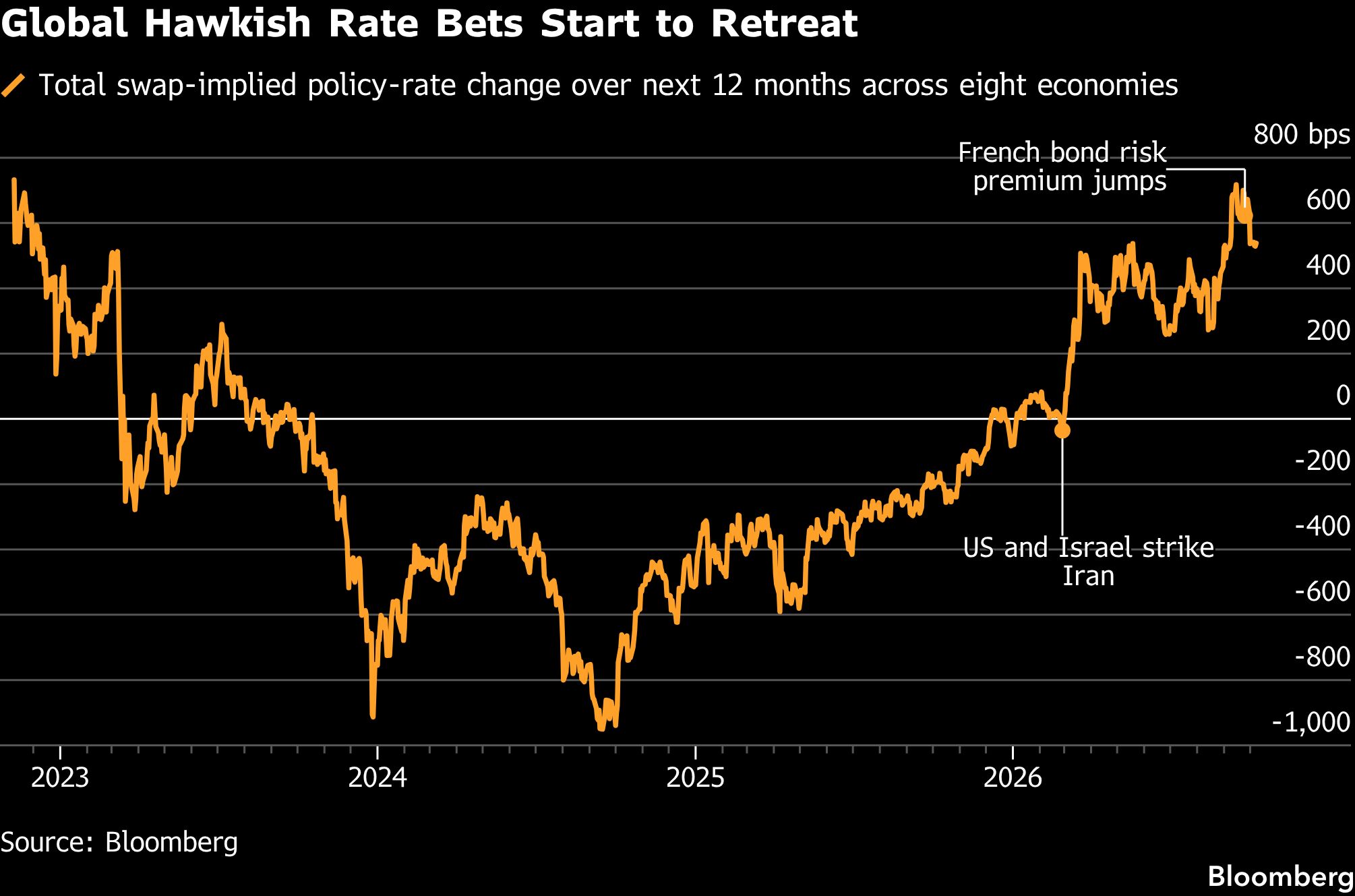
(Bloomberg) -- Bond markets are starting to do some of the lifting for central banks around the world by pushing up borrowing costs themselves, potentially reducing the number of benchmark interest-rate hikes needed to get inflation under control.
Yields have surged to multiyear highs after weeks of selling, tightening financial conditions even without further action from policymakers. Traders have responded by paring rate-hike expectations, with the amount priced into swaps across eight major economies falling by almost 200 basis points since mid-September, according to data compiled by Bloomberg.
There are few signs the bond selloff is abating as concerns over fiscal spending from the US to Japan and France push investors to demand more compensation, while a slew of AI-related debt issuance soaks up capital.
The higher borrowing costs are spilling into mortgages and junk credit, delivering some of the economic restraint central banks would otherwise seek through higher policy rates.
"The more tightening markets price, the tighter financial conditions become," said Ken Orchard, head of international fixed income at T. Rowe Price, which oversees $1.9 trillion. "And the tighter financial conditions become, the less tightening central banks may ultimately need — or be able — to deliver."
Traders are now pricing in a combined 539 basis points of rate hikes across the eight economies, down from 717 basis points in September, when expectations were the highest since 2022, data compiled by Bloomberg show. The biggest pullback has been in Australia, followed by the euro area amid concerns over France's fiscal outlook, then South Korea and Canada.
Red more: Europe's Indebted Nations Are Starting to Blink at Market Wrath
The average yield on global government bonds has climbed above 4% to the highest since 2000, raising the question of where the tipping point lies. Higher yields may do some of central banks' work for them, but if they appear too focused on bolstering growth, investors may doubt their commitment to fighting inflation and demand an even bigger premium to hold longer-dated debt.
"Central banks would ultimately have to balance the growth mandate with near-term inflation risk," said Yuxuan Tang, Asia head of rates and foreign-exchange strategy at JPMorgan Private Bank. "We think most rates markets are now overpricing the risk of further hikes, given the increasing downside risks to growth from the war's repercussions."
Topics in this story
Gathered from external sources. Rights to this text belong to whoever originally published it.