How US ally Oman got caught in Trump’s crosshairs
President Trump’s rising anger with Oman over a pending deal with Iran concerning the Strait of Hormuz is spilling over into the public spotlight. The two Gulf countries say they are poised to make an agreement to set up new shipping lanes in the vital waterway, but Tehran has added steep conditions for Washington to…
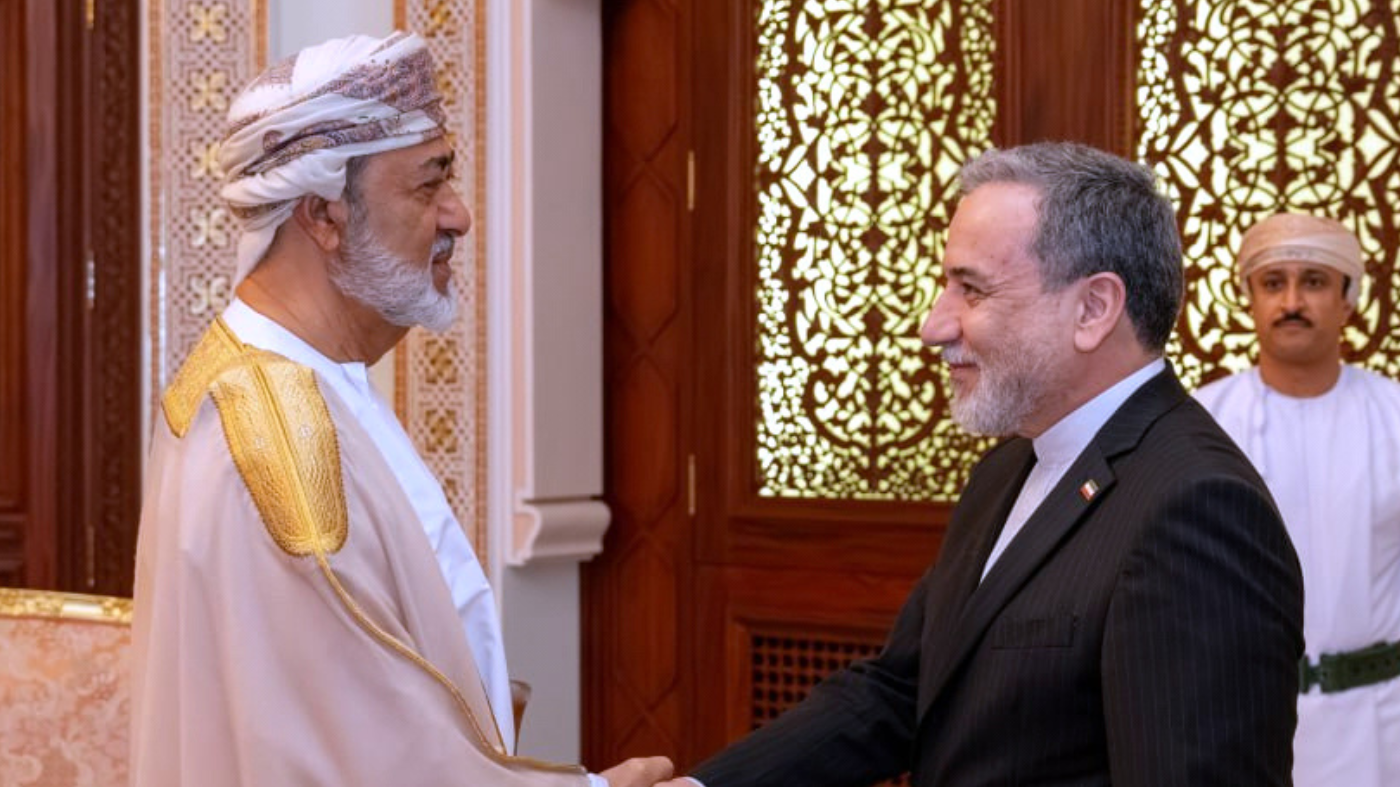
President Trump’s rising anger with Oman over a pending deal with Iran concerning the Strait of Hormuz is spilling over into the public spotlight.
The two Gulf countries say they are poised to make an agreement to set up new shipping lanes in the vital waterway, but Tehran has added steep conditions for Washington to meet before that takes place.
The negotiations aren’t sitting well with Trump, who on Monday threatened to bomb Oman if it “gets in the way” of U.S. efforts to pressure Iran into a broader nuclear deal.
“I think what we’re seeing, and what we’ve continued to see in a variety of ways, is just the outward expression of deep frustration by the administration that they’re still stuck with this Strait of Hormuz problem and no apparent solution in sight,” said Mona Yacoubian, the director of the Middle East Program at the Center for Strategic and International Studies.
“In a way, it’s almost more of a shoot-the-messenger type of a situation,” she told The Hill. “They’re not in a position to ensure U.S. demands with regard to the strait are met.”
The fight for control of the Strait of Hormuz has become the biggest issue of the U.S.-Israeli war on Iran, which began on Feb. 28.
Trump, unable to force concessions from Iran through military means, on Wednesday promised an “Economic D-Day” to pressure Tehran. He has insisted the U.S. has “total control over the strait,” despite Iran’s continued attacks on ships, with Trump even sharing an image this week labeling the Strait of Hormuz as a U.S. territory.
Some control has slipped from Iran’s grasp, as evidenced by reports this week that the U.S. military has quietly established a shipping corridor in and out of the narrow waterway to transport millions of barrels of oil each day.
Roughly 15 to 20 tankers have traversed the strait through a southern channel along the coast of Oman in the operation, which has been underway for the last several weeks and has facilitated the transit of about 10 million barrels a day to the global energy market, Axios reported this week.
Caught in the crosshairs is Oman, which had kept a relatively low profile since its failed efforts to mediate a nuclear deal before the war began. But given its geographic position on the opposite side of the strait, Oman has taken the lead in talks over creating a stable status quo in the key shipping corridor.
After weeks of negotiations, Iran and Oman have sent signals a deal is near. However, Tehran insists that any agreement to set up new shipping lanes can only be ratified once the U.S. withdraws its naval blockade, pays the regime compensation for damages from the war, unfreezes Iran’s assets, lifts sanctions and permanently ends the conflict against Iran and its regional allies.
Those demands largely fall within a 60-day memorandum of understanding signed between the U.S. and Iran in June — a deal that officially ended on Monday — but are conditional on Tehran making concessions on its nuclear ambitions, which it has refused to do.
That has left both sides in a standoff, with Oman caught in the middle as Trump’s frustration grows. John Kirby, a former Pentagon press secretary during the Biden administration, called Trump’s comments on Oman “a head-scratcher.”
“I’m really having a hard time getting my head around why he made those comments,” Kirby said Tuesday on CNN, adding that Oman is working in quiet cooperation with Trump’s son-in-law Jared Kushner and special envoy to the Middle East Steve Witkoff to reach a negotiated deal to open the strait.
“Bullying Oman when they’re really one of the few friends you have left in the Middle East that’s willing to actually do something about getting the strait open just makes no sense at all,” he said. “I think this is him flailing.”
Jon Hoffman, a research fellow with the Cato Institute, said he believes the Omanis are between a rock and a hard place, adding, “anybody is going to run into the exact same problem, which is Trump does not want negotiations. He wants capitulation, and that has been the case since day one.”
He added that he doesn’t believe there’s an actual intention to bomb Oman but that behind the scenes the United States is being pushed by Oman and likely other Gulf states to make some concessions around the strait.
“But for some reason,” Hoffman said, Trump “has staked his flag in the ground, saying that we are not going to allow any type of toll, any type of anything.”
“This is a situation in which the administration just continues to fundamentally misunderstand not only Iran but misunderstand who actually holds the most important cards here, which frankly is not the United States,” Hoffman said.
Topics in this story
Gathered from external sources. Rights to this text belong to whoever originally published it.