Controversy swirls around Trump’s Venezuela business partner
The Trump administration’s Venezuela oil deal puts the federal government in business with a controversial figure from the South American nation. Recent reporting links North American Blue Energy Partners’s Alejandro Betancourt to multiple investigations. But administration officials have defended their partnership, saying that Betancourt is a proven operator in Venezuela’s energy sector. Late last month, the…
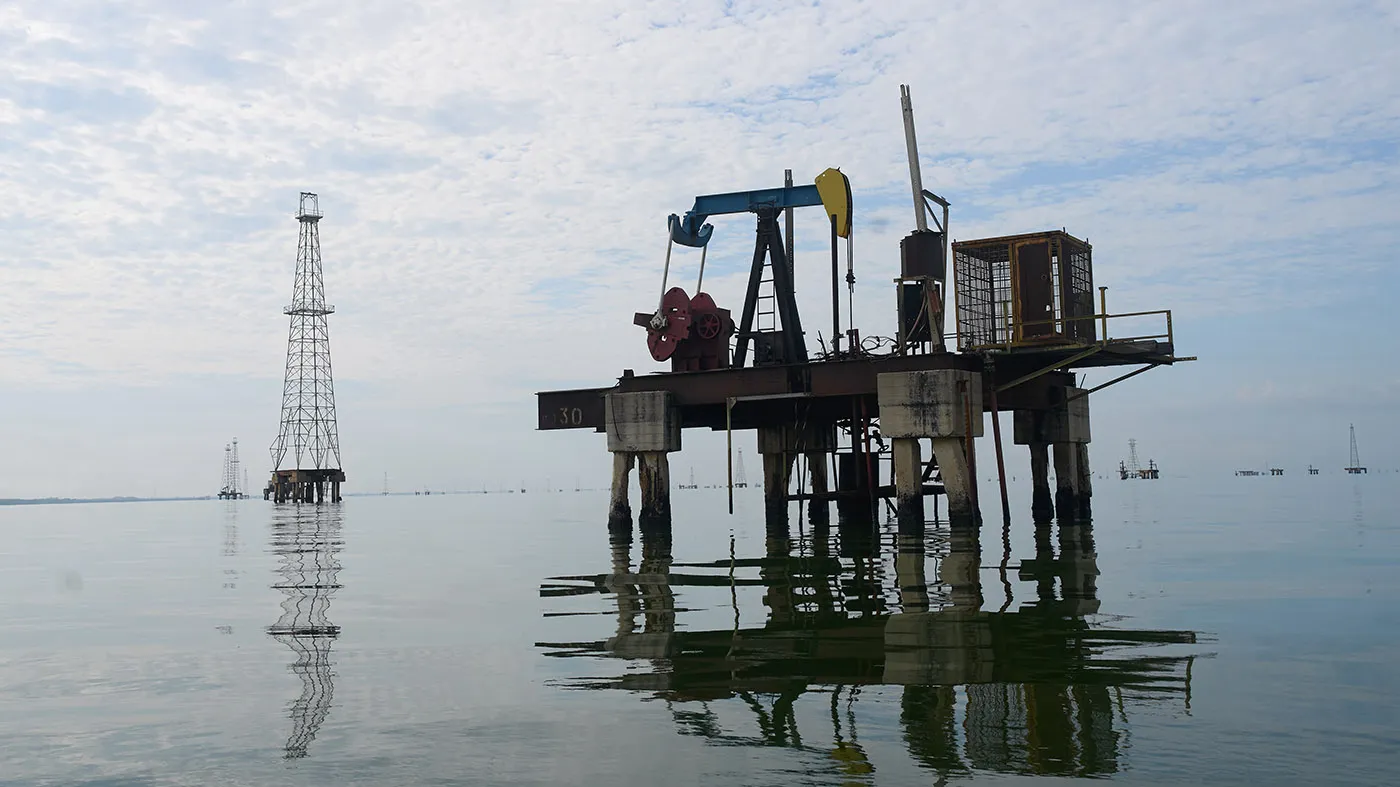
The Trump administration’s Venezuela oil deal puts the federal government in business with a controversial figure from the South American nation.
Recent reporting links North American Blue Energy Partners’s Alejandro Betancourt to multiple investigations. But administration officials have defended their partnership, saying that Betancourt is a proven operator in Venezuela’s energy sector.
Late last month, the Trump administration said it had reached a deal to develop the country’s oil fields , estimated to contain as much as 65 billion barrels of oil, with what was then an unnamed business partner.
Last week, it unveiled additional details , including that the Pentagon’s Office of Strategic Capital is taking a 35 percent stake in company North American Blue Energy Partners.
Several news outlets have reported that Betancourt is the company’s leader. The Washington Post recently reported that U.S. officials intervened in a criminal probe, pushing to avoid criminal charges and end travel restrictions for Betancourt.
The Post also linked him to several investigations in Switzerland, Spain and the U.S. into alleged money laundering, but noted he has not been charged.
Sources told The Miami Herald in 2021, meanwhile, that Betancourt was one of the unnamed alleged conspirators in a $1.2 billion embezzlement case. Attorney Jon Sale told the newspaper, “My client denies any wrongdoing.”
Some critics of the administration’s actions in Venezuela cited the U.S. involvement with Betancourt among their complaints about the deal.
“There is a whole lot that we need to be questioning about Trump’s Venezuela oil deal, because the closer you look, the shadier it gets,” Rep. Mike Levin (D-Calif.) said in a post on X.
“Take a look at the billionaire oil businessman that the Pentagon is partnering with, because this is where the alarm bells start getting louder and louder,” Levin wrote. “Trump’s State Department is backing him, and has even pressured foreign governments to scale back their investigations and travel restrictions on him.”
In a letter to the White House on Friday, Rep. Raja Krishnamoorthi (D-Ill.) wrote that details reported about Betancourt’s history “are extremely concerning, and Mr. Betancourt’s central role in this deal warrants a full accounting of why he was selected as a partner.”
However, the Trump administration has defended their choice.
Asked about Betancourt in a recent interview , Secretary of State Marco Rubio said, “There was no investigation within our system against him.”
Rubio added that North American Blue Energy Partners is a firm with “a track record of production, that has knowledge of the system, and now we have in place a whole series of laws and regulations that will regulate the way in which it is going to be professionalized.”
“This is going to become a professionalized operation with, with jurisdiction and laws that will apply to it so that the money is never used improperly or in a way — that is not adequate or appropriate,” he continued.
A federal official recently told reporters that Betancourt was vetted and is not facing any U.S. charges.
Vijay Vaitheeswaran, director of the energy security and climate change program at the Council on Foreign Relations, said the fact that the U.S. government is now in business with Betancourt is “troubling,” but he added that “to do business in complicated countries, sometimes one has to work with less than savory characters.”
“Venezuela is a complicated country to do business with at the moment, after years of [Hugo] Chavez and [Nicolas] Maduro, and so you don’t have a conventional capitalist business structure left because of Chavismo and the way the business was done through crony capitalism,” he added, referring to the nation’s recent leaders.
After the U.S. captured Maduro at the start of this year, President Trump has repeatedly expressed a desire for Venezuela’s oil . The country is estimated to have more oil beneath its ground than any other nation.
The latest deal advances that goal. Meanwhile, Chevron, which has had longtime operations in Venezuela, also recently announced plans to greatly expand its production there.
Regarding the U.S.’s new joint venture, Jason Marczak, vice president and senior director of the Atlantic Council’s Adrienne Arsht Latin America Center, said that scrutiny of Betancourt means that it’s particularly important that there is transparency going forward.
“It just reinforces the importance of transparency around the financial flows of this deal,” Marczak said.
Topics in this story
Gathered from external sources. Rights to this text belong to whoever originally published it.