Wall Street reacts to the stunning election day Blue Wave: winners, losers and those in between
The views on the markets begin to trickle in post mid-term election Blue Wave.
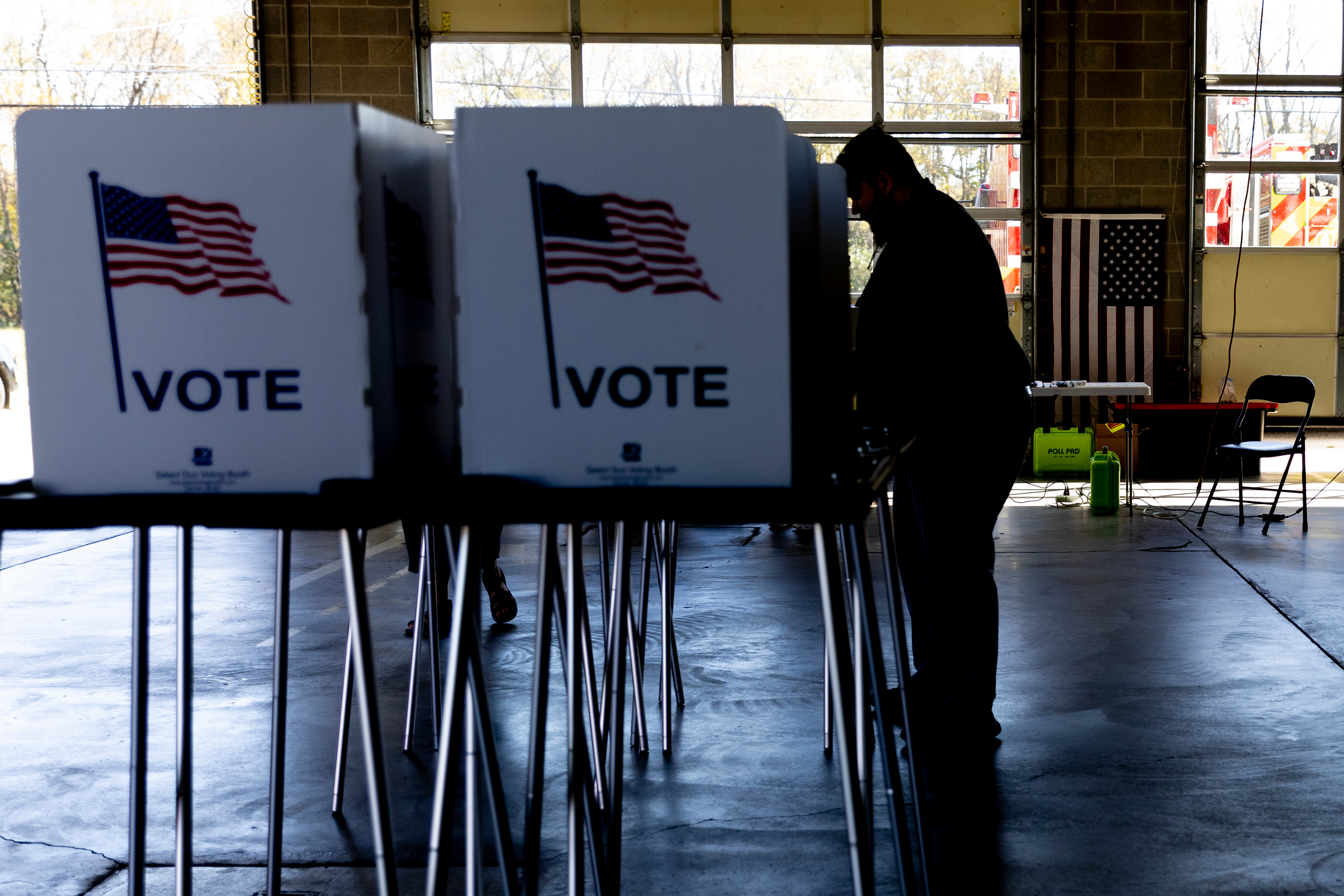
Let the picking of winners and losers begin for Wall Street following the stunning Democratic blue wave that erupted on Election Day late Tuesday.
A powerful Democratic surge swept across the nation on Election Day, securing majorities in both chambers of Congress in a strong rebuke of President Donald Trump's handling of the economy.
Democrats flipped key Senate seats in states including Texas, Kansas, North Carolina and Ohio to reclaim the upper chamber. The party also crossed the 218-seat threshold to capture the House.
Gubernatorial races delivered landmark milestones as well, including Keisha Lance Bottoms winning in Georgia and Gina Hinojosa securing a win in Texas.
The sweeping victories across federal and state levels mark a decisive shift in the national balance of power and could have implications for everything from AI stock darlings like Nvidia ( NVDA ) to the small-cap Russell 2000.
Here are several early Wall Street reactions.
"The overnight price action suggested to us that the election results are unlikely to halt the rotation in leadership in the US equity market that's been underway recently from big cap Growth to small caps and non-TIMT related sectors. Russell 2000 futures, one of the destinations in the rotation trade, outperformed Nasdaq 100 futures and the S&P 500 overnight. We do see the decisive margins in both chambers as a positive for equity markets from the perspective of uncertainty being removed. Even if certain Senate seats are close or the results are challenged, that process is unlikely to alter the balance of power. We still struggle to support the idea that the election will be a major clearing event for markets, however, given the absence of the usual turbulence in the US equity market around the election so far. S&P 500 gains in the years that follow midterms tend to be sub-trend (6.2% on average) in years that didn't see a down 3Q or down 4Q in the midterm year itself." -RBC Capital Markets strategist Lori Calvasina
"Names to Play Defense – APH, ANET, AAPL, CSCO & MSI: 1) Amphenol ( APH ) is our diversified way to retain AI exposure: higher signal, power, and optical content sit alongside strength in defense, commercial aerospace and, industrial, reducing dependence on any single AI architecture or customer cohort. If things go into a recession, this is the name to own given its ability to navigate historical demand volatility better than most other companies. 2) Arista Networks ( ANET ) is our quality AI/networking expression, with exposure spanning back-end AI, front-end and campus deployments; the key debate remains supply execution and revenue conversion against a constructive demand backdrop. Not a cheap stock we concede, but the highest quality asset from a margin perspective. Plenty of growth across front-end cloud, campus, and new customer wins (GOOG, etc.) to help sustain growth. 3) Apple ( AAPL ) offers a different earnings driver through iPhone mix/pricing and Services rather than data-center construction; our work points to resilient demand, with gross-margin recovery and price elasticity the key tests. This is THE name to keep working when investors want to get defensive. 4) Cisco ( CSCO ) has been a relative laggard, and reality is there are plenty of tailwinds here across its core campus product with a refresh cycle, along with tailwinds on the optics and Silicon One side. 5) Motorola Solutions ( MSI ) role in delivering mission critical solutions to public safety agencies provides the company with a macro-resistant (non-AI dependent) business model while Silvus/D-Fend align the company with new growth vectors." -EvercoreISI analyst Amit Daryanani
Topics in this story
Gathered from external sources. Rights to this text belong to whoever originally published it.