Vance says foreign workers at Microsoft will no longer be able to apply for permanent status
Vice President Vance said Thursday that foreign workers at Microsoft will no longer be able to apply for permanent resident status in the U.S. through an employer-based program, after he accused the company of abusing the process. The tech giant has been suspended from the permanent labor certification program, referred to as PERM, which allows…
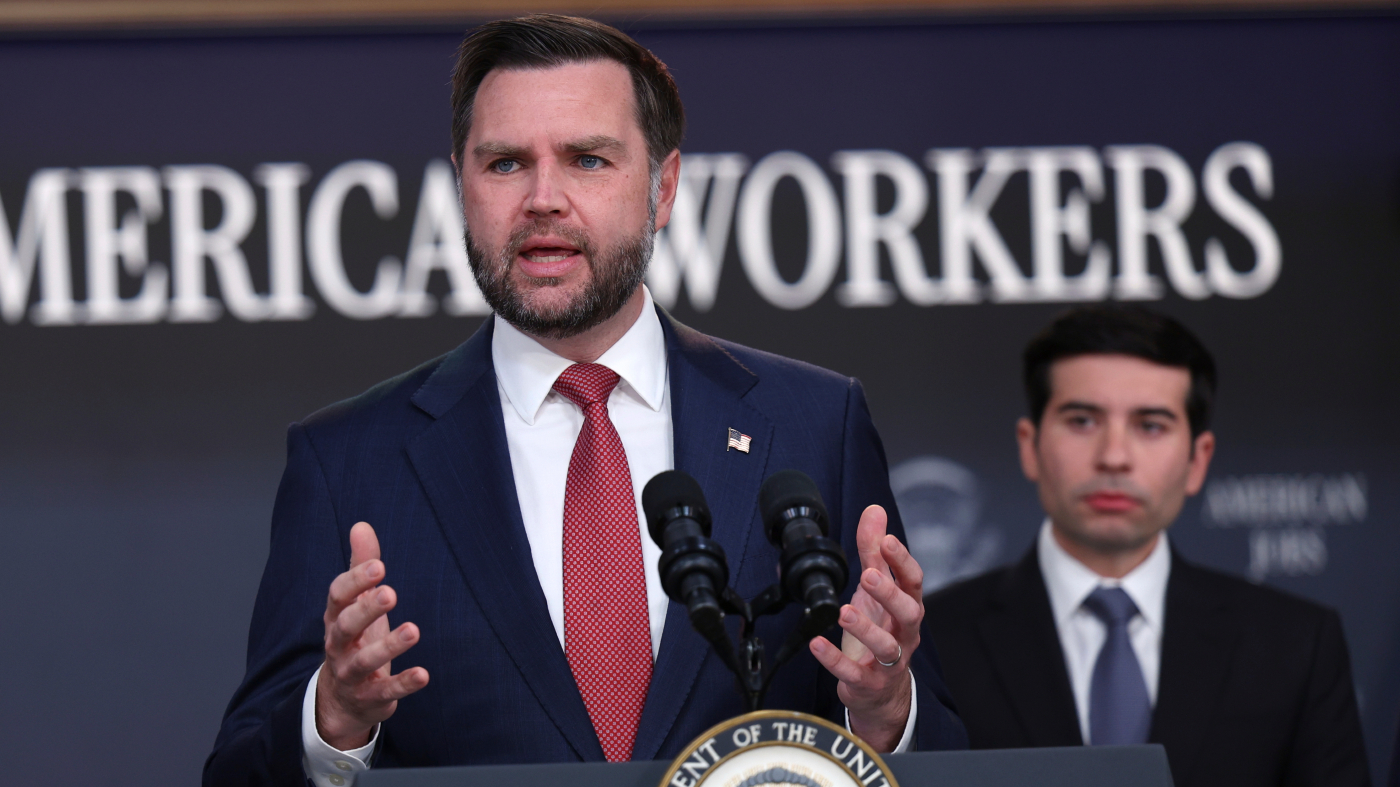
Vice President Vance said Thursday that foreign workers at Microsoft will no longer be able to apply for permanent resident status in the U.S. through an employer-based program, after he accused the company of abusing the process.
The tech giant has been suspended from the permanent labor certification program , referred to as PERM, which allows companies to hire foreign workers to work permanently in the U.S.
“There has been no company in the United States, unfortunately, that has abused this system more than Microsoft,” Vance said at a press conference.
“Now, our message to Microsoft and to any other foreign or domestic corporation is quite simple,” he added. “We obviously want you to thrive in the United States of America.”
“We want people to invest in the United States of America, particularly the American technology sector. We are the biggest boosters of your industry. We want you to continue to grow and to employ a lot of people, but we want you to employ American workers.”
Vance accused Microsoft of benefiting heavily from both the PERM program and H-1B visa program last year, while also laying off thousands of American workers. The H-1B visa is used to hire international talent for specialty jobs.
Microsoft argued Thursday the “vast majority” of its employees in the U.S. are Americans, adding that 80 percent of its applications to the H-1B visa program last year were to extend or change the status of existing employees.
The company’s remaining filings for new employees were for individuals already legally in the U.S., it added.
“Microsoft only files H-1B petitions for those who meet the rigorous standards of this visa category,” a spokesperson said in a statement. “We pay our employees some of the highest compensation in the tech sector, and our wages are among the highest of all H-1B filings. We pay our H-1B employees the same as any other employees doing comparable work.”
“Microsoft succeeds as a global technology leader by developing the world’s best technology workforce,” they continued. “We do this by strengthening this country’s talent pipeline, hiring American workers, and attracting the best talent from around the world.”
Labor Secretary Keith Sonderling said Thursday that Adobe, Cognizant, Infosys and several other IT firms were also suspended from the PERM program.
The Trump administration has previously taken aim at foreign hiring through the H-1B visa program, which is used to bring on international talent for specialty jobs, amid a broader push to curb immigration.
President Trump announced last year that he was raising the fee for the H-1B visa application to $100,000. The move sparked concerns in Silicon Valley, which is reliant on the program to recruit highly skilled workers from overseas.
A federal judge blocked the administration from imposing the fee in June. But the Department of Homeland Security proposed a new $103,265 fee on H-1B visas in late August.
Topics in this story
Gathered from external sources. Rights to this text belong to whoever originally published it.