Trump Barges Into Nvidia's Internal Decisions, Opens Door to Even More Federal Meddling in the Economy
Jensen Huang’s reinstatement means Washington will be intervening even more in the chip business.
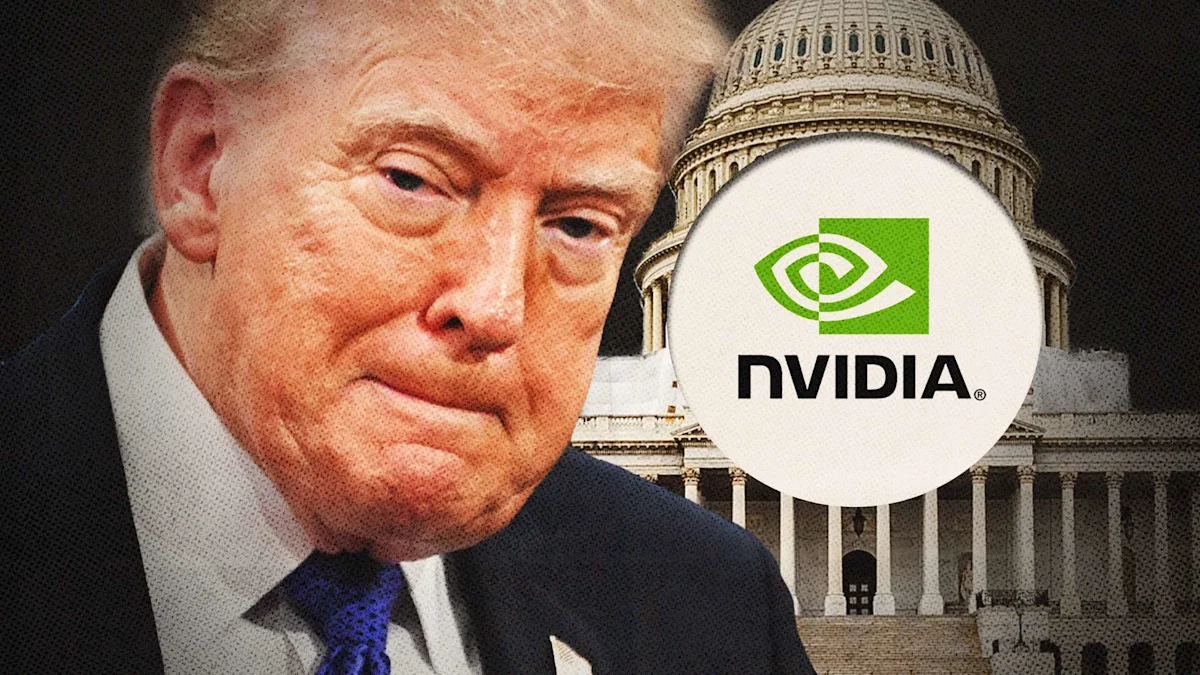
On Monday, Nvidia's board of directors announced that it had "voted unanimously" to reinstate Jensen Huang as president, CEO, and board member. The decision—which happened 11 days after Huang resigned following allegations that he had an extramarital affair with an alleged Chinese spy—has shown just how entangled the federal government has become in the private sector, especially during the second Trump administration .
The decision to reinstate Huang has surprised some in Washington, D.C., and on Wall Street. On an earnings call with investors last Tuesday, Harvey Jones, Nvidia's board chair, said the board did not "intend to reinstate Jensen as CEO." On Monday, the board reversed course. It said its decision followed a "series of discussions and meetings" with Huang, during which it felt "satisfied" with his "candor and ability to lead" Nvidia. In reaching its decision, Nvidia's board said it "received input from senior levels of the United States government" and was "confident that Mr. Huang's reinstatement poses no national security risk." Semafor reported that hours before Nvidia's board made its final decision, President Donald Trump "dialed into Nvidia's board meeting to argue for Jensen Huang's return." The outlet also reported that Vice President J.D. Vance was "personally engaged" in Nvidia's decision to reinstate Huang, because Vance and Trump believe that Huang is an "effective counterbalance against the incredible and increasing power of OpenAI and Anthropic."
The stock market has rallied in response to Huang's return. So too have lawmakers, who are calling for more intervention in the AI industry.
Following Nvidia's announcement, Sen. Elizabeth Warren (D–Mass.) wrote that Congress should pass "bipartisan export control bills and make sure NVIDIA does not lobby to kill that legislation and put our national security at risk." In the House, Rep. Don Bacon (R–Neb.) said Nvidia should have "moved on without Huang and ignored the Administration's inexplicable desire to save Huang." Bacon also called for an investigation into "who approved high end computer chips sales to China." Warren and Bacon aren't alone in thinking export controls are necessary to maintain America's position in the AI race. In August 2025, and again in December of the same year, the Trump administration tried to curb sales to China by instituting export controls on Nvidia's advanced semiconductor chips, which it later eased.
Despite bipartisan calls from lawmakers to strictly regulate Nvidia—and Treasury Secretary Scott Bessent telling Fox News that Nvidia needed a "dramatic shake-up" and alleging it had a "culture of non-compliance"—Trump remains a staunch supporter and advocate of Huang. In a Truth Social post sent after the decision was announced, Trump said that the "United States Government has no reason to believe that Jensen's return to NVIDIA poses any risk to National Security." The president also said that Attorney General Todd Blanche had "confirmed that the U.S. Government does not possess evidence" that Huang "engaged in any unlawful conduct."
Topics in this story
Gathered from external sources. Rights to this text belong to whoever originally published it.