US ends military mission in Iraq
U.S. Central Command (Centcom) on Wednesday announced the departure of U.S. forces from Iraq, ending its 12-year military mission. Centcom stated that all U.S. forces and equipment departed Erbil Air Base in northern Iraq as part of a yearlong wind-down of Operation Inherent Resolve and a transition “to a U.S.-Iraq bilateral defense relationship.” This will…
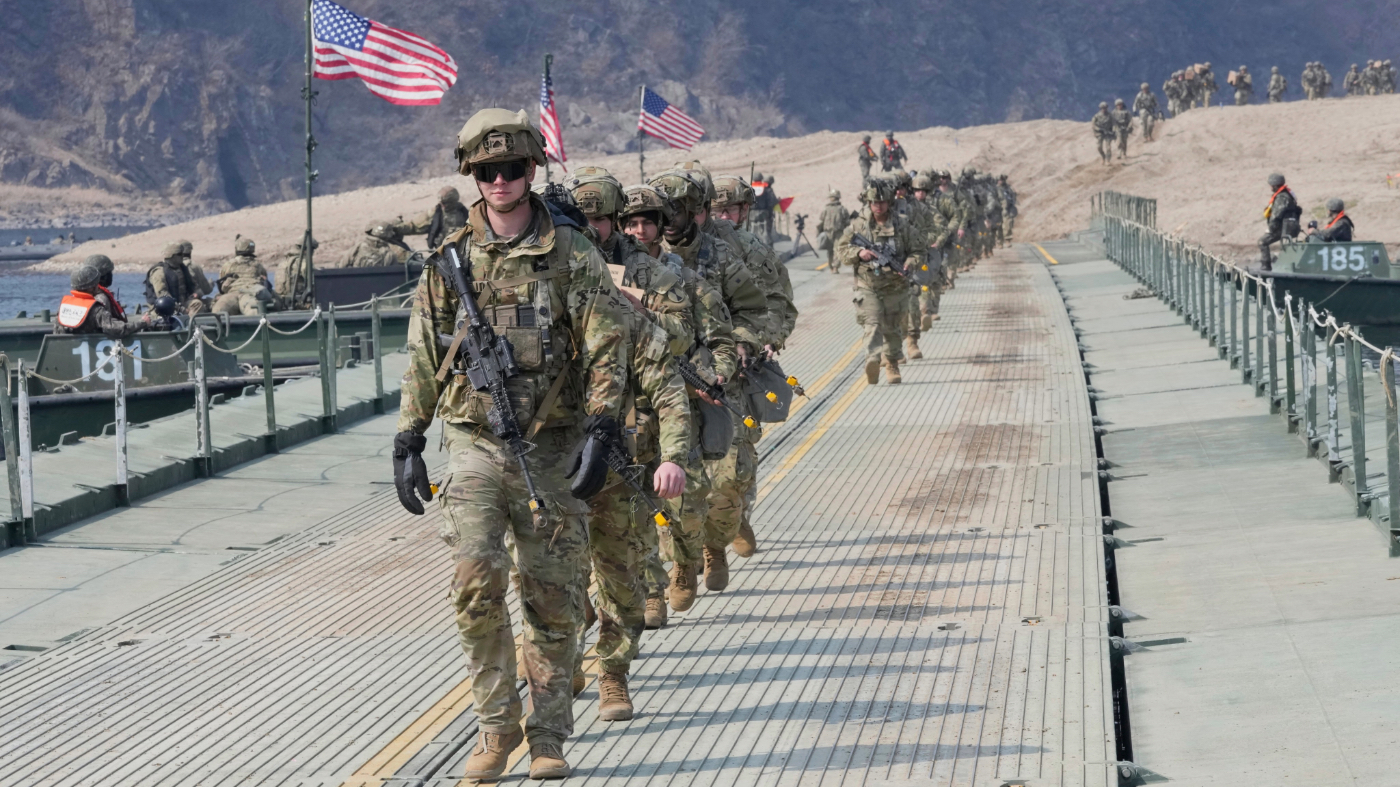
U.S. Central Command (Centcom) on Wednesday announced the departure of U.S. forces from Iraq, ending its 12-year military mission.
Centcom stated that all U.S. forces and equipment departed Erbil Air Base in northern Iraq as part of a yearlong wind-down of Operation Inherent Resolve and a transition “to a U.S.-Iraq bilateral defense relationship.” This will continue to operate in Jordan while U.S. forces counter ISIS forces in Syria.
“Job well done to the tens of thousands of American service members, diplomats, and civilian personnel who answered the call in Iraq,” Centcom head Adm. Brad Cooper said in a statement .
“Because of your grit, sacrifice and professionalism, ISIS no longer poses a systemic threat to Iraq’s national security and Iraqi security forces, including the Peshmerga and other Iraqi Kurdistan Region security forces, now possess the capacity, leadership, and operational independence to unilaterally manage threats to their homeland.”
Cooper said that the U.S. has handed “full primary responsibility for Iraq’s security to the government and Iraq and the brave people of Iraq,” while U.S. troops in the region will maintain “vigilance and readiness” in “protecting the U.S. homeland and strengthening regional security.”
Former President Biden struck an agreement with the Iraqi government in 2024 to withdraw as the U.S. has attempted to shift its focus from the Middle East toward Asia, The New York Times reported . The Trump administration has followed through with this, even as conflicts such as those in Gaza, Yemen and Iran have kept the U.S.’s focus firmly on the region.
Iranian-backed groups celebrated the exit from Iraq, while Iraqis in the Kurdish region fear ISIS could see a resurgence if emboldened by the U.S. exit, The Associated Press reported .
The U.S. invaded Iraq in 2003, seeking to oust dictator Saddam Hussein and his regime. The war lasted years after former President George W. Bush, who led the U.S. effort without a formal declaration of war, left office.
The Iraq war drew protests as Americans accused the Bush administration of war crimes and of lying about Hussein having weapons of mass destruction. More than 4,500 U.S. service members were killed and between 186,000 and 210,000 Iraqi civilians died, according to Brown University’s Watson School of International and Public Affairs.
Former President Obama withdrew troops in 2011 but returned three years later after ISIS used the power vacuum, despite a new Iraqi government, to seize much of the country’s territory. The agreement with Biden came into existence after years of reducing ISIS’s numbers.
Iraqi Prime Minister Ali al-Zaidi told the Times he will further contain ISIS militias and bring their remaining territories under state control by mid-2027. He told the outlet in a recent interview that disarming ISIS is not an option but a “necessity.”
“Every Iraqi today wants his country to have complete sovereignty; they want power to be exclusively in the hands of the state,” he said, adding that he wants to end “the law of the jungle.”
Topics in this story
Gathered from external sources. Rights to this text belong to whoever originally published it.