How political tensions over Trump family crypto ventures derailed Clarity Act
President Trump and his family’s sprawling empire of cryptocurrency businesses cast a long shadow over efforts this year to negotiate a bill regulating the industry. They arguably weighed down bipartisan talks in the end, which ultimately disintegrated ahead of a Senate vote last week on the Clarity Act that failed to advance the bill. Senate…
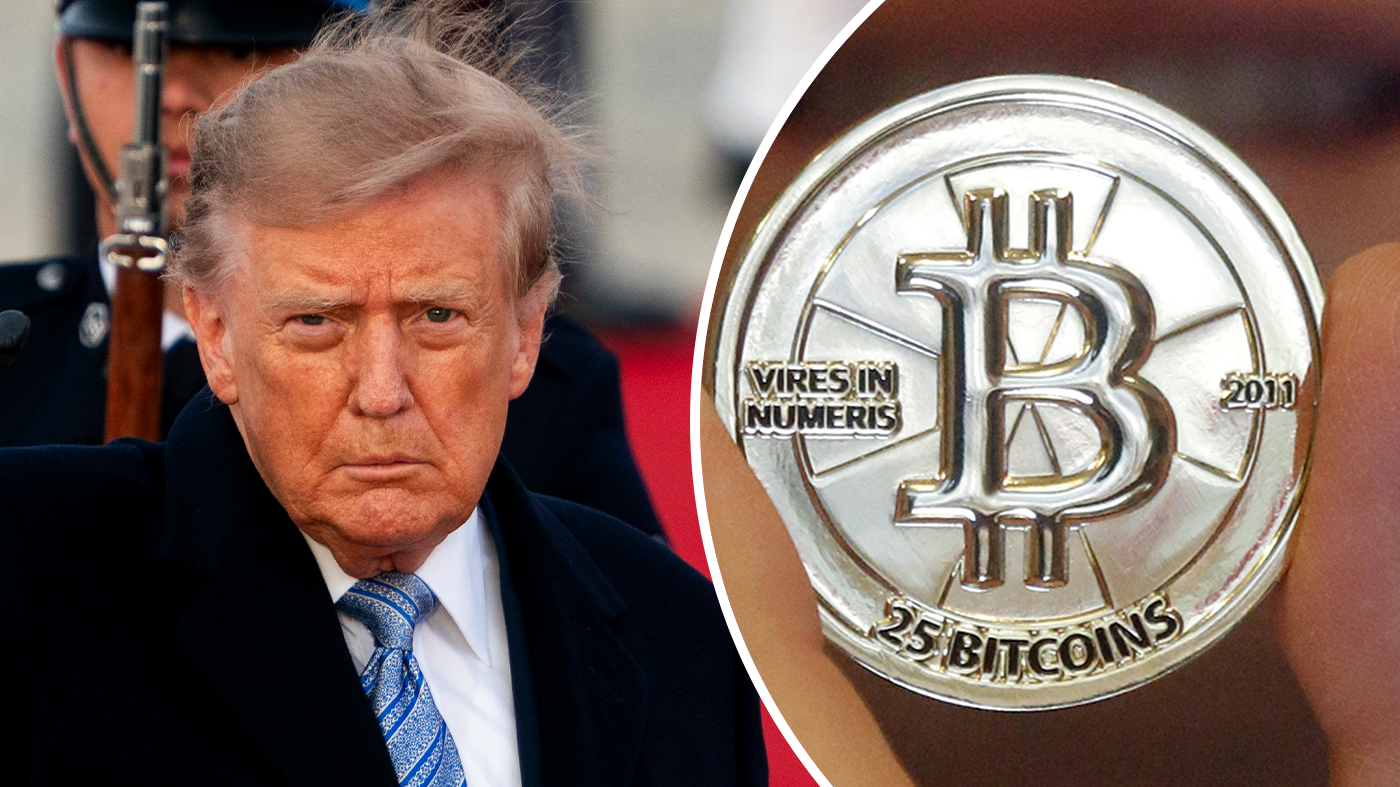
President Trump and his family’s sprawling empire of cryptocurrency businesses cast a long shadow over efforts this year to negotiate a bill regulating the industry.
They arguably weighed down bipartisan talks in the end, which ultimately disintegrated ahead of a Senate vote last week on the Clarity Act that failed to advance the bill.
Senate Democrats across the board refused to vote for the legislation amid concerns that it failed to sufficiently rein in the president and his family’s involvement in the industry.
The timing of the vote became “increasingly problematic” given the upcoming midterms, said Chris Niebuhr, a senior research analyst at Beacon Policy Advisors.
“The fact that we got so close to the election before even a first preliminary vote happened on the bill, just increased the salience of all of the political issues around the bill, chief among which was the president’s crypto business,” he added.
Ian Katz, managing director at Capital Alpha, noted that this dynamic “made it harder for the Democrats to go along with the bill or easier for them to say no. The wording of that depends on your perspective.”
A White House official blamed Democrats for the failure.
“The Democrats are to blame for the failure of the Clarity Act because they put political games over doing what’s best for American technology and innovation,” the official said in a statement. “The Trump Administration agreed to the most comprehensive and wide-ranging ethics provision in history.”
When Trump first embraced the world of crypto during his 2024 campaign, it marked a seismic shift for an industry that had long been on the outs in Washington.
After years of feuding with the Biden administration, crypto firms suddenly had a powerful new ally who vowed to oust their chief nemesis — Securities and Exchange Commission (SEC) Chair Gary Gensler.
Once Trump took office, he did oust Gensler, and he nominated crypto-friendly officials to take over key roles. The administration abandoned numerous investigations into and lawsuits against crypto companies.
But this push was almost immediately complicated by the Trump family’s growing portfolio of crypto ventures.
Just before taking office, both the president and first lady Melania Trump launched a pair of meme coins, digital tokens that hold no inherent value and are typically based on internet trends.
This ruffled some feathers among some in the crypto industry amid concerns that the move could undermine the administration’s regulatory efforts.
The meme coins would rear their head again within months, when Trump hosted a private dinner for top investors in his token, $TRUMP. The event faced widespread criticism from Democrats, who slammed it as a “pay-to-play scheme.”
The Trump family’s main crypto venture, World Liberty Financial, also proved highly controversial.
Launched by Trump and his two eldest sons just weeks before the 2024 election, the company initially issued tokens before moving into stablecoins, cryptocurrencies tied to more stable assets like the U.S. dollar.
World Liberty Financial’s stablecoin became a major flashpoint after the company announced that it would be used by the Emirati investment firm MGX to invest $2 billion in the crypto exchange Binance.
The move raised eyebrows, particularly when the Trump administration granted the United Arab Emirates (UAE) access to hundreds of thousands of advanced AI chips just weeks later. The AI company set to receive many of these chips, G42, is controlled by an Emirati royal who is also connected to MGX.
Binance’s involvement in the transaction also came under scrutiny after Trump pardoned the company’s founder Changpeng Zhao last November. Zhao previously pleaded guilty to failing to maintain an effective anti-money laundering regime.
Trump’s annual financial disclosure, which was released in late June, added fuel to the fire. It showed the president made more than $1 billion from his various crypto ventures last year.
Stablecoin bill succeeds with Democratic support
Democrats repeatedly slammed the Trump family’s crypto moves and pushed for restrictions on their involvement in the industry in an initial stablecoin bill known as the GENIUS Act — the Guiding and Establishing National Innovation for U.S. Stablecoins Act.
But the measure ultimately passed the Senate and House with sizeable Democratic support last year. It marked a key early victory for the industry, but the crown jewel for crypto was always the Clarity Act.
Negotiations over this bill, which aimed to provide a regulatory framework for the rest of the market, got underway soon after the passage of the stablecoin measure.
The same group of about a dozen crypto-friendly Democrats who were involved in GENIUS Act discussions joined their Republican counterparts in the effort to hash out market structure legislation.
“In mid-2025, Democrats were interested in passing the bill,” Niebuhr said. “And I think throughout the process, you saw this group of Democrats who voted for the Genius Act, who had a legitimate interest in creating long-term guardrails for the industry.”
From the beginning of Clarity Act negotiations, industry players and analysts warned that politics could become a problem the longer negotiations dragged on, particularly as the midterm elections neared.
“Politics played a very significant role in the bill’s ultimate demise, but one that might have been avoidable if you had adjusted the timing,” Niebuhr added.
Talks progressed haltingly through the end of 2025, and by early 2026, Republicans were eager to move the legislation out of committee.
But a Senate Banking Committee markup was canceled at the last minute in January following pushback from the crypto industry to a stablecoin provision.
The provision was a major source of tension between the banking and crypto industries and delayed the process by several months. Senators ultimately reached a bipartisan agreement in early May, although the banking industry continued to oppose the language.
This issue chipped away some GOP support for the bill, further complicating its path forward.
“It was going to be hard to get enough Democrats to get across the finish line, even if you had all of the Republicans,” Katz told The Hill.
As time went on, Democrats also began fearing the progressive flank of their party more, he noted, adding that “if they were to go along with this bill, there would be a lot of criticism from their left.”
Many both in and outside of Congress viewed lawmakers’ monthlong August recess as a key deadline to get the Clarity Act across the finish line. When the Senate left town last month without holding a vote, analysts noted that the bill’s prospects had dimmed significantly.
Senate leaders teed up the measure for a mid-September vote, even as the ethics issue remained unresolved. Just days before the vote, Republicans unveiled updated bill text, with a new White House-approved ethics provision.
But Democrats argued it didn’t go far enough and blocked the Clarity Act from clearing a procedural hurdle on the Senate floor. In the wake of the vote, they accused Republicans of cutting talks short, while GOP senators accused their colleagues across the aisle of moving the goal posts on the issue.
If the bill had made it to the Senate floor earlier in the year, “I don’t think politics would have played a role in the way that it did,” Niebuhr said.
“It would have played a role,” he continued. “There would have still needed to be an ethics provision, but it wouldn’t have been a prohibitive force, whereas in September it absolutely was.”
Topics in this story
Gathered from external sources. Rights to this text belong to whoever originally published it.