Sunrises before 5 a.m.? How permanent standard time would impact summer mornings
Summer mornings could feel a lot different if we stopped observing daylight saving time during part of the year.
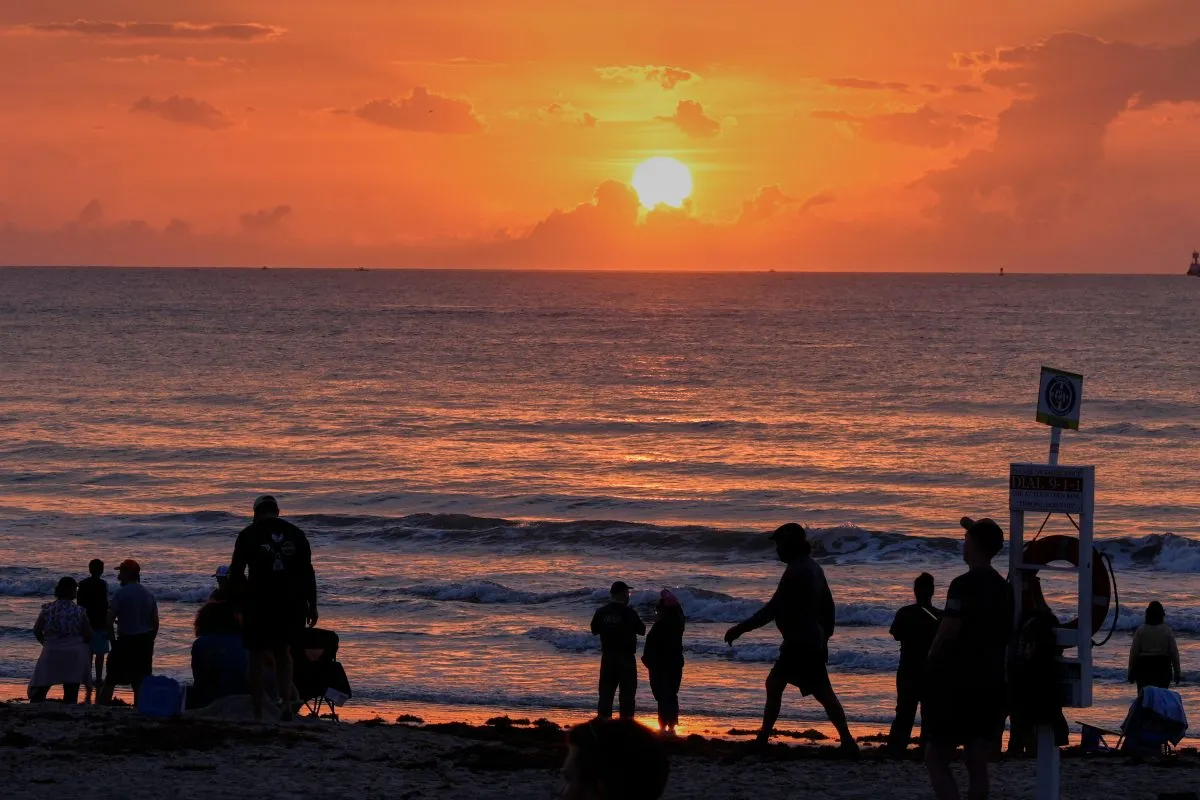
(NEXSTAR) – While it’s permanent daylight saving time that the U.S. is closest to adopting, there remains a bill in Congress that could lock the clocks on standard time.
As of late August, the Sunshine for Our Kids Act of 2026 remains in the House Committee on Energy and Commerce. If it were to be enacted into law in its current form, standard time would become permanent , but states would be allowed to make daylight saving time permanent (states can only opt to observe year-round standard time at present).
Several health experts have spoken out in favor of permanent standard time due to the benefits it could have on our overall well-being . But opponents have pointed to how the move would alter summer sunsets .
Standard time is the time we observe from early November until early March. That would mean our clocks would not fall back an hour in March, causing our spring, summer, and early fall sunrises and sunsets to slide forward an hour.
For many, that would mean summer sunsets before 8 p.m. In some areas, the summer sun would set earlier than 7 p.m.
Permanent standard time would, of course, also impact our summer sunrises.
Across June, July, and August – what we’re broadly defining as “summer” – the earliest sunrises in the U.S. at present range between around 5 a.m. and 6:30 a.m. If standard time were to become permanent, those times would shift to 4 a.m. to 5:30 a.m.
In Green Bay, Wisconsin, for example, the earliest sunrise the city sees during the summer is 5:07 a.m. Under permanent standard time, that would become 4:07 a.m. For 79 of the 92 summer days we analyzed, the sun would rise before 5 a.m. in Green Bay.
The interactive table below shows how summer sunrises would change across 33 cities under permanent standard time. On the far right side, you can see the earliest summer sunrises these cities currently experience, and what that time would become under permanent standard time.
Omitted from the table but potentially the most impacted is Alaska. In Juneau, there would be 48 sunrises before 4 a.m. through June and early July. Only 20 of the 92 sunrise times reviewed by Nexstar would happen after 5 a.m. Juneau’s earliest summer sunrise would happen at 3:20 a.m.
The table also doesn’t consider the states that have enacted permanent daylight saving time legislation already , making them likely to pursue the same plan if the Sunshine for Our Kids Act were to pass.
As strange as it may be to wake up to such early sunrises during the summer, health experts have argued that it is likely what your body prefers . Having more sunlight exposure in the morning is crucial for our melatonin system, Dr. Alaina Tiani, a clinical health psychologist who specializes in behavioral sleep medicine at the Cleveland Clinic’s Sleep Disorder Center, previously told Nexstar. It can also prove beneficial for our circadian rhythm.
“When our circadian rhythms are working well, they help us anticipate our day,” Dr. Karin Johnson, spokesperson for the American Academy of Sleep Medicine (AASM) and co-chair of the Coalition for Permanent Standard Time , said during a Senate hearing on daylight saving time last year .
On hotter summer days, observing standard time may also offer an advantage that most of one state is already taking advantage of : earlier reprieve from the hot sun. A contributing factor for Arizona’s decision to lock its clocks on permanent standard time is that the sun will set earlier in the day, helping those sweltering hot days not feel so long.
It’s difficult to say whether the Sunshine for Our Kids Act will pass out of the House committee it’s in. The House already passed the Sunshine Protection Act, which would make daylight saving time permanent in the U.S. That bill is now in the Senate, where it faces an uncertain future, despite support from President Trump .
Regardless of whether you ( or your lawmakers ) prefer permanent daylight saving time or permanent standard time, the study – published in the Proceedings of the National Academy of Sciences – determined that changing the clocks twice a year is the worst of the three options.
Without any quick action in Congress, clocks will “fall back” an hour on the earliest possible date this year.
Topics in this story
Gathered from external sources. Rights to this text belong to whoever originally published it.