Newsom amasses fundraising machine that could power 2028 bid
If California Gov. Gavin Newsom enters the 2028 presidential race, as many Democrats expect, he’ll walk in with an asset other White House hopefuls will inarguably envy: A small-dollar fundraising and organizing machine powered by a massive and ever-growing contact list of potential supporters across the country. Even before last year’s successful Proposition 50 redistricting…
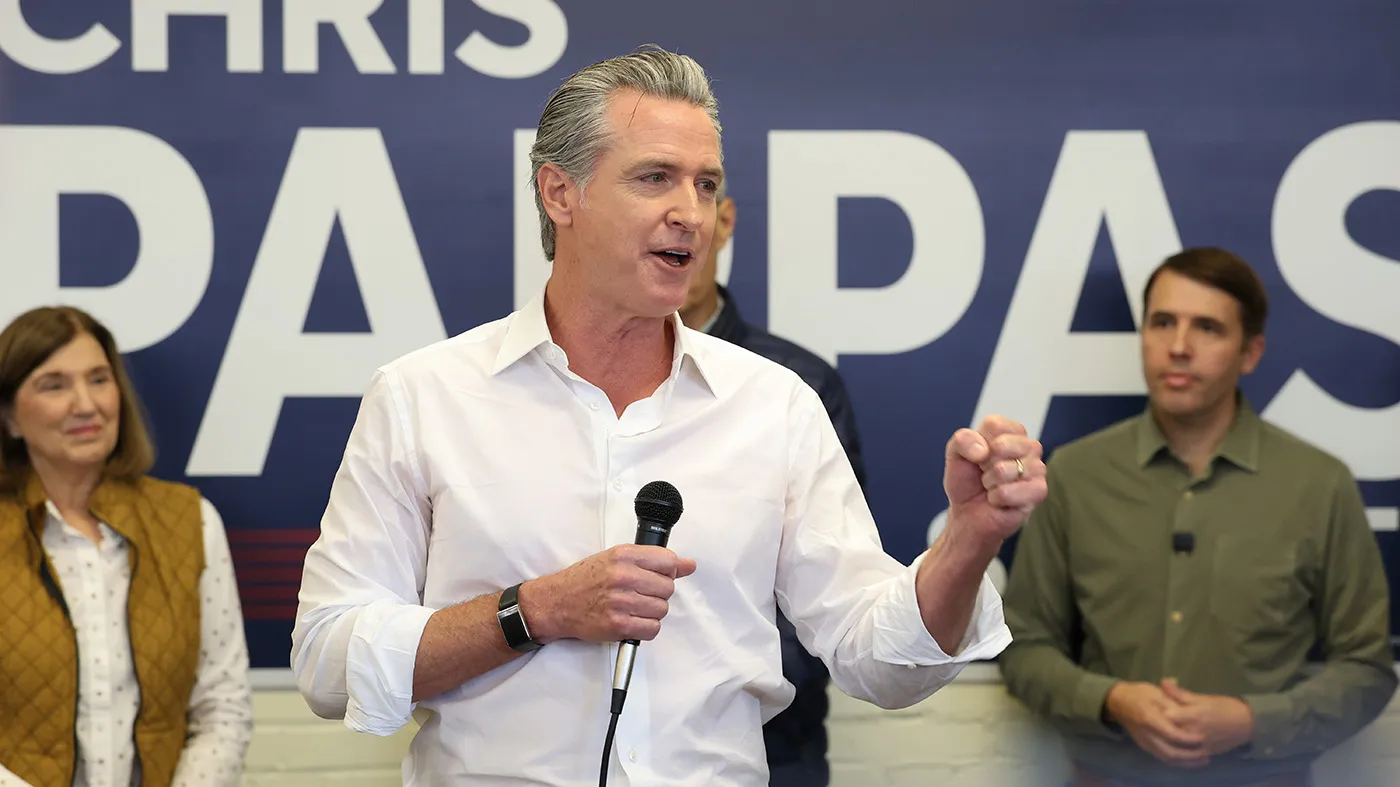
If California Gov. Gavin Newsom enters the 2028 presidential race, as many Democrats expect, he’ll walk in with an asset other White House hopefuls will inarguably envy: A small-dollar fundraising and organizing machine powered by a massive and ever-growing contact list of potential supporters across the country.
Even before last year’s successful Proposition 50 redistricting effort in his state, Newsom had amassed more than 17 million email addresses, and his advisers say it’s only multiplied exponentially since then as Democrats feverishly donated in large numbers to redraw California’s electoral maps.
That list — advisers declined to provide its current size — has already helped Newsom raise more than $6.8 million during the midterm election cycle, Newsom’s advisers said. There have been more than 305,000 contributions this cycle, with $22.47 being the average donation, the advisers tell The Hill.
Newsom’s team said the bulk of the fundraising appeals have been funneled solely toward other Democratic candidates and causes. The governor, they say, remains hyper-focused on helping Democrats win in the midterms. Of the $6.8 million total, $1.85 million has been raised for 15 state Democratic parties, they said. And $2.2 million has been raised for Southern Democrats to help build infrastructure in the Deep South, which has been a sore spot recently for the party.
But should the governor launch a White House bid, the list would give him not only an automatic financial shot in the arm but a significant edge on outreach and organizing of potential supporters.
“Oh, of course, that’s a key advantage he’ll have in a presidential race,” said Garry South, a longtime Newsom ally who advised him in his first gubernatorial race. “First, any successful candidate in California starts out with a bigger donor base than anyone from another state because we’re the biggest state. But his national fundraising for Prop 50 provides him with a national fundraising base on top of his proven California donor list.”
Newsom has been building the list for years, dating back to 2021 when he was facing a recall. Back then, his list was relatively meager by comparison, with a quarter of million contacts.
By 2022, Politico reported that he had grown the list to 6 million and has supercharged it since, after he hired Tim Tagaris, who helped manage Sen. Bernie Sanders (I-Vt.)’s digital operation on his 2016 presidential campaign and helped turn Newsom’s list into its own potent political weapon.
In that time, the governor has reached out to supporters on a number of topics, including his various fights with Trump and Republicans on a series of fiery issues.
During the 2024 cycle, for example, Newsom had single-handedly poured more than $21 million into Democratic efforts and candidates with his small-dollar fundraising apparatus.
Other potential 2028 contenders including, Rep. Alexandria Ocasio-Cortez (D-N.Y), have also built powerful small-donor operations. Ocasio-Cortez, for example, raised more than $37 million during the current election cycle, with most of it coming from contributions of $200 or less.
At the end of September, her campaign reported more than $17 million cash on hand, giving her a strong foundation for what comes next. Ocasio-Cortez is weighing her next moves, including whether she’ll run for president or a New York Senate seat.
The way money plays in politics has changed over the years, and candidates like to show the electorate they’re not just relying on mega donors and super PACs to help win races.
“Money’s important but not determinative — just look at the literal billions the GOP is spending on midterm races, and still failing to close the gap,” said Democratic strategist Christy Setzer. “Money can buy name recognition but also a negative label from voters, who generally hate self-funders and the way money is so infused in our politics.
“A large amount of small dollar donations, however, are important as a show of strength and momentum; it’s a key reason AOC is mentioned in 2028 conversations,” Setzer said.
The appeals to the list are constant but targeted and intentional, Newsom allies say. In one missive in August, the governor sought support for two candidates in red states, former Rep. David Jolly in Florida and Jermaine Johnson in South Carolina.
“We’ve raised a lot of money for southern states and candidates running in southern states this year, and there’s a good reason for it,” Newsom said in one email. “These are places long-neglected by the Democratic Party.”
But he went on to explain in the email that “the only way back for those states is if we have the courage to fight — cycle after cycle — until we get it done.”
And Newsom’s team says the donations have made palpable changes — including in key states the governor would need to win in a 2028 presidential race. When he raised more than $579,000 for New Hampshire Democrats this cycle, part of that money helped fund a new Democratic field office in Nashua, along with support for state candidates down the line.
In South Carolina, the first state where Democrats will vote in the 2028 primaries, Newsom made some of his largest investments, his team said. His list helped raise more than $342,000 for the state’s Democratic Party; $53,000 for Johnson, the gubernatorial candidate; and more than $61,000 for six state House candidates.
Newsom’s team said that the legislative investments in South Carolina help telegraph his operation successfully: Candidates with small fundraising budgets can receive roughly $10,000 each, which is, in some cases, the entire budget of their campaigns.
In Nevada, another early state for Democrats, Newsom put the list to work to not only fundraise but build events in the state. When he appeared there with Nevada Attorney General Aaron Ford — who is running for governor — and Rep. Steven Horsford (D-Nev.) this summer, his team used the list to rally volunteers and open a new field office in the state.
And in his home state, on the heels of his successful Proposition 50 effort, Newsom directed half a million dollars for five congressional candidates running in districts made competitive by the redistricting initiative.
Newsom hasn’t yet decided if he will enter the race, even as many Democrats expect he will in fact wade into 2028 waters.
For now, his spokesman Izzy Gardon, said Newsom is “doing everything he can to help Democrats win” the midterms.
“He isn’t fundraising for himself,” Gardon said. “He is spending his time, his resources, and deploying his national small donor network to support candidates and parties who need the help — especially in down-ballot races that rarely get national attention.”
Topics in this story
Gathered from external sources. Rights to this text belong to whoever originally published it.