Dem rep asks Bessent to ‘talk sense’ into Trump on regulating AI
Democratic Rep. Stephen Lynch (Mass.) on Tuesday urged Treasury Secretary Scott Bessent to convince President Trump to reverse course on regulating artificial intelligence (AI). During Bessent’s appearance before the House Financial Services Committee, Lynch said Trump does not have “a grasp” of “what we’re dealing with” regarding AI. “I’ll be honest, I don’t think the…
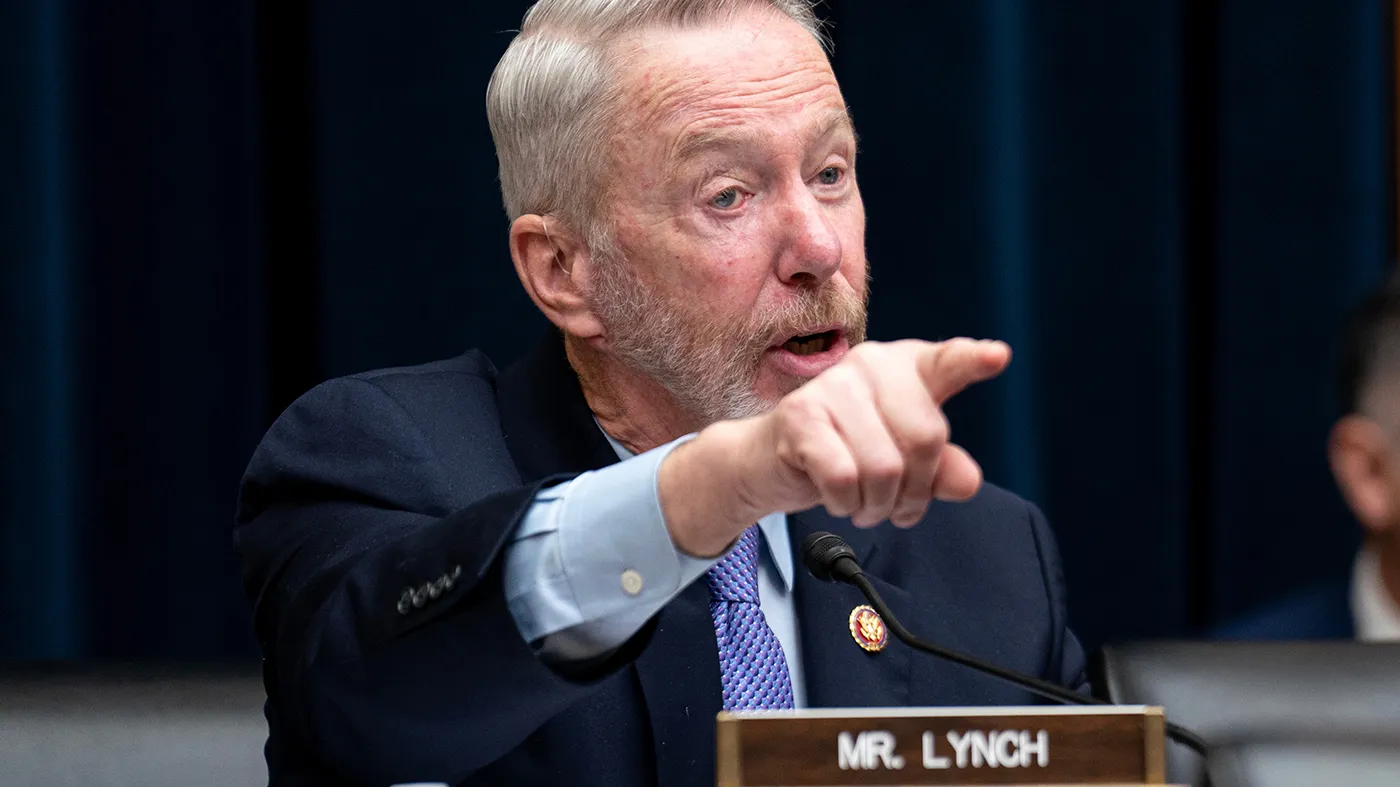
Democratic Rep. Stephen Lynch (Mass.) on Tuesday urged Treasury Secretary Scott Bessent to convince President Trump to reverse course on regulating artificial intelligence (AI).
During Bessent’s appearance before the House Financial Services Committee, Lynch said Trump does not have “a grasp” of “what we’re dealing with” regarding AI .
“I’ll be honest, I don’t think the president could spell AI if I gave him the first letter,” quipped the Massachusetts Democrat, the ranking member of a House Financial Services subcommittee focused on AI.
The Commerce Department has worked with leading AI labs on evaluating models before they are deployed, under a voluntary program.
Earlier this summer, the Trump administration briefly held up new models from OpenAI and Anthropic, before allowing the companies to release their GPT 5.6 and Fables and Mythos models, respectively.
Trump has dismissed the need for beefed-up regulations on AI, even as industry leaders argue for reigning in the pace of development . Trump said Monday the only “guardrails” AI needs is a “STRONG AND SMART” president.
The president wrote on Truth Social , “We already have tremendous CRIMINAL and REGULATORY power over these companies!” adding there is a “SICK conspiracy” in the U.S. against AI and data centers.
During Tuesday’s hearing, Lynch credited Bessent with “suggesting some things” on AI “that are thoughtful and … cautionary.” The veteran lawmaker later said “we’ve lost control” of AI, referencing OpenAI recently hacking the systems of Hugging Face, which Nvidia announced it will purchase earlier this month.
“Do you think the president understands that it probably doesn’t matter whether the good guys develop a superintelligence or the bad guys develop a superintelligence?” Lynch remarked. “If you don’t have control of that entity, and it has preferences and goals that are inimical to the existence humanity, it won’t matter.”
Bessent pushed back, saying it “matters a great deal” whether the U.S. or China lead on AI. Lynch then cut the Treasury secretary off, reiterating his view that “the entity itself is what is the danger to us all,” not the possibility of China leading on AI.
“We keep hearing about this race, this race against China. … Well, we don’t control the entity that we’re trying to create, and neither does China,” Lynch said.
“What I’m saying is, I hope there’s a way that you might be able to talk sense to the president about AI and the threat that you and I know it presents,” the Massachusetts lawmaker later told Bessent.
Bessent responded saying Trump was “completely aligned” with Nvidia CEO Jensen Huang on AI development. While Huang was speaking at the All-In Summit in Los Angeles on Monday, Trump called him and said concerns about AI were a “hoax.”
“The data centers are great, and they make people wealthy, and they make states wealthy,” the president said after Huang put him on speaker phone, according to a video summit attendee Ben Pouladian shared online .
Earlier this month, Huang urged policymakers to regulate “practical and actual” harms of AI instead of “theoretical and hypothetical” effects.
“We want to make sure that the technology advances in a safe way and … the more advanced it is, the safer and more practical it could be,” Huang told reporters at the G20 Innovation Ministerial in Chapel Hill, N.C.
Topics in this story
Gathered from external sources. Rights to this text belong to whoever originally published it.