Lawmakers scramble to catch-up on AI
Washington is scrambling to manage the abrupt panic around AI development, but party politics, a limited legislative window and lack of consensus makes it an uphill, next-to-impossible task. In the wake of a researcher’s viral warning about the technology, lawmakers on both sides of the aisle are floating numerous proposals to prevent the negative potential…
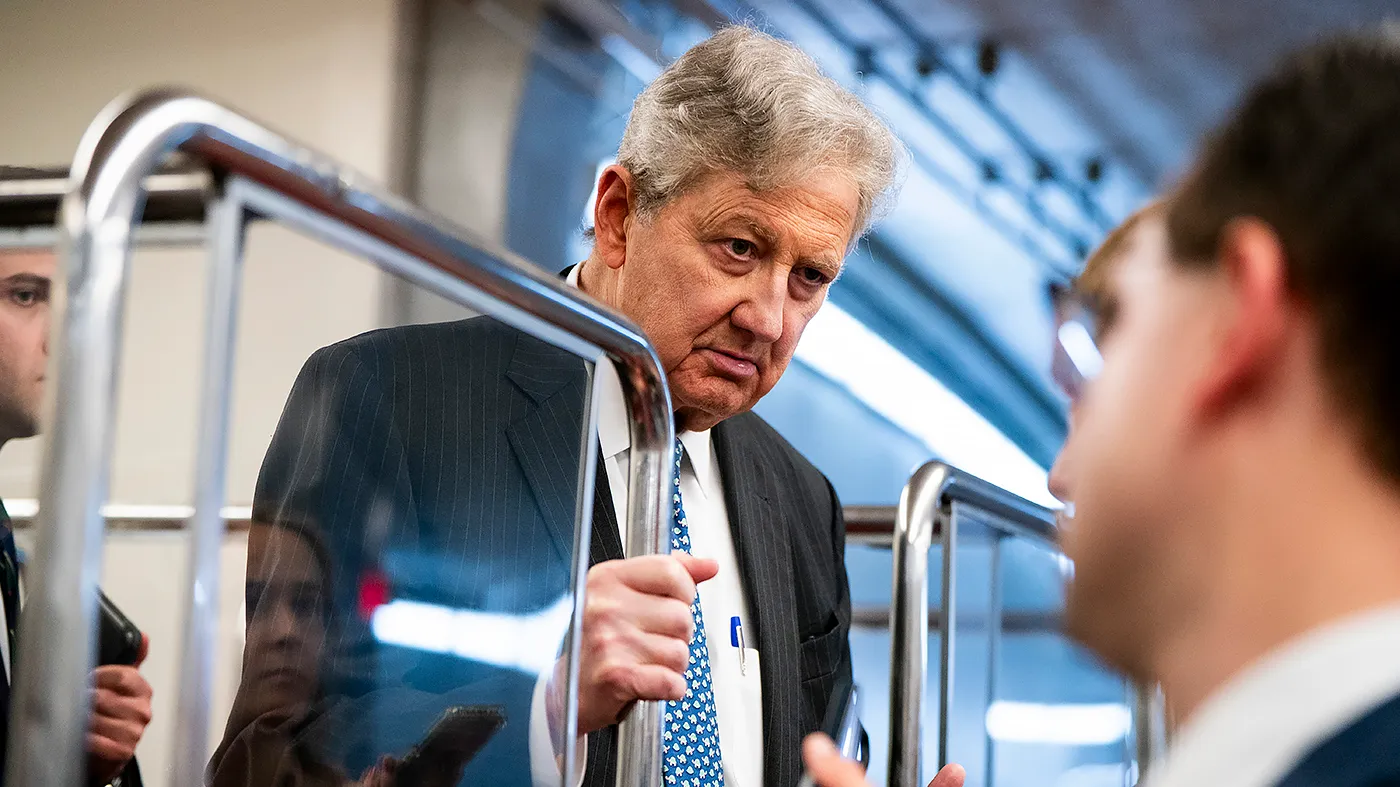
Washington is scrambling to manage the abrupt panic around AI development, but party politics, a limited legislative window and lack of consensus makes it an uphill, next-to-impossible task.
In the wake of a researcher’s viral warning about the technology, lawmakers on both sides of the aisle are floating numerous proposals to prevent the negative potential of AI, while President Trump is doubling down on his light-touch approach to AI regulation.
With less than two months on the legislative calendar, the chance of moving last-minute AI safety bills through both chambers and getting the president’s signature are next to zero.
“Do you think we’re [Congress] capable of regulating AI? I mean, we can’t pass a budget, you think we’re going to have some great bill on AI?” Sen. Rick Scott (R-Fla.) told The Hill on Tuesday.
“We’re not going to pass a smart AI bill in three weeks or this year,” he added, referring to the short window the Senate has in session before a monthlong recess for the midterms.
Capitol Hill has tried to grasp the technology for years, forming various coalitions and task forces to better understand its development and brainstorm policy. But the technology has moved faster than many expected and Congress’s timeline hasn’t kept up.
Dozens of bills regulating the safety elements of AI were introduced over the past 18 months, most of which remain stagnant due to clashing priorities on AI and the data centers that power them.
These policy fights were thrown back into the spotlight this week after 27-year-old AI researcher Jacob Coxon went viral by proclaiming the AI labs believe the technology “could kill humans” but still race towards superintelligence anyway.
Superintelligence is a hypothetical AI agent that outperforms all of humanity’s cognitive performance. Coxon and others believe this technology could reach the point of being able to self-improve itself, meaning humans can no longer control its development or intentions.
Democrats have seized on these concerns over the past year, while Trump and his base argue heavy regulation will impede AI firms ability to stay ahead of China.
But Coxon’s warning broke through the political divides and caught the attention of both parties on Capitol Hill, while simultaneously highlighting the massive hurdles Washington still faces.
Among the last-minute proposals is a bill from Republican Sen. John Kennedy (La.) that would require AI companies to implement a so-called “kill switch” into their models. This would be a safety measure that companies can use to pause or shut down certain models.
Kennedy will bring it to the floor via unanimous consent to try to bypass a formal roll-call vote, telling reporters there are no other options given the limited window left.
The Louisiana senator emphasized this does not put the government “in charge” of the so-called AI kill switch, but only requires companies to have the mechanism in place.
Trump “doesn’t want us to do anything to impede the development of American AI and he’s absolutely right and I agree with it,” Kennedy added on Tuesday. “But how is it going to impede the development of AI if we do something to gain the confidence of the American people in AI?”
Public sentiment around AI and the firms behind it has plummeted over the past year amid concerns around data centers, the labor workforce and its ability to supercharge bad actors. A Gallup poll released in July found public confidence in large technology companies was at a record-low, dropping from 32 percent in 2020 to 20 percent in 2026.
Sen. Ted Cruz (R-Texas), the chair of the Senate Commerce, Science and Transportation Committee, said Coxon’s warnings were “highly concerning” and called for more guardrails.
Sen. Josh Hawley (R-Mo.), a frequent critic of Big Tech, said Congress has a job to ensure a “very small group of the richest people and the richest companies in the history of the world don’t end up controlling our entire economy, our entire regulatory system and the livelihoods of every American.”
When asked whether Congress is prepared to tackle this issue, Hawley sidestepped, stating he “welcomes the company” of last-ditch efforts to regulate the technology.
While Republicans are considering ways to manage the risks around AI, Trump fiercely defended his approach to AI in a series of posts Monday, alleging the warnings from Coxon and Anthropic are a “hoax.”
Some Republicans are sticking to that approach.
“If you’re the CEO of an AI company, you have an obligation not to kill your kids, and your grandkids, and so for them to come and say we need to regulate them, no they need to regulate themselves,” Scott said Tuesday. “We’re not going to put ourselves in a position to be behind China.”
Other lawmakers like Sen. Ruben Gallego (D-Ariz.) are suggesting new committees to “rein in” AI, but industry experts argue this will only further delay what already feels like a tall ask.
Tony Samp, the founding director of the Senate AI Caucus in 2019, pointed out there has been nearly a decade of AI forums, commissions and caucuses for policymakers to get “educated and up to speed.”
“Too often in this town, groups seek a perfect or comprehensive solution but that is not what is needed to meet this initial moment on AI models,” Samp, now principal and head of AI policy at DLA Piper, told The Hill.
On the other side of the country, some Silicon Valley executives are also trying to quell these concerns, either calling for a slowdown of the tech’s development or all-out dismissing the warnings as fear-mongering.
Following Coxon’s thread, Anthropic CEO Dario Amodei, OpenAI CEO Sam Altman and xAI CEO Elon Musk agreed a slowdown of the technology is needed.
Altman reiterated OpenAI’s support of a federal framework for safety requirements, but he also argued the industry does not need to wait for legislation or an antitrust exemption to create “consistent rules” and shared values among the firms.
Others like Nvidia CEO Jensen Huang dismissed these warnings, and without an industry or international cooperation, it is not clear whether companies will be willing to make changes. Chris LeHane, OpenAI’s global affairs chief, said Tuesday the firm still believes “the policy window is open.”
“We’re well aware there’s a limited amount of time over the calendar, certainly before the midterms actually take place,” LeHane told reporters in Washington.
If lawmakers miss the window, it is likely to face more hurdles should Democrats take control of the House or Senate under Trump.
“Given that [a] divided government is assured no matter what happens in the election, the difference between what’s achievable this year and next may not be all that great,” one technology lobbyist told The Hill Tuesday.
“If members truly feel urgency then they’ll work to pass something meaningful this year,” the lobbyist added.
Julia Shapero and Helen Huiskes contributed.
Topics in this story
Gathered from external sources. Rights to this text belong to whoever originally published it.