Republicans face a midterm reckoning over prices at the pump
Voters are expected to punish Republicans for high gas prices this election cycle. Since the start of the Iran war, prices of oil and gasoline have been on the rise. As of Monday, gas prices were averaging about $4.29, up about $1.23 from where they were a year ago. Over the last several months with…
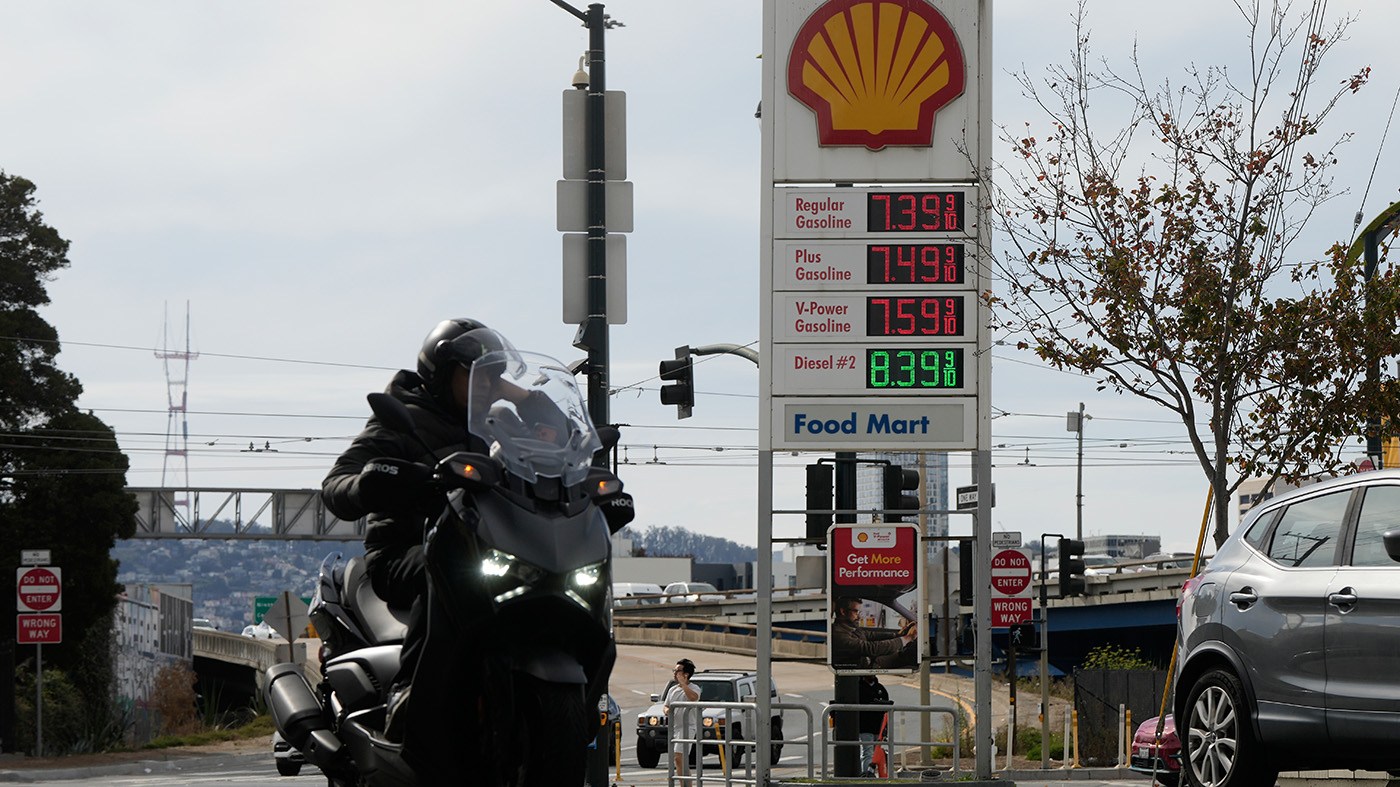
Voters are expected to punish Republicans for high gas prices this election cycle.
Since the start of the Iran war, prices of oil and gasoline have been on the rise. As of Monday, gas prices were averaging about $4.29, up about $1.23 from where they were a year ago.
Over the last several months with energy prices on the rise, Americans have become increasingly dissatisfied with President Trump’s handling of the economy.
A recent CNBC poll found that 65 percent of registered voters disapproved of the president’s handling of the economy; 60 percent said the same in July.
High gas prices — along with high prices of diesel — could tip many contested races toward Democrats and may even put some historically Republican seats in play.
“I expect it to be a leading cause of Republicans’ political woes in this midterm election,” said Matt Dallek, professor of political management at George Washington University.
“The problem for a party in power with the price of gas is that … you see it everywhere you go,” Dallek said. “People talk about the cost of living and inflation, you know, it’s very abstract, but gasoline … makes it very concrete.”
Democrats have been heavily messaging on the issue, making the case that Trump and Republicans are to blame.
“The consequences of this war are that you are paying nearly $5 in gas. You’re paying more in groceries because of the price of diesel. He has cheerled this war all along because he stands hip-to-hip with Donald Trump,” Michigan Senate candidate Abdul El-Sayed (D) said of his opponent , former Rep. Mike Rogers (R), in a recent debate.
Iowa Democratic contender Josh Turek on Monday released a pair of “closing ads” ahead of next week’s election, one of which was about fuel prices. In the ad, the Senate hopeful says that his Republican opponent, Rep. Ashley Hinson, “has voted over and over for policies that have jacked up prices” while he will “work to lower prices.”
In farm-heavy states such as Iowa and Kansas, each of which currently has two Republican senators, diesel prices, in addition to gas, are a major flashpoint.
Meanwhile, in hotly contested Maine, heating oil prices have also been a major issue .
“The biggest problem that we have right now is Sen. [Susan] Collins’s insistence in supporting the Iran war because Donald Trump wanted it. I mean, right now we’re paying 80 percent more this year than we were last year for heating oil,” Maine Democratic Senate nominee Troy Jackson said during a recent debate . (Collins has voted to halt military actions in Iran, though other Republicans have killed such measures.)
And across the country , Democratic-aligned groups are running advertisements on fuel prices in key House races.
Democratic strategist Eddie Vale said he believes Democrats are “capitalizing” on the issue in “a smart digital grassroots way,” including through man-on-the-street interviews for social media and putting stickers blaming Republicans on gas stations.
“I also think that it’s cutting through more than other issues because you don’t need to talk politics for people to be seeing how it’s hurting them,” said Vale, who is working on a campaign in Wisconsin.
In this year’s races, Vale said he thinks the issue could flip moderate Republicans or blue-collar Democrats who previously voted for Trump.
He added that other more right-wing voters may be “disappointed” in Trump and “disbelieving of the things that he said he did and might also just decide to sit home.”
GOP strategist Keith Naughton said high gas prices are “a negative for the Republicans.”
“They’re the party in power, and gas prices have clearly gone up … and then diesel prices have gone up in particular … and that really goes at a vote base for them,” said Naughton, who is an opinion contributor for The Hill and writer of “Betting On Politics” on Substack.
“That costs farmers, that costs truckers, and you don’t really have to lose the entirety of that vote base, you just have to have some of that sliced off for that to cost you in some of these close races,” he said.
He added that Republicans should try to change the subject and focus on Democrats’ weaknesses.
“They’re changing the subject to these more emotional issues, these cultural issues that the Democrats struggle with. I think they’re going to change the subject to how much worse things could be — that the Democrats don’t really have any actual proposals,” he said.
Asked how to do that without seeming like they’re ignoring the problem, Naughton said, “It’s a huge challenge, but I mean, I don’t think you’ve got many other options.”
Despite the GOP’s efforts, though, gas prices are expected to be a factor next week.
Laurel Harbridge-Yong, a political science professor at Northwestern University, said research she’s been part of shows that “even controlling for other economic measures as well as other factors that are known to drive presidential approval … rising gas prices were associated with declining presidential approval.”
“We know particularly in midterm elections that how the president’s party does hinges on presidential approval. It also hinges on measures of the economy itself, and so I think it’s fair to extend the work that we’ve done on gas prices to suggest that in a midterm election like the current one, that gas prices have almost a double penalty … for congressional Republicans,” she said.
She added that talking about cultural issues can have an impact “at the margins” but that “voters overwhelmingly report that the economic factors are what are driving their votes.”
At the same time, Trump has repeatedly downplayed the high gas prices, calling them a “small price” to pay to prevent a nuclear Iran.
This weekend at a rally in Georgia, Trump said, “The United States oil and gas business is making hundreds of billions of dollars.”
“Our country is making hundreds of billions of dollars because of what’s happened in the Middle East because they’re coming to Texas, and they’re coming to Oklahoma, and they’re coming to Louisiana, and they’re taking that oil,” he told supporters.
“My people said, ‘Please don’t mention that, sir, because people are paying a little higher,’” Trump continued. “I can just see the fake headlines ‘President Trump is talking about all the money they’re making while people are suffering at the pump.’ That’ll be the headline, but I said, ‘I don’t give a damn, I’m going to say it, we’re making a freaking fortune.’”
Asked about Trump’s rhetoric last week, prior to the “freaking fortune” remark, Naughton said that the small price message “is not working because he hasn’t explained the real implications of a nuclear Iran. One of them is that if they got a nuclear weapon, they’d probably use it.”
“He comes in and out of it, so there’s not a consistent message,” Naughton said of Trump. “And for someone who can’t pay their bills, I don’t think they’ll find that a small price to pay. Or they might be wondering, ‘Well, why am I paying it?’”
Topics in this story
Gathered from external sources. Rights to this text belong to whoever originally published it.