Interior spares California, Arizona, Nevada from most dramatic short-term Colorado River water cuts
The federal government has unveiled its short-term plans for Colorado River water cuts from California, Arizona and Nevada — issuing a plan that’s largely in line with what the states themselves have proposed and sparing them from more dramatic cuts for the time being. The Interior Department announced Friday that it would require these states,…
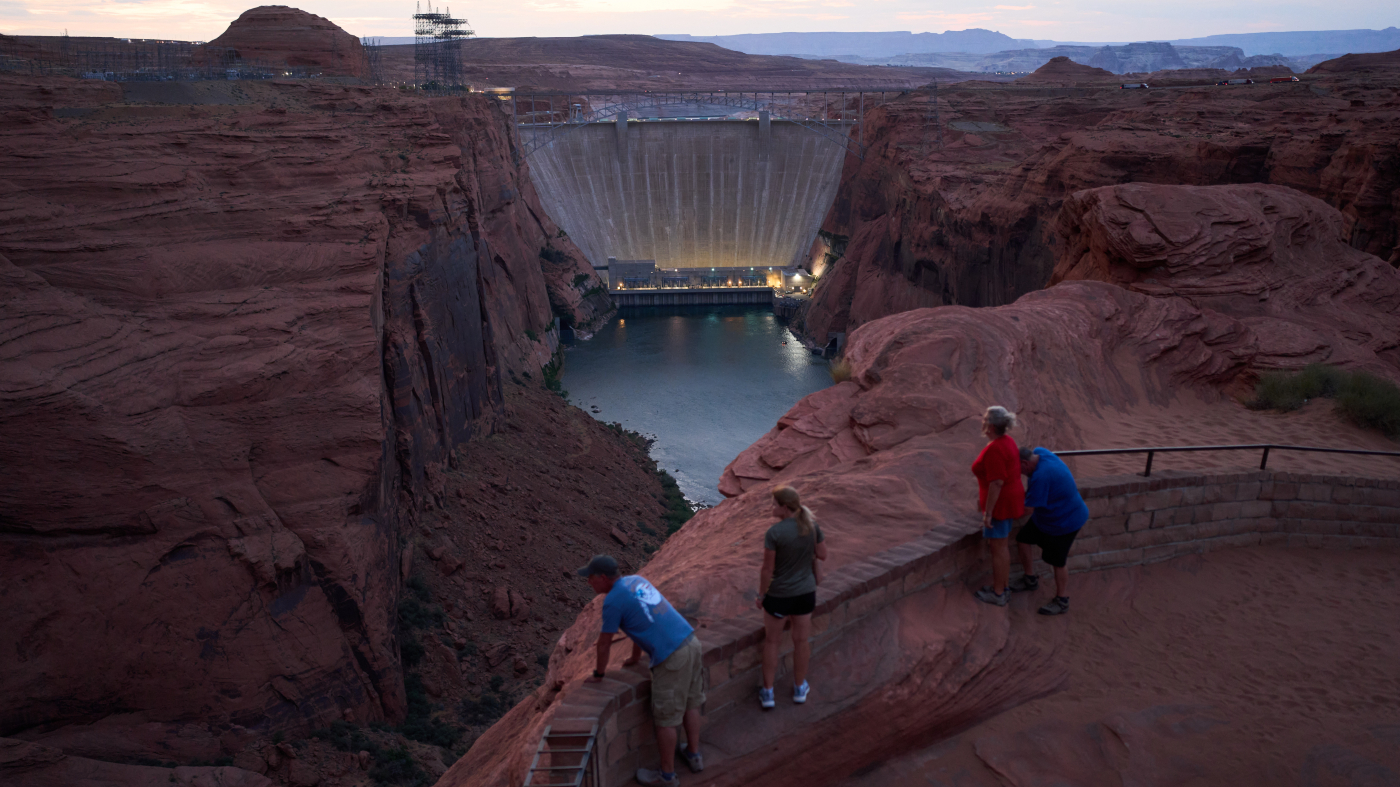
The federal government has unveiled its short-term plans for Colorado River water cuts from California, Arizona and Nevada — issuing a plan that’s largely in line with what the states themselves have proposed and sparing them from more dramatic cuts for the time being.
The Interior Department announced Friday that it would require these states, collectively known as the Lower Basin states, to reduce their water use by 1.25 million acre-feet per year in 2027 and 2028.
It encourages them to conserve and store an additional 700,000 acre-feet in total over the next two years.
That lines up with a plan put forward by the three states in which they suggested they could cut 1.25 million acre-feet over the same period.
The short-term guidelines follow the federal government’s recent announcement of a 10-year framework in which it said the states could be forced to cut as much as 3 million acre-feet per year.
State officials recoiled at the 3 million figure, with Arizona and Nevada officials saying cuts that steep could devastate local economies . Interior has said that the 10-year plan is meant to be flexible and responsive to whatever the water conditions may be down the road — meaning the states may never actually see cuts that are that steep.
The department also said Friday that it was finalizing its 10-year framework decision that includes the potentially steeper water cuts.
The river provides water to states throughout the West , including drinking water and water for agricultural, industrial and municipal uses. In particular, seven states rely on it as a water source: Arizona, California, Colorado, Nevada, New Mexico, Utah and Wyoming.
As the West becomes drier and the river faces a major drought, figuring out how to manage the water has been a challenge.
The seven states that rely on the river have long been negotiating about its future management, as 2007 interim guidelines expire at the end of this year.
The federal government is having to step in and impose its own plan after they failed to reach an agreement.
Topics in this story
Gathered from external sources. Rights to this text belong to whoever originally published it.