US Partners Respond to Tariffs With Anger, Protest and Diplomacy
Major US trading partners responded with disappointment and protests while holding out the prospect of negotiations after the Trump administration rolled out...
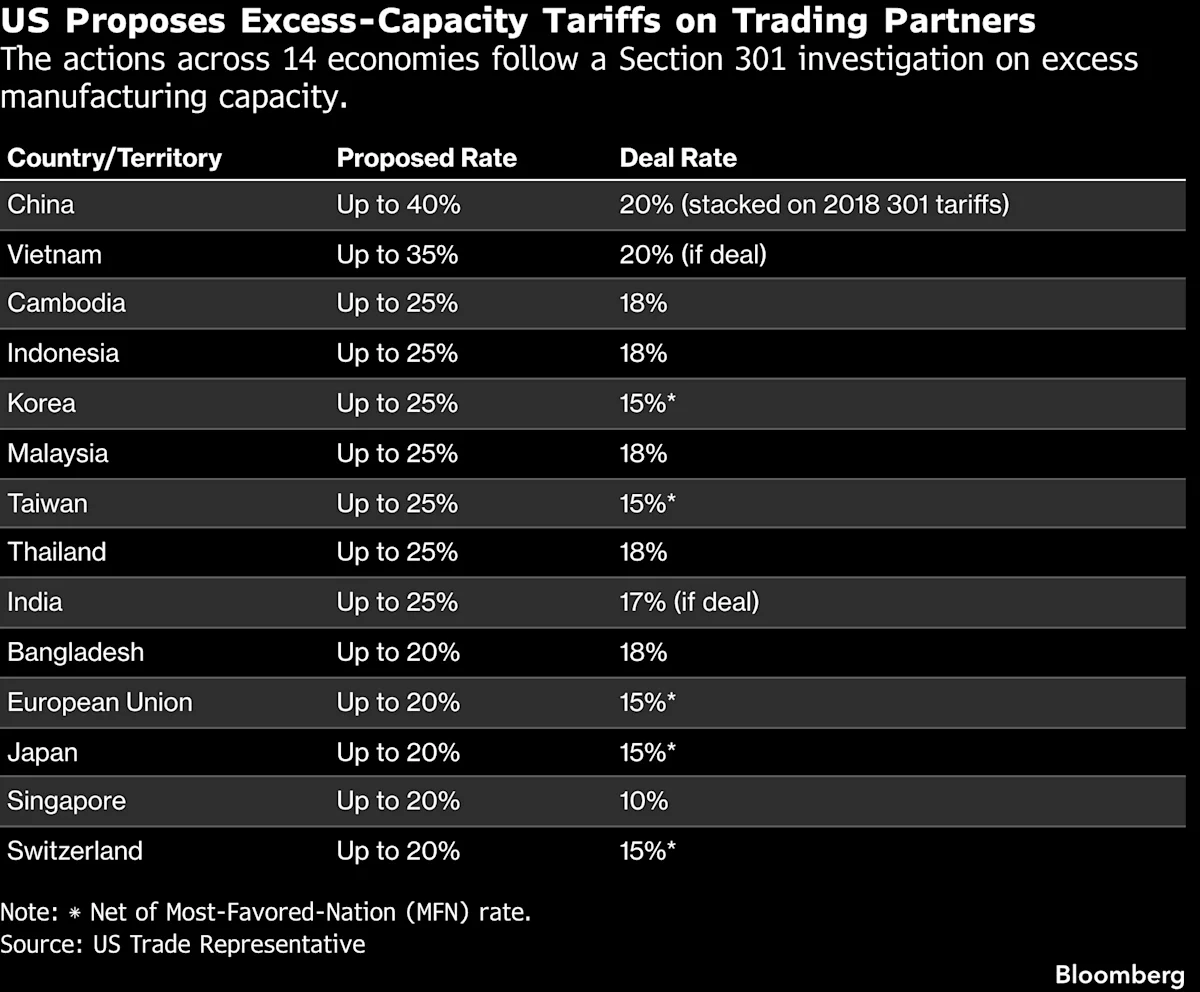
(Bloomberg) -- Major US trading partners responded with disappointment and protests while holding out the prospect of negotiations after the Trump administration rolled out a fresh round of tariffs on goods from China, the European Union and a dozen other economies.
For now, officials from Singapore to Japan are signaling a preference for negotiation over retaliation, even as China and the European Union have made clear they could hit back if Washington pushes beyond the terms of existing trade deals. The Trump administration plans to impose levies on imports from economies it accuses of contributing to excess manufacturing capacity and hurting US companies.
The new tariffs mark the latest effort by the Trump administration to reinstate an expansive trade agenda that included country-by-country levies implemented using emergency powers. Those were struck down by the Supreme Court in February, forcing the president to invoke other legal authorities to restore the duties.
Singapore said it disagreed with the US findings that its policies contribute to a glut in manufacturing capacity and will urge Washington to reconsider proposed tariffs of up to 20% on the city-state's exports.
The rate could be lowered to 10% if Singapore reaches a reciprocal trade agreement with the US or concludes other negotiations that address Washington's concerns.
"Singapore's economic policies do not protect our domestic market or subsidize manufacturing for export," the Ministry of Energy, Trade and Industry said Thursday. "Our free trade agreements seek to lower barriers to trade and investments."
Japan protested US plans to impose a 15% levy on its products, with the chief government spokesman calling the move "regrettable."
"Japan does not have any non-market policies or practices, or structural excess production capacity," Chief Cabinet Secretary Minoru Kihara said at a regular news conference.
Chinese Foreign Ministry spokesman Guo Jiakun told reporters at a briefing Wednesday that the prospect of new US tariffs on its exports was "political maneuvering" and said the two nations should work together to maintain their trade truce.
For many economies, the proposed rates are broadly in line with levels previously negotiated with Washington before the court's decision. They aren't expected to take effect until after a written-comment period and public hearings, with implementation possible in late January.
Topics in this story
Gathered from external sources. Rights to this text belong to whoever originally published it.