Leonids meteor shower to peak this week: How to watch
The Leonids meteor shower is set to put on a show this week, peaking in mid-November each year.
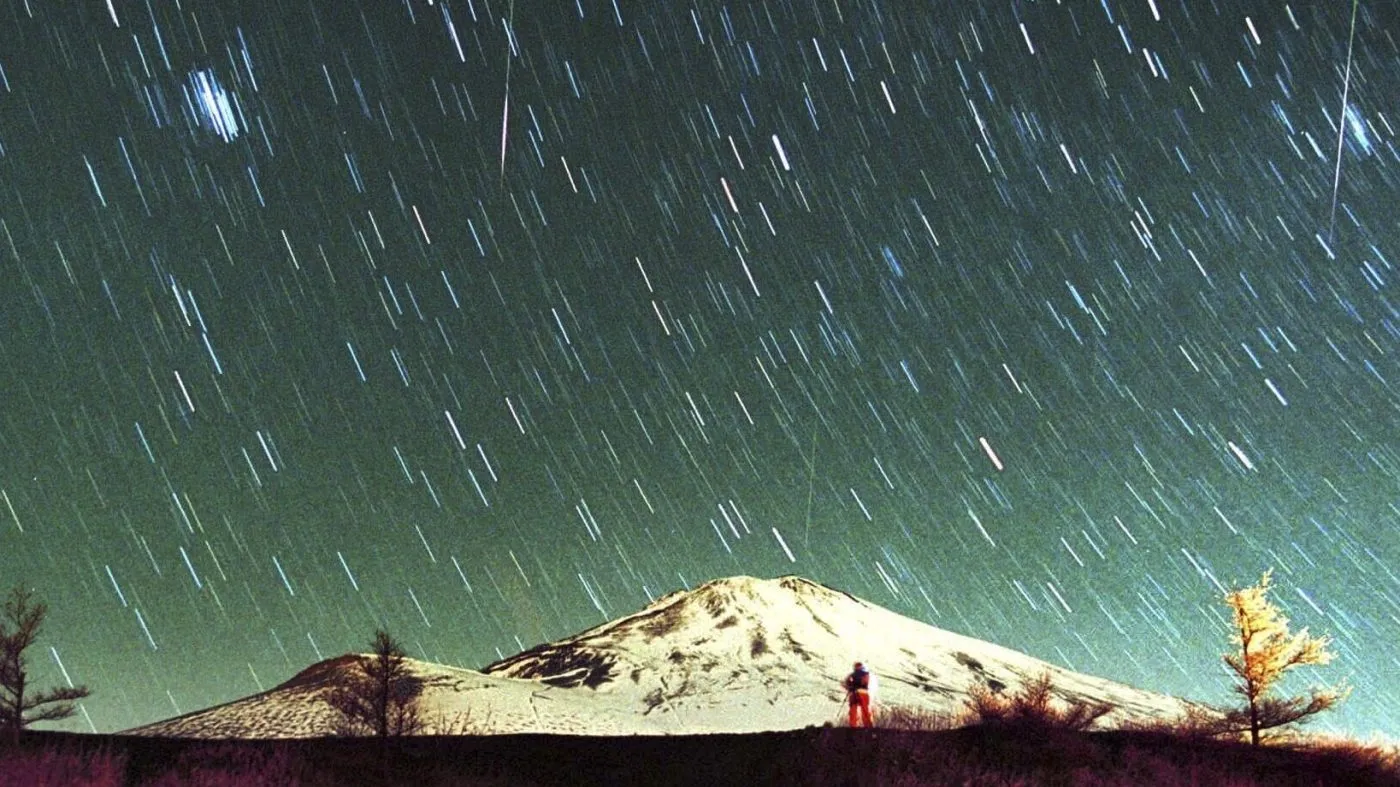
AUSTIN ( KXAN ) — The Leonids meteor shower is set to put on a show this week, peaking in mid-November each year.
The meteor shower gets its name from the radiant constellation Leo. This is where the meteors appear to originate when looking at the sky.
As the comet 5P/Tempel-Tuttle travels near the Sun, small pieces of rock and dust break off, forming the meteors. Those parts then burn up as they enter the Earth’s atmosphere.
5P/Tempel-Tuttle was discovered twice by different people, Ernst Tempel and Horace Tuttle, in 1865 and 1866, respectively, giving it the name.
It is a small comet that takes 33 years to orbit the Sun once.
The Leonids are quite fast — they can travel at speeds of 44 miles per second. They are also bright and can be colorful.
They are best known for fireball meteors, which are characterized by large explosions of light, and Earth-grazers, which have long, colorful tails and track near the horizon.
Although the meteor rates are often as low as three meteors per hour, the Leonids are considered a major meteor shower.
About every 33 years, a Leonid storm occurs with hundreds to thousands of meteors per hour. The difference between a meteor shower and a meteor storm is having at least 1,000 meteors per hour.
A Leonid meteor storm last occurred in 2002. In 1966, a meteor storm led to thousands of meteors entering the atmosphere within 15 minutes, so many that it appeared to “fall like rain,” according to NASA .
The Leonids peak the night of Nov. 16, or Monday night into Tuesday morning.
Viewing is best starting at midnight until dawn. For the best shot at seeing the Leonids, travel outside the city and streetlights to an area with dark skies.
Face your feet towards the east and lie on your back, looking at as large a portion of the sky as possible. It could take up to 30 minutes for your eyes to adapt before you can easily spot meteors.
Topics in this story
Gathered from external sources. Rights to this text belong to whoever originally published it.