China reveals how it intends to beat NASA back to the moon
Space Race 2.0 is on.
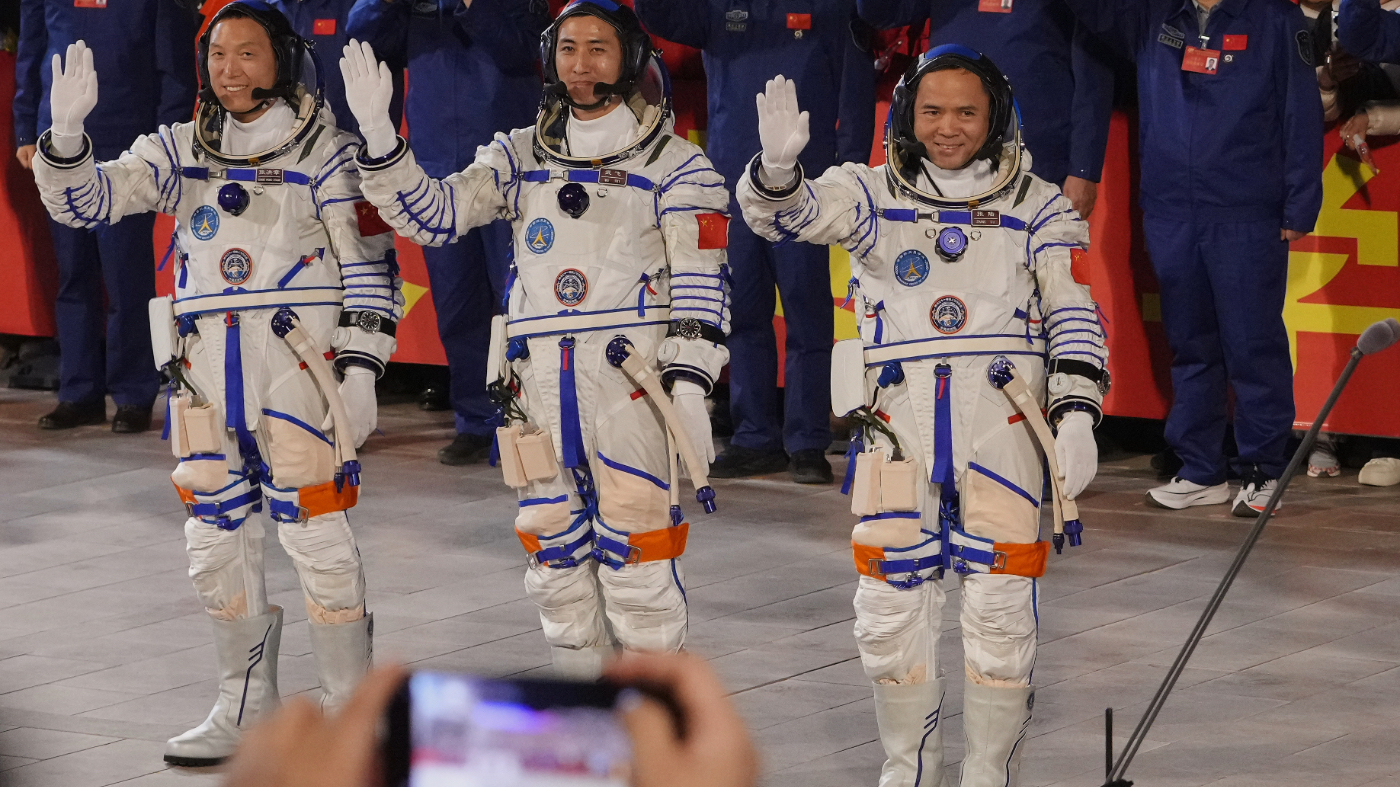
Wang Xiang, the deputy chief designer of China’s manned space program, recently revealed how that country intends to beat NASA back to the moon. The Chinese plan is elegant in its simplicity.
The Chinese lunar landing mission will consist of two launches of the Long March 10 heavy lift rocker. One Long March 10 will carry the Mengzhou spacecraft with three astronauts to lunar orbit. Another Long March 10 will carry the Lanyue lunar lander to lunar orbit. The two spacecraft will dock and two of the Chinese astronauts will transfer to the Lanyue and ride it to the lunar surface.
The mission is scheduled to take place before 2030.
The Chinese have also said that three test missions must occur before attempting a crewed lunar landing: a 2027 test flight of the Mengzhou on a Long March 10A to the Chinese Tiangong space station, an uncrewed test flight of the Lanyue to land on the lunar surface in 2028 and an uncrewed test mission of both the Mengzhou and the Lanyue to the moon and back in 2029.
The thing that jumps out about this announcement is how transparent it is for a totalitarian regime like China’s. Like the Soviet Union during the original moon race, totalitarian nations tend to be secretive about everything, especially their space programs. If they announce a high-profile space mission with a specific schedule and it doesn’t happen for whatever reason, huge embarrassment ensues.
The announcement speaks to a considerable amount of confidence in Beijing that it can accomplish what it proposes to do: two Chinese astronauts will walk on the moon before 2030.
Space Race 2.0 is on. How does the race look in early November 2026?
On the one hand, NASA has already tested its Orion spacecraft and Space Launch System heavy rocket with flights around the moon twice, the second time with a crew. The Long March 10, the Mengzhou and the Lanyue have yet to fly.
On the other hand, China holds one advantage in that their lunar lander takes only one launch to take it to the moon. The American human landing systems will take multiple launches.
The Starship Human Landing System will take between six and eight refueling flights to ready it for a lunar mission, according to Space X’s Elon Musk. Other estimates peg the number as high as 22. The Blue Origin Blue Moon Human Landing System will take four launches , the lander and three transfer stages, on the New Glenn.
The Starship and Blue Moon are large enough to build and support a lunar base. The Lanyue, not so much. China will need a larger lander if it intends to build its own moon base.
Each side has a testing program with missions that have to succeed before a crewed lunar landing can be attempted. Any failure will throw off the schedule and push back the date of the attempt to send astronauts to the moon.
Political considerations may intervene as well. As Jeff Foust at Space News points out , the results of the midterm elections and the upcoming 2028 campaign for the presidency may complicate what has been a hitherto bipartisan support for the Artemis return to the moon program.
As I have mentioned before, the desire on the part of congressional Democrats to wage lawfare on Musk may throw a monkey wrench in the works as well. Democrats taking over Texas, where SpaceX has a launch facility, may also complicate matters.
China’s Xi Jinping appears to be firmly ensconced in power, having conducted yet another purge of People’s Liberation Army generals. A political event that could derail China’s moon program seems unlikely, though anything is possible, as China analyst Gordon Chang points out .
If the United States wins the new race to the moon, it will bask in the glory of yet another political victory. President Donald Trump will certainly be pleased at a legacy-building event.
If China wins, the event will be a short-term political embarrassment for the U.S. Fingers will be pointed. Blame will be placed. NASA Administrator Jared Isaacman, who has been given the mandate to beat China back to the moon, expects to be fired if he fails.
The U.S. can still win in the long run, by establishing the first lunar base and reaping the rewards of access to the moon. In that event, a Chinese victory in Space Race 2.0 will just be a curious, historical footnote.
Mark R. Whittington, who writes frequently about space policy, has published a political study of space exploration entitled “ Why is It So Hard to Go Back to the Moon? ” as well as “ The Moon, Mars and Beyond ” and, most recently, “ Why is America Going Back to the Moon? ” He blogs at Curmudgeons Corner.
Topics in this story
Gathered from external sources. Rights to this text belong to whoever originally published it.