Italy and wolves: living with a growing population amid myths and alarmism
The latest data put Italy's wolf population at around 3,500 animals spread nationwide, and experts say it has since grown. Amid sightings and scares, what is...
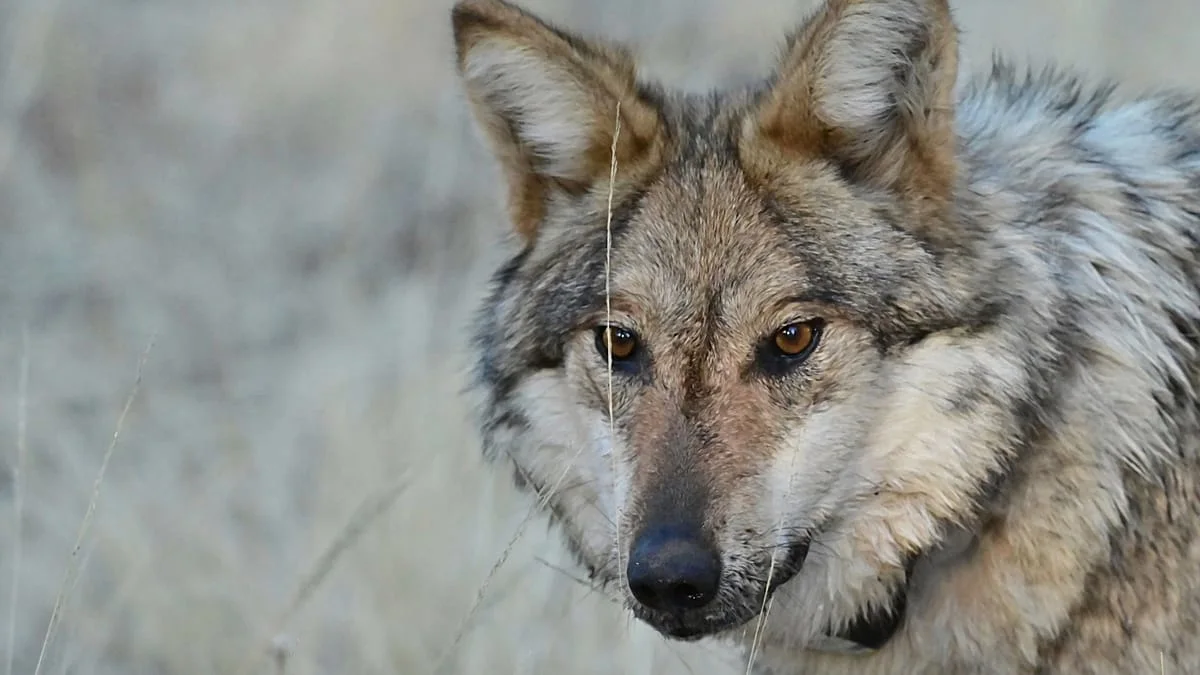
From the attacks in Puglia to sightings in Emilia-Romagna, Umbria and Lazio, the summer of 2026 was dominated by alarmism about wolves.
The wolves currently present in Italy are around 3,500 according to the data from the latest national monitoring exercise carried out by Ispra (source in Italian) , the Higher Institute for Environmental Protection and Research, which dates back to 2022. Since then the population has increased by around 150 animals, mainly in the Alpine area.
However, it is not only the growing number of wolves or the sightings near built-up areas that have reopened the debate about the species.
In March 2026 Italy transposed the 2025 EU directive on the wolf's protection status , which amends the previous 1992 rules. The animal has thus gone from "highly protected species" to "protected species", raising questions among experts about how useful this downgrading really is.
Are there too many wolves in Italy? How real is the risk for people living in towns and cities and how should they behave? Euronews asked experts in the field to respond, debunking myths and scaremongering.
"Wolf attacks remain an extremely rare phenomenon, so there is no real risk to people, but in recent years we have seen an increase in these cases, which we monitor very closely," says Piero Genovesi , head of the wildlife coordination service at Ispra, speaking to Euronews.
The institute was the first to carry out nationwide monitoring of the number and distribution of wolves in Italy using rigorous scientific methods. In the past, animals were counted at local and regional level on the basis of sightings and estimates, but the methods were not standardised.
Ispra's study was conducted between 2018 and 2022 and used a single protocol for sampling and data analysis across the country, as well as the most sophisticated statistical methods currently available. The figure of 3,500 animals is therefore an accurate estimate of the number of wolves actually present in the country; it is not a minimum figure, the experts stress.
"Numbers tell only part of the story: wolves are territorial animals that live in packs and they do not accept other animals in their territory. This means that numerical increases are not explosive, but that the species tends to colonise any area left free ," explains Genovesi, noting that the wolf has gone from being a species almost extinct 50 years ago to one that is now found virtually everywhere, from the beaches of Rome and Puglia to the Po Valley.
The species' remarkable adaptability is the reason why sightings near cities are no longer so rare.
There were 19 incidents of wolves attacking humans between 2017 and 2024, according to Ispra data gathered thanks to cooperation with Life Wild Wolf, (source in Italian) an EU co-financed project that supports the authorities in preventing and managing interactions between humans and wolves.
The most significant figure, however, concerns the number of wolves involved in these attacks: only seven animals were responsible for all the cases , and a single female wolf committed 11 of them. Looking at the numbers, it is clear that these episodes are exceptional and that these particular wolves have developed abnormal behaviour , as confirmed by experts and by studies that have been focusing on this species for decades.
"In reality there is no need to be afraid of wolves: it is a species that keeps its distance; it is a shy, nocturnal animal that tends to avoid coming into contact with humans ," says Marco Antonelli, zoologist and large carnivore specialist for WWF Italy.
Ispra has drawn up a specific protocol for the management of urban and 'confident' wolves , classifying wolf behaviour according to the level of risk it poses. While sightings near homes have always occurred and pose no risk, permanent settlements close to people carry a higher level of risk, up to increasingly worrying behaviour such as the predation of domestic animals and, ultimately, aggressive reactions towards humans.
"There may be different reasons why this kind of behaviour develops: certain human actions lead wolves to become used to and comfortable around people ," explains Antonelli, adding that in some cases these are individual traits of specific animals that develop behaviour that departs from the norm.
Downlisting and legislation in other European countries
The major novelty in 2026 is the so-called "downlisting", the move from the category of "highly protected" species to "protected" species . The difference is just a single word, but we will have to wait and see what changes in practice.
In March Italy approved the transposition of the 2025 EU directive and will have to bring previous rules into line with it by January 2027 . The decision is triggering a wave of changes at national level: Germany, for example, has already transposed the new directive and is preparing to amend its national hunting law.
"It was a political choice, pushed by President von der Leyen . It was not necessary; wolves could already be culled under derogation, as provided for in the legislation," says Luigi Boitani , emeritus professor at La Sapienza University in Rome and one of the world's leading wolf experts.
His view is backed up by some figures: in Italy there have been cases of culls authorised as derogations from the rules, and there are countries where they took place regularly, such as France, which culled 250 wolves every year .
According to Piero Genovesi, by contrast, in the Italian system the downgrading brings technical changes, as it simplifies the bureaucratic procedure .
"Whereas previously authorisation from the Environment Ministry was required, based on a technical opinion from Ispra, now the regions can decide autonomously, still on the basis of a technical opinion," says Genovesi.
The current system should therefore be much more flexible, but it does not solve the real problem created by the growing number of wolves in Europe.
"The downgrading was essentially a political decision driven by very powerful farming lobbies at European level, in an attempt to solve the age-old issue of conflict between wolves and livestock farming ," says Marco Antonelli, speaking to Euronews.
The difficult coexistence between wolves and farmers
Zootechnics is the science that deals with livestock breeding. And it is livestock farmers who have always been on the front line in denouncing the damage caused by wolves to their sector and the dangers faced by farm animals.
"Over the past 10 years, wolves are thought to have been responsible for preying on 0.6% of the livestock present in Europe , and the figures for Italy are very similar," says Antonelli, adding that the phenomenon should not be underestimated and should in fact be tackled with appropriate prevention strategies.
One of the most effective strategies is the use of so-called livestock guardian dogs , specially selected breeds of sheepdogs that look after and guard flocks. One of the best breeds for this job is found in Italy: the Maremma-Abruzzese sheepdog.
Other, more modern strategies include electrified and buried fences or raised night shelters , which provide effective protection for animals. Culls can be a solution to deal with animals that develop abnormal behaviour, but taken together these protective measures can ensure everyday coexistence between wolves and farmers.
"The data show that prevention strategies are much more effective than any culling strategy . A solution does exist, but it is not as simple as many make out, which is why the commitment of the authorities is also needed," Antonelli concludes.
Beyond polarisation: "coexistence means compromise"
City dwellers can also play a part and need to know the right preventive behaviour to adopt. Above all, it is essential to ensure proper waste disposal, as rubbish is highly attractive to all kinds of wildlife.
Another important factor is the management of pets: in areas where sightings are frequent, experts advise against leaving pets unattended and, above all, against leaving pet food on the street, as it could attract wolves.
"The most dramatic change we are seeing today is the polarisation of opinion about wolves : the number of people wanting to defend them has grown a lot, and so has the number of people wanting to see them culled," says Luigi Boitani.
"The middle ground is still very small, yet that is what we should be aiming for: coexistence means compromise ," the professor concludes. Knowledge of the species beyond opinions and myths is still limited, but pursuing it is the only long-term solution.
This text was translated with the help of artificial intelligence. Report a problem : [feedback-articles-en@euronews.com].
Topics in this story
Gathered from external sources. Rights to this text belong to whoever originally published it.