A Wyoming ranch dog found a black-footed ferret in 1981 after the species was presumed extinct; 45 years later, none were found at the site
In September 1981, a barking dog interrupted the sleep of a Wyoming cattle rancher and his wife, and a morning discovery became one of the most remarkable
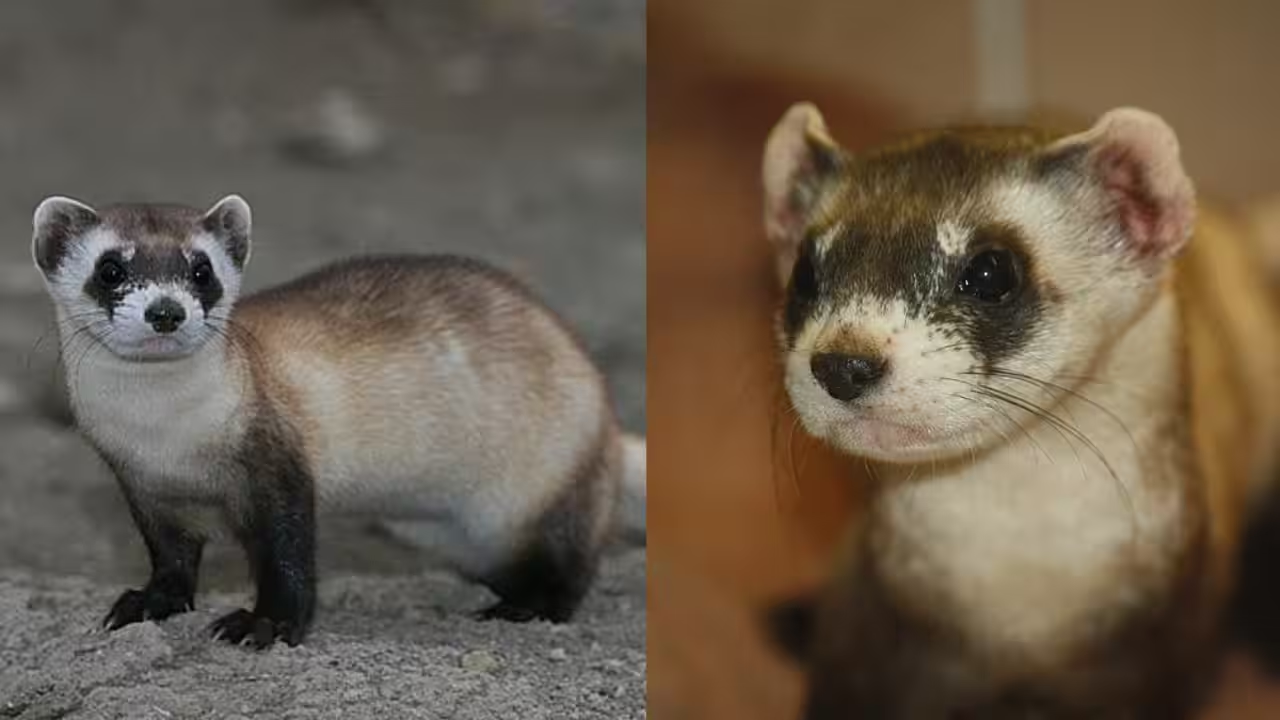
In September 1981, a barking dog interrupted the sleep of a Wyoming cattle rancher and his wife, and a morning discovery became one of the most remarkable stories in wildlife conservation. What the dog had dragged home looked like a masked animal, yet it belonged to a species that officials had already written off as extinct. Within hours, a local taxidermist was making a phone call that would bring biologists to a ranch. This article follows the dog's discovery, the hidden colony it revealed, the disease crisis that nearly erased the species, and the recovery that brought the animals home.The night a ranch dog named Shep woke John Hogg and his wife and left a strange carcass at the ranchAn account from the Fort Collins Museum of Discovery, says that at about three o'clock in the morning on September 26, 1981, cattle rancher John Hogg and his wife, Lucille, were woken by their dog, Shep, barking just outside the bedroom window. Assuming Shep had tangled with a porcupine again, they went back to sleep. The next morning, Hogg found what the dog had actually caught, the carcass of a small animal with a black mask, black feet and a black-tipped tail, its back broken. Lucille thought it might be worth having mounted, so the couple drove it into Meeteetse to the local taxidermist. He took one look at the animal, fell quiet and said he needed to make a phone call.Why a Meeteetse taxidermist dropped everything to call Wyoming officials about a black-footed ferretThat phone call changed everything. Driggs reports that the animal was a black-footed ferret, a species whose official history seemed to leave no room for doubt: the last wild population had vanished by the mid-1970s, and the last ferret in captivity died in 1979. By every official account, the species was extinct. The taxidermist's call reached Wyoming wildlife officials, and biologists soon arrived at the Hogg ranch to investigate. The significance was enormous, because a single carcass suggested that a living population might still exist somewhere nearby. Driggs describes the moment as the start of a chain of events that would either save a species or confirm its extinction, and the biologists lost very little time in finding out which.How biologists located 120 to 130 black-footed ferrets on two ranches after years of failed searchesSurveys, trapping and radio tracking turned up a small colony living quietly on the Hogg property and the neighbouring Pitchfork Ranch, Driggs reports: about 120 to 130 ferrets, the last known wild population on the planet. The article stresses that the colony was a long shot nobody had managed to find on purpose. In the late 1970s, Wyoming newspapers had run stories and advertisements asking ranchers to report any sightings of the species, and none ever turned up. As Driggs puts it, it took a dog's late-night encounter to do what years of searching could not. The discovery placed two working ranches at the centre of the species' fate and gave biologists a living population to watch, at a time when the animal was officially considered gone.How distemper and plague in 1985 pushed the black-footed ferret to just its last 18 breeding animalsBiologists spent the next few years watching the colony, but Driggs reports that in the summer of 1985 disease tore through it. Canine distemper and plague struck the ferrets and their main food source, prairie dogs, at the same time, and the population crashed. Wildlife managers brought six ferrets into captivity that fall to start a breeding program, yet all six caught distemper and died within weeks, according to Wyoming Game and Fish. Bob Oakleaf, a former Wyoming Game and Fish biologist, later told the agency that there was a "big debate" about what to do with the animals once they were found. By February 1987, officials had removed every ferret they could find from the wild: seven males and 11 females, 18 animals in total, the species' entire breeding population.How 18 ferrets rebuilt a species, returned in 2016, and why none were found at Meeteetse this summerThose 18 ferrets became the foundation of a captive breeding program, Driggs reports, and reintroductions eventually reached 29 sites across eight states, Canada and Mexico. According to the Wyoming Game and Fish Department, in 2016, wildlife officials released 35 captive-bred ferrets onto the Hogg and Pitchfork ranches, yet the Associated Press reported on October 13, 2026, that late-August surveys of 4,000 to 5,000 acres detected none. Plague flared in 2018 and 2019, leaving one confirmed animal in 2020, and plague returned in 2023 after releases helped the group recover. Andy Gygli, a Wyoming Game and Fish biologist, told WyoFile that drought has also hurt prairie dogs, the ferrets' main prey, so he diverted 10 captive-raised ferrets to Shirley Basin. Allen Hogg told WyoFile, "I'm not saying all hope is lost."
Topics in this story
Gathered from external sources. Rights to this text belong to whoever originally published it.