Pine martens vanished from England for a century; locals built den boxes and set up cameras to track their return, now four kits have been spotted
Science News: Pine martens are making a remarkable return to south-west England after disappearing from Exmoor for more than a century, with conservationists captur.
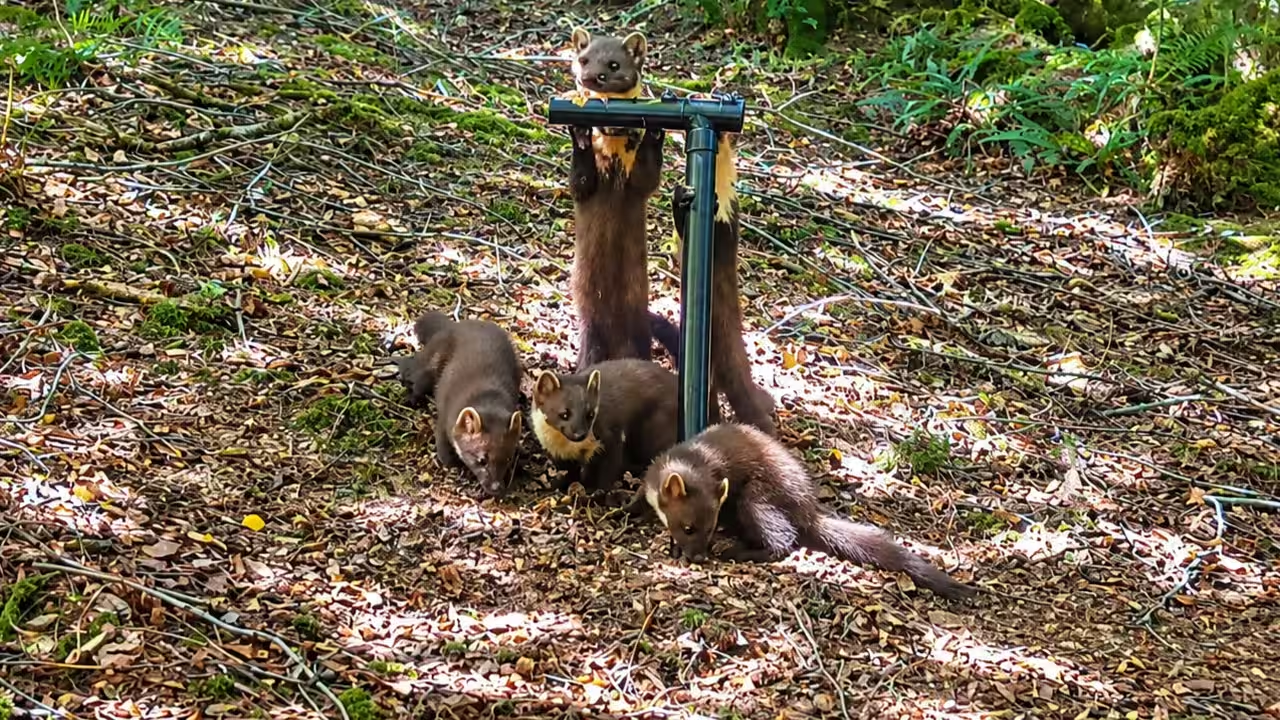
Pine martens are making a remarkable return to south-west England after disappearing from Exmoor for more than a century, with conservationists capturing the first confirmed evidence that the reintroduced animals are breeding in the wild. A remote trail camera recorded a female pine marten with four kits on Exmoor, signalling that an ambitious effort to restore the native predator is beginning to take hold. The breakthrough follows the release of 19 pine martens on Exmoor in September 2025 after years of preparation involving conservation organisations, landowners, volunteers and local communities. Volunteers have supported the project through practical conservation work, including helping with den boxes and monitoring wildlife cameras, while conservationists have tracked the released animals to understand how they are settling into the landscape. The sighting of four kits marks a major step towards establishing a self-sustaining population.Pine martens return to England after a centuryPine martens (Martes martes) were once widespread across Britain, including south-west England, but their numbers fell dramatically because of persecution, trapping, hunting and habitat loss. The species disappeared from Exmoor more than a century ago and became extremely rare across much of England. Their main remaining stronghold in Britain was Scotland, where healthier wild populations could support carefully selected animals for conservation translocations. The return to Exmoor is part of the Two Moors Pine Marten Project, which aims to restore the species across Dartmoor and Exmoor and eventually establish a connected population throughout south-west England. The project is led by Devon Wildlife Trust and involves Dartmoor National Park Authority, Exmoor National Park Authority, Forestry England, the National Trust, Somerset Wildlife Trust and the Woodland Trust, with expert support from the Vincent Wildlife Trust.19 pine martens were released on ExmoorThe latest phase of the recovery began in September 2025, when 19 pine martens were released into woodland on Exmoor. The founding group consisted of nine females and 10 males, providing conservationists with a balanced starting population for the reintroduction. The animals came from healthy wild populations in the Scottish Highlands and underwent health checks before being transported to Devon. The release was the result of around seven years of preparation, including habitat assessments, discussions with landowners and farmers and planning for the animals' long-term monitoring. The pine martens were placed in specially prepared release pens before being allowed to explore the surrounding woodland. Each animal was fitted with a radio collar so project staff could track its movements and study how it used the new landscape.Local people helped track their returnThe reintroduction was led by conservation organisations, but local people have played an important role in supporting the recovery. Volunteers have helped with practical work such as constructing den boxes and assisting with wildlife monitoring. The project has also encouraged people across Devon, Cornwall and Somerset to report possible pine marten sightings, particularly when photographs are available. Trail cameras have become an especially important monitoring tool because pine martens are elusive and mainly active at night or around dusk and dawn. Remote cameras allow conservationists to record animals without disturbing them and can reveal behaviour that would be difficult to observe directly. The involvement of local people therefore gives the project a much wider network for detecting animals as they move beyond the areas where conservationists are actively tracking them.A camera captured a female with four kitsThe major breakthrough came when one of the project's remote trail cameras recorded a female pine marten with four young kits. The cameras are positioned across the landscape to monitor the reintroduced animals, with some using scents and food such as peanut butter and fish oil to attract pine martens close enough to be recorded. The footage provides the first confirmed evidence that the reintroduced population on Exmoor has successfully bred. That makes the discovery considerably more significant than an ordinary wildlife sighting. An adult surviving after release would demonstrate that the animal had adapted to its surroundings, but a female raising young shows that at least one of the reintroduced animals has survived, reproduced and found conditions suitable for raising the next generation.Four kits offer hope for a self-sustaining populationThe discovery of four kits is particularly encouraging because pine martens generally have relatively small litters. Females usually give birth in March or April, and two or three kits are typical, although larger litters can occur. Ali North, the Two Moors Pine Marten Project's field officer for Exmoor, said the team had been monitoring the animals and was delighted to see evidence of breeding. Ali Hawkins, senior ecologist at Exmoor National Park Authority, described the breeding evidence as a major milestone while stressing that the population remains small and vulnerable. The kits therefore do not mean that the reintroduction is complete. Instead, they provide the first clear indication that the population has moved beyond simple survival after release and has begun the crucial process of reproduction.Dartmoor’s pine martens are breeding tooThe Exmoor discovery follows an earlier success on neighbouring Dartmoor. The Two Moors Pine Marten Project released 15 pine martens on Dartmoor in autumn 2024, consisting of eight females and seven males. Trail-camera footage subsequently confirmed that females had produced young. In 2026, further footage showed a female with two kits near the Wray Valley, providing evidence of breeding for a second consecutive year. The breeding records from both Dartmoor and Exmoor are encouraging because the project's wider objective is to establish viable populations in both landscapes. If those populations expand and animals disperse between suitable areas, they could eventually help create a much larger and more connected population across the south-west.Why conservationists want the predator backPine martens are native woodland predators and omnivores that eat a broad range of foods, including small mammals, birds, insects and fruit. Their return restores a predator that had been missing from parts of south-west England for generations. Conservationists are also interested in their potential influence on grey squirrels. Research elsewhere in Britain has found relationships between recovering pine marten populations and grey squirrel abundance, and pine martens may create conditions that benefit native red squirrels in some landscapes. However, it would be premature to claim that the Exmoor reintroduction will automatically control grey squirrels or restore red squirrels. The central aim of the project is to restore a native species and rebuild ecological processes that were disrupted when pine martens disappeared.The reintroduced animals are being closely monitoredConservationists are using several methods to determine whether the animals are adapting and establishing themselves. Radio collars fitted to the released pine martens allow researchers to follow individual movements and determine which habitats they use. Remote cameras provide information on activity, behaviour and breeding, while public reports can reveal animals outside the project's main monitoring areas. This combination is particularly useful for a species that is difficult to observe directly. Monitoring will also help conservationists identify potential threats and understand whether the population is expanding naturally. The evidence gathered during the early years of the project will be important in determining whether the animals can survive and reproduce without further releases.The comeback remains vulnerableDespite the excitement surrounding the four kits, conservationists say the population is still small and vulnerable. Pine martens naturally occur at relatively low densities and produce only one litter each year, so population growth can be gradual. The animals also face modern threats, including road deaths and accidental poisoning from rodenticides. Habitat connectivity will become increasingly important if young pine martens disperse into new areas. Conservationists therefore need to continue monitoring the population and working with landowners and local communities to make sure suitable habitat remains available. The four kits are a sign that the project is moving in the right direction, but they are not proof that the species has yet secured a permanent foothold.Seven years of preparation are beginning to pay offThe return of pine martens to Exmoor was not a quick reintroduction exercise. The Two Moors Pine Marten Project spent roughly seven years preparing for the releases, assessing habitats, working with landowners and farmers and developing systems for monitoring the animals. Volunteers and local communities became part of that wider effort by supporting practical conservation work and helping gather information about wildlife. The release of 19 animals in 2025 was therefore one stage in a much longer conservation programme. The discovery of the four kits now provides evidence that the years of planning and monitoring are producing the outcome conservationists ultimately wanted, with reintroduced animals surviving in the wild and producing a new generation.People are now being asked to help find moreThe conservation effort is continuing, and members of the public are being encouraged to report possible pine marten sightings across Devon, Cornwall and Somerset. Photographs can help experts distinguish pine martens from other similarly sized mammals and verify records. People who already operate trail cameras are also being encouraged to take part in wildlife monitoring. This public involvement could become increasingly valuable as young pine martens grow and begin dispersing from their mother's territory. Each verified sighting can help conservationists understand how far the population is spreading and whether animals are beginning to establish themselves beyond the original release sites.Four kits mark the beginning, not the endA female pine marten moving through Exmoor woodland with four kits is a striking sign of a species returning after generations of absence. The footage provides the first confirmed evidence that the animals released on Exmoor have bred and that the landscape is supporting their young. For the conservationists and volunteers involved, it is an important reward for years of preparation, monitoring and practical work. But the real measure of success will come over the years ahead, as more young are born, animals disperse and the population becomes capable of sustaining itself. After more than a century without pine martens, however, the appearance of four kits offers a powerful early sign that England's lost woodland predator is beginning to reclaim part of its former range.
Topics in this story
Gathered from external sources. Rights to this text belong to whoever originally published it.