In 1982, one of the world's most remote islands built a wind turbine to cut diesel use; 408 days later, a gale destroyed it
Experiments & Discoveries News: A small wind turbine became part of an unusual energy project on Tristan da Cunha in 1982, when the remote island community explored how renewable tec.
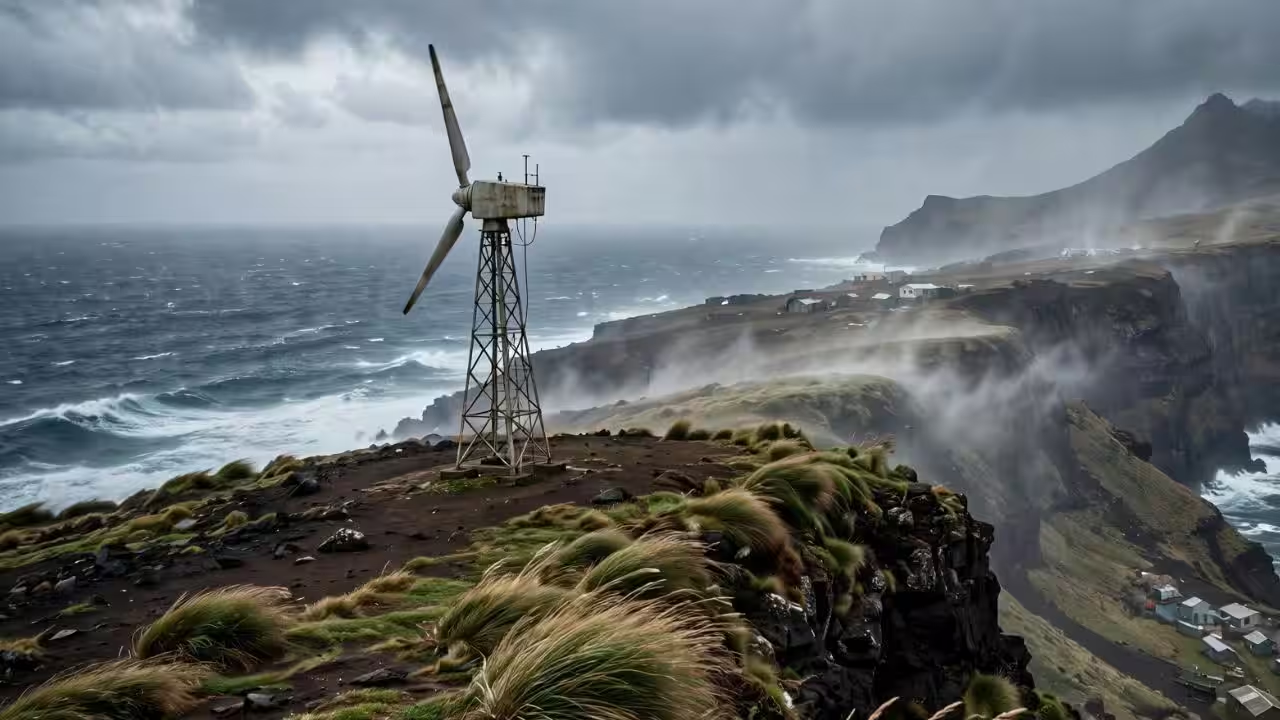
A small wind turbine became part of an unusual energy project on Tristan da Cunha in 1982, when the remote island community explored how renewable technology could work in difficult conditions. The project also involved transporting equipment to the island, which added another challenge to the project. Local staff from the island helped with the installation and later took responsibility for operating the machine.According to the study published in Science Direct titled ‘The Installation and Operation of a Wind Turbine on the Island of Tristan da Cunha’, the project was recorded in the proceedings of the Third International Conference on Energy for Rural and Island Communities, held in Inverness in 1983.How did the wind turbine project begin on Tristan da CunhaThe turbine, manufactured by the Danish company Windmatic and selected by the UK's Cranfield Institute of Technology, was erected on 14 April 1982 on the plateau above Hottentot Point. Like other oil-dependent communities, Tristan da Cunha faced rising costs for diesel-generated electricity and civil agricultural operations. The Government of the island then began exploring the possibility of generating electricity from wind.The idea led to a wind power project near the settlement. Within six weeks, components from Denmark, the United Kingdom, and South Africa were brought to the island and installed to create a 45 kW wind-powered generating station. The turbine was connected to the existing electricity network and later maintained by local staff. However, just 408 days after it was installed, the turbine was destroyed in a gale.What made the wind turbine project challenging for Tristan da CunhaBy November 1982, the turbine had produced 2,910 kWh of electricity, but at that rate, it represented a payback period of 23 years on capital costs, without even accounting for local labour or maintenance.As an island community, Tristan da Cunha faced practical challenges in bringing people and equipment to the site. The project had to work around shipping movements and the limited time available for the installation. Staff from the island contributed to the work and were acknowledged in the project record for their role in installing the machine within the available time.How did local staff help install and operate the wind turbineIsland staff helped with the installation and completed the work within the limited time available. The project, however, required a substantial investment from the island, with more than £70,000 of Tristan Government money spent on the turbine. The experience showed that bringing renewable energy technology to a remote island involved more than transporting equipment. It also required the technical skills to install and operate the system, along with support to deal with problems after the equipment arrived.How was the wind turbine operated after installationThe turbine was operated on Tristan da Cunha rather than being treated as a one-time demonstration. This responsibility of the staff was important because renewable energy equipment requires people on site who can manage its operation. In an isolated community, that role becomes especially significant because assistance from outside may not be immediately available. The project involved more than selecting an energy technology. It required transport, timing, installation skills, and ongoing technical responsibility.
Topics in this story
Gathered from external sources. Rights to this text belong to whoever originally published it.