In 2023, Princeton researchers tested radiative cooling with natural ventilation and thermal mass, keeping a building 3.9°C below outdoor air
Science News: In 2023, researchers tested whether a building could be cooler than the air outside while still relying on natural ventilation. The experiment used tw.
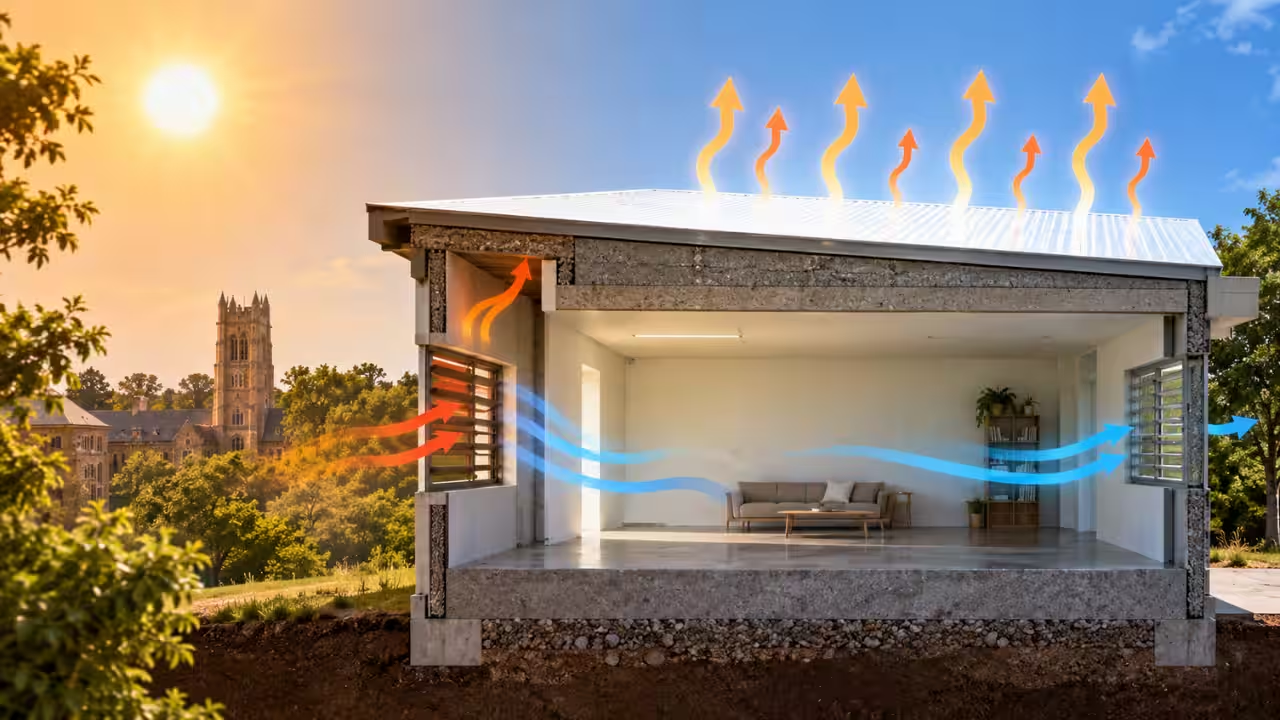
In 2023, researchers tested whether a building could be cooler than the air outside while still relying on natural ventilation. The experiment used two insulated boxes in California to study how radiative cooling, thermal mass and temperature-driven airflow could work together without fans or mechanical systems. The test box had an uninsulated aluminium roof covered with a radiative cooling material. According to the study published in Cell, titled ‘Passive radiative cooling to sub-ambient temperatures inside naturally ventilated buildings’, the surface released heat towards the sky, while its underside absorbed heat from inside the box through natural convection. Differences between indoor and outdoor temperatures drove air through the ventilation openings, and thermal mass helped moderate the temperature. During the November experiment, the test box was 3.9°C below the prevailing outdoor temperature, while the reference box was 5.0°C above it. Despite an internal heat source, the test box also maintained nearly seven air changes per hour during the day.How did the cooling roof work with natural ventilationThe test box relied on temperature differences to move air instead of using fans. During the day, when the interior was cooler than the outside air, buoyancy forces produced a downward mixing flow through the box. The reference box used the opposite arrangement. Air moved upwards when the interior became warmer than the outdoor air.The roof was responsible for much of the heat rejection. Its radiative cooling surface released thermal energy towards the sky, while the underside transferred heat from the interior through natural convection. Thermal mass inside the box absorbed and released heat as temperatures changed. The researchers scaled the experiment to represent about one per cent of the ventilation rate and heat load associated with a single occupant, allowing the results to be considered in terms of building-scale conditions.How much cooler did the test box stay than outdoor airThe experiments were carried out under clear skies, with the researchers recording indoor temperatures, ventilation rates and heat flows. In November, the reference box was 5.0°C above the prevailing mean ambient temperature. The test box, in contrast, was 3.9°C below the prevailing mean. It also reduced the outdoor temperature swing by a factor of 0.59.The lower temperature was maintained while the test box continued exchanging air with the outside. During the day, it recorded nearly seven air changes per hour even with an internal heat source. Overall, the test box was 8.9°C cooler than the reference “gold standard” for passive cooling. Its temperature was less stable than that of the reference box because the roof radiator temperature varied with outdoor conditions.What did the study reveal about passive radiative coolingThe experiment showed that radiative cooling could work alongside buoyancy-driven ventilation and thermal mass to keep indoor temperatures below the prevailing outdoor temperature. The test box was designed to distinguish the effect of radiative heat rejection from the effects of nighttime ventilation. Since it ventilated during the day rather than relying on night-time cooling, the researchers could examine the contribution of radiative cooling more directly.The researchers concluded that a naturally ventilated building could be cooled below the prevailing ambient temperature using an uninsulated roof that radiates heat towards the sky. Their calibrated model also suggested that adding thermal mass to the roof radiator could reduce temperature fluctuations while keeping the indoor temperature below the prevailing mean. The study combined radiative cooling, thermal mass and temperature-driven ventilation in a passive system that maintained air exchange without mechanical ventilation.
Topics in this story
Gathered from external sources. Rights to this text belong to whoever originally published it.