How melting Arctic glaciers is creating a climate ‘doom loop'
The more glaciers melt, the more of the greenhouse gas they are likely to release into the atmosphere. The post How melting Arctic glaciers is creating a cli...
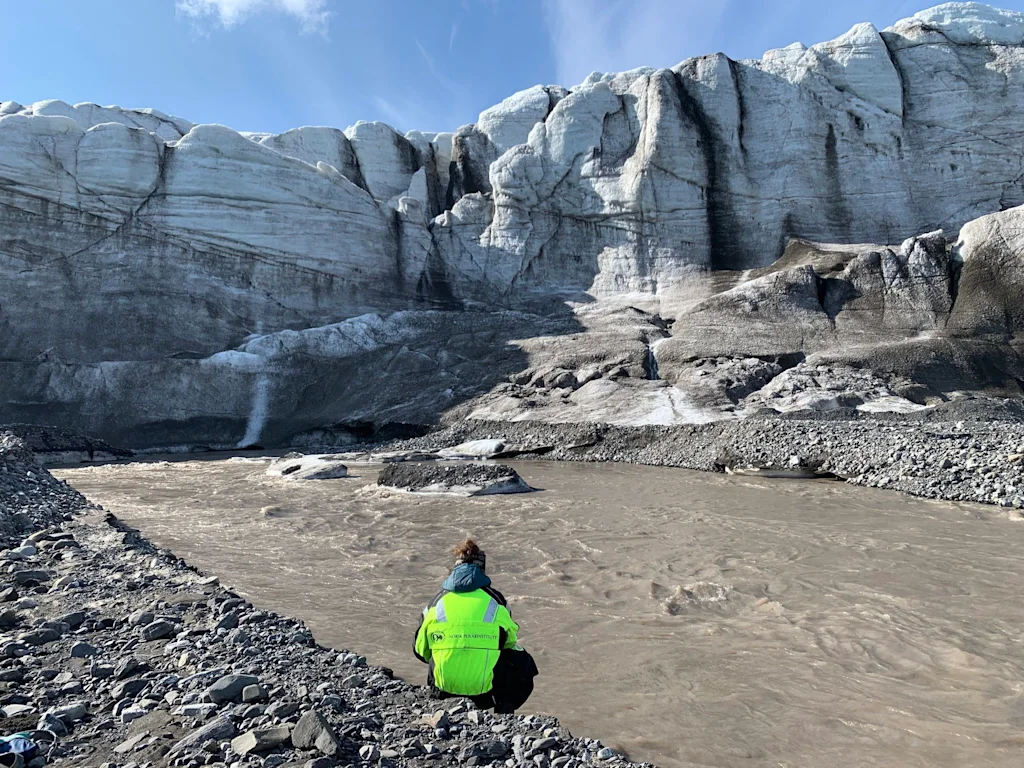
Melting Arctic glaciers are releasing ancient methane from rocks beneath the ice, creating a natural feedback loop that may worsen as the region continues to warm.
Research conducted in Svalbard reveals that glacier meltwater rivers are carrying methane from rocks under the ice into the atmosphere, with every river tested containing more methane than expected.
The study estimates that land-terminating glaciers across Svalbard may transport between 182 to 368 metric tons of methane per year in meltwater, highlighting a previously undercounted pathway for ancient carbon to reach the atmosphere.
Melting Arctic glaciers are creating a climate "doom loop" by flushing out ancient methane from rocks beneath the ice, reveals new research.
The more glaciers melt, the more of the greenhouse gas they are likely to release into the atmosphere, say scientists.
The study shows meltwater rivers flowing from Svalbard glaciers inside the Arctic Circle are carrying ancient methane from rocks under the ice into the open air
The findings reveal a natural "feedback" loop that scientists warn may worsen as the Arctic continues to get warmer.
They say melting glaciers can open hidden pathways for the powerful greenhouse gas.
The study, published in the journal Nature Communications , was led by Gabrielle Kleber from the iC3 Polar Research Hub in Tromsø, Norway.
Her team sampled rivers draining valley glaciers across Svalbard.
They found methane in every river they tested.
The research team took 148 water samples from 19 glacier-fed rivers in central Svalbard, providing the most extensive assessment yet of methane in glacier meltwater in the region.
Every river in their survey contained more methane than expected from contact with the atmosphere, with the highest values reaching up to 425 times that level.
Study co-author Silje Waaler says the team deliberately designed the survey to capture the diversity of glaciers across the region.
She said: "We wanted to study many different glaciers, across a range of rock types and ice conditions.
"That gave us a clearer picture of why some glacier rivers carry more methane than others.
A key finding was that the methane is mostly not being made by microbes under the ice, as has been observed beneath glaciers in Greenland.
Instead, it appears to come from Svalbard's geology.
Many parts of the archipelago contain old shale layers rich in organic carbon.
Over millions of years, heat and pressure can turn the material into methane and other gases.
They also analyzed the carbon in the methane to identify its source.
In some samples, they measured related gases - including ethane and propane - which helped confirm that much of the methane came from geological sources.
Kleber said: "These glaciers are mostly melting on their surfaces.
"But this meltwater finds its way to the bottom of the glaciers through crevasses and holes.
"This means that it interacts with the rocks underneath, and where those rocks contain ancient gas, the water can flush methane out into rivers."
She said the most methane-rich waters came from glaciers resting on shale-bearing rock formations, but geology alone did not explain everything.
The team also found that the physical state of the glacier bed matters.
Glaciers with thawed, wet and active beds were far better at picking up methane.
Glaciers frozen to their beds were less connected to the rocks below, even when methane-rich geology was present.
To understand the processes, the research team combined river chemistry with ice surveys.
They used ground-penetrating radar to map ice conditions within selected glaciers.
That allowed them to estimate how much of each glacier bed was thawed and able to carry water.
Co-author Leonard Magerl, a doctoral candidate, said: "The temperature at the base of glaciers is an important piece of the puzzle.
"We found that the biggest methane releases happened where the right rocks and the right glacier conditions came together.
"This insight can help to estimate emissions from other ice-covered regions."
The research team estimates that land-terminating glaciers across Svalbard may transport between around 182 to 368 metric tons of methane per year in meltwater, depending on how the estimate is scaled.
That is in addition to previous, much higher estimates for methane released by groundwater springs in front of glaciers.
But the researchers say it still points to a widespread and undercounted pathway for ancient carbon to reach the atmosphere.
While the study focused on Svalbard, the team believes similar methane-release pathways likely occur in other glaciated regions where ice overlies organic-rich rocks or sediments - including large parts of the Arctic, the Himalayas and Antarctica .
Kleber said: "The amounts reported here are small compared with human-caused emissions from fossil fuels, farming and waste.
"But they matter because they reveal a natural feedback loop that is not confined to Svalbard, and that may grow as the Arctic warms ."
As glaciers thin and retreat, she says more meltwater may reach their beds whch can increase contact with fractured rock, sediment and groundwater.
In some places, that may flush out more methane.
Kleber said some Svalbard glaciers are also becoming colder at their beds as they shrink.
If a glacier becomes frozen to its bed, she said its ability to flush methane through subglacial rivers may fall.
Kleber added: "Our results show that future methane release will depend on both geology and glacier change.
"That makes it important to know what lies beneath the ice, not only how fast the ice is melting."
Kleber and Magerl have previously found that meltwater from one Svalbard glacier could carry geologic methane from beneath the ice, making it release more methane per area than Greenland glaciers.
But newly uncovered groundwater springs are also releasing the potent greenhouse gas in Svalbard.
The new study shows that methane-rich meltwater is not unique to one glacier, but is widespread across central Svalbard being strongest where shale-rich geology and thawed glacier beds overlap.
Topics in this story
Gathered from external sources. Rights to this text belong to whoever originally published it.