A Neanderthal survived a severe facial injury for at least a year before dying 75,000 years ago; a 15mm shoulder-blade hole may be the earliest evidence of lethal violence with a wooden spear
A Neanderthal who lived around 75,000 years ago survived a serious facial injury for at least a year before suffering what researchers believe was a fatal
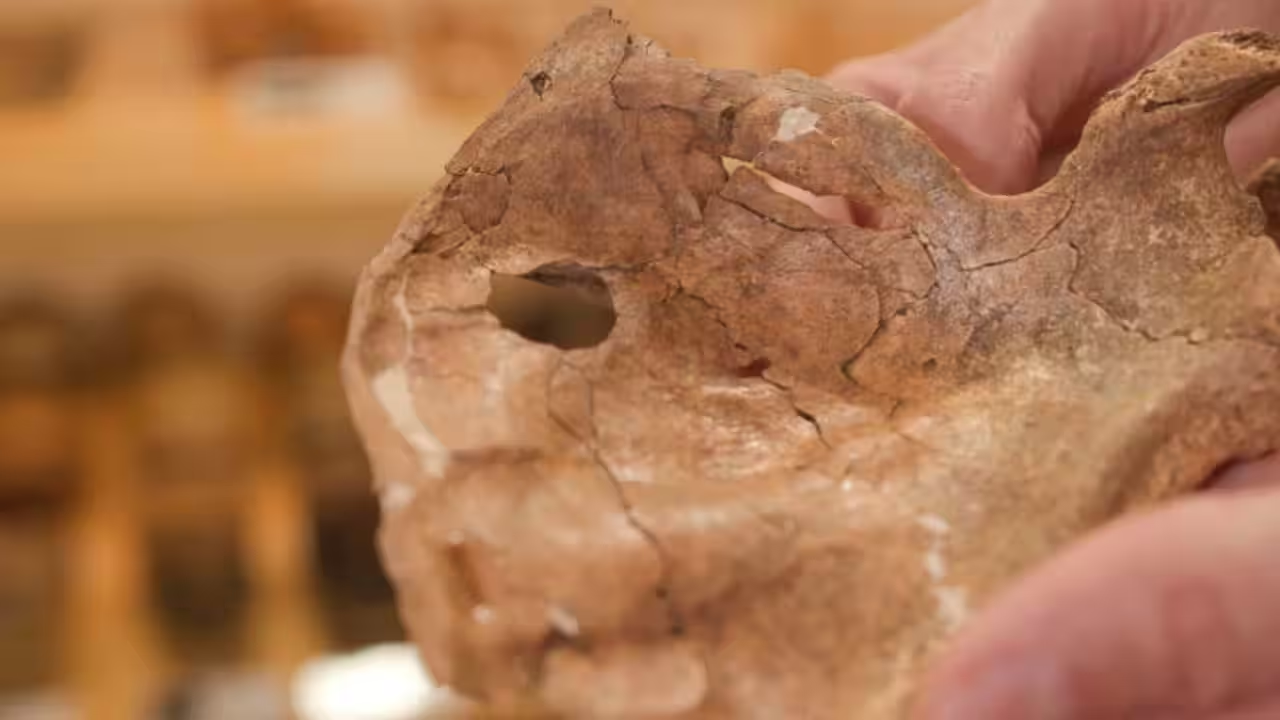
A Neanderthal who lived around 75,000 years ago survived a serious facial injury for at least a year before suffering what researchers believe was a fatal spear wound. The discovery, made at Shanidar Cave in Iraqi Kurdistan, could provide some of the earliest evidence of a deadly attack involving a wooden spear in human evolutionary history.Scientists reached this conclusion after examining the remains of an adult Neanderthal, identified as Shanidar A. A nearly complete left shoulder blade contained a circular hole measuring approximately 15mm across. Researchers believe the shape of the opening is consistent with a sharpened wooden spear passing through the chest and emerging through the bone. They also identified damage to the individual's front teeth, suggesting that the Neanderthal had experienced a separate, serious injury long before death.Although the shoulder wound may have resulted from an attack, scientists have not ruled out a hunting accident. The discovery is particularly important because the same remains offer evidence of both a potentially violent death and survival after an earlier injury that may have required help from other members of the group.Findings of the research led by archaeologists at the University of Cambridge were published on Thursday in the journal Scientific Reports and shared by Nature.com.What the 15mm hole reveals The shoulder blade was recovered from beneath approximately 7.5 metres of rock and sediment. Despite its age and fragile structure, much of the bone remained intact, allowing scientists to examine the damage in detail.The circular opening, together with small fractures around it, suggested that a pointed object had pierced the bone. Using microscopic examination and micro-computed tomography scans, scientists studied the direction of the impact and fragments found beneath the shoulder blade.The analysis indicates that the weapon entered the front of the body, passed through the left side of the chest and exited through the shoulder blade. Such an injury could have damaged the lungs and major blood vessels, causing death within a short time.The researchers then compared the opening with injuries produced experimentally using prehistoric weapons. Its rounded shape was more consistent with a wooden spear than a stone-tipped weapon, which generally leaves a different pattern of damage.According to Dr Emma Pomeroy, the study's lead author, "Holes left by recreations of spears from this time are an excellent fit for the one we found in the Neanderthal scapula," she said as quoted by University of Cambridge.However, the circumstances remain uncertain. A spear used during close-range hunting could have caused the injury accidentally. Researchers also considered deliberate violence because of the wound's position and the force involved.Pomeroy says, "The position of the wound and the force required to push it right through the Neanderthal’s body bear the hallmarks of an intended kill shot directed towards the heart."Earlier facial injury and possible careScientists also examined six heavily worn front teeth attributed to Shanidar A, who was estimated to have been around 45 years old at death.One lower incisor had split lengthways, leaving only half the tooth. Nearby teeth had also shifted from their normal positions. Researchers believe the damage was probably caused by a major blow to the mouth or face, although they could not establish whether it resulted from an accident or violence.A thick accumulation of dental calculus, commonly called tartar, had developed over the damaged tooth. This showed that the individual continued living and using the tooth after the injury.According to the researchers, the Neanderthal survived for at least another year, possibly longer. Eating and communicating may have remained difficult during that period. The team believes other Neanderthals may have helped the injured individual survive.Importance of Shanidar Cave According to Reuters, Shanidar Cave, located in the Zagros Mountains of northern Iraq, was used by Neanderthals as a seasonal campsite for tens of thousands of years, Reuters reported. Modern humans, or Homo sapiens, also occupied the cave in a later period. The site overlooks the Great Zab river valley and has been an important source of information about Neanderthals since archaeological excavations began there in the 1950s. Earlier discoveries included remains showing serious disabilities and long-term survival, contributing to research into care within Neanderthal groups.The latest study also examines how the dead were placed inside the cave. Shanidar A was found beneath other Neanderthal remains in a small area measuring approximately 1.5 metres by one metre.The bodies appear to have been deposited at different times, possibly within years or decades of one another. Their repeated placement near a large boulder supports the interpretation that the location was deliberately used for the dead.The researchers also found that a flash flood had disturbed Shanidar A's skeleton after decomposition, explaining why only some bones survived in their original positions.Together, the findings raise questions about Neanderthal social behaviour, including how they treated injured individuals and their dead.The proposed wooden spear injury also adds to evidence that prehistoric humans and their relatives possessed sophisticated woodworking skills. Wooden spears dating back hundreds of thousands of years have previously been discovered in Europe, including at Schoningen in Germany.
Topics in this story
Gathered from external sources. Rights to this text belong to whoever originally published it.