Scientists discovered a deep-sea worm living inside a glass sponge 1,000 metres below the Pacific; it uses the sponge as a hiding place to ambush other animals
A deep-sea worm living inside a glass sponge more than 1,000 metres beneath the Pacific Ocean has been identified as a new species, revealing an unique
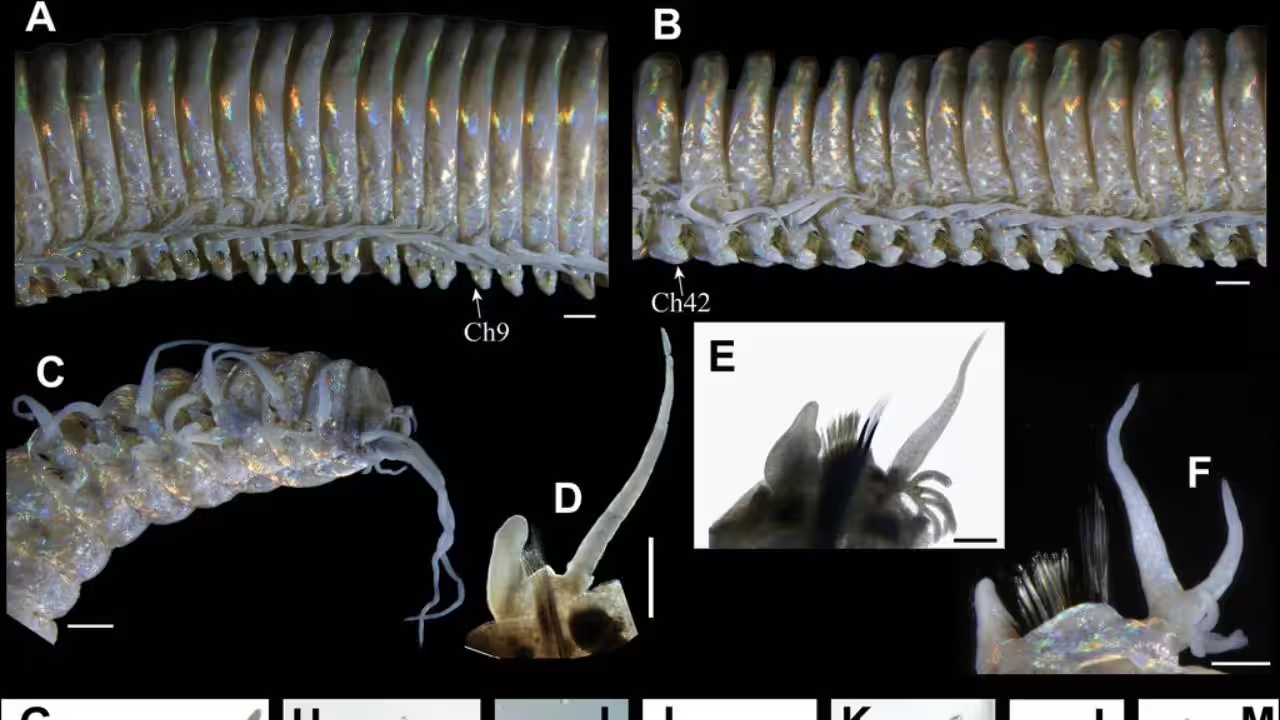
A deep-sea worm living inside a glass sponge more than 1,000 metres beneath the Pacific Ocean has been identified as a new species, revealing an unique relationship between two marine animals. The worm uses the sponge as a sheltered hiding place, waiting for other creatures to come within reach before feeding. Researchers described the discovery in a 2025 study titled 'Ambusher in sponge: a new species of Eunice (Annelida, Eunicidae) commensal within deep-sea Farreidae (Porifera, Hexactinellida) on northwest Pacific seamounts.' The findings also suggest that the arrangement could benefit both animals.Deep-sea worm hiding inside a glass sponge uses an unusual hunting strategyThe newly described species, named Eunice siphoninsidiator, lives in the central cavity of deep-sea glass sponges belonging to the Farreidae family. According to the ZooKeys study, the worm was discovered on seamounts in the north-west Pacific, where researchers examined specimens collected during deep-sea expeditions.Instead of living freely on the sea floor, the worm lives inside the sponge. This puts it in a safe spot but allows it to remain close to potential prey as it moves around the surrounding marine environment.The researchers identified the animal as a member of the Eunicidae family, a group of marine worms. Its particular association with glass sponges, however, makes it distinct from many other members of the group.A sheltered position helps the worm wait for preyThe worm's unique home appears to play an important role in how it feeds. Researchers examined fragments recovered from its digestive tract and found evidence of a carnivorous diet.The ZooKeys paper reports that the gut contained fragments of stalked barnacles and brittle stars. Although the researchers could not identify the remains to the species level, the material provided clues about what the worm consumes.Our results indicate that Eunice siphoninsidiator employs a sit-and-wait hunting strategy. It doesn’t appear to actively hunt across the seabed for food, but instead to stay hidden inside the sponge, and ambushes animals that come close enough to be captured. This behaviour explains the significance of the species' scientific name, which reflects its ambush-oriented lifestyle.The sponge may benefit from its unusual residentThe relationship between the worm and its host is not necessarily one-sided. "The animal living inside the sponge's central cavity might also benefit the sponge," the researchers suggest.The worm could help remove organisms growing on the surface of the sponge, the study says. These are called epibionts , and they can attach to other living organisms in the sea .The worm may help keep its host relatively clean by feeding on animals associated with the sponge. The researchers therefore consider the association to be potentially mutualistic, where both organisms could gain from their association.The study also makes an important observation. The worm was always within the glass sponges the researchers examined. This repeated association suggests the animal is closely adapted to the sponge habitat and not just using it by chance.Researchers identified the worm through physical and genetic evidenceThe researchers also studied its physical features and genetic material to see if it was a new species not previously described.The study describes Eunice siphoninsidiator as very similar to the Atlantic Ocean species Eunice norvegica. Both its physical appearance and molecular characteristics showed similarities.But the researchers identified differences that helped distinguish the newly described worm. These included the relative length of its palps, the structures around its head, the positions where certain hooks begin along its body and the shape of its bristles.Genetic analysis provided further evidence. The researchers compared a section of the animals' DNA known as the cytochrome c oxidase subunit I gene, or COI, and found a genetic distance of 13% between the new species and Eunice norvegica. This difference supported the researchers' conclusion that the sponge-dwelling worm should be recognised as a separate species.Deep-sea sponges provide habitats for other animalsThe discovery also points to the role of deep-sea sponges in supporting marine life. Glass sponges make intricate structures that can offer shelter and habitat to other organisms in places where good homes may be scarce.In the study, the researchers explain that deep-sea sponges attract a variety of associated animals including species that live with or inside them. Eunice siphoninsidiator is one example of how such relationships can develop in the deep ocean.Your child uses AI every day. But do they understand it? Find out in the TOI AI Masterclass.
Topics in this story
Gathered from external sources. Rights to this text belong to whoever originally published it.