Scientists discover bacteria that use iron minerals to remove toxic sulphide, revealing a hidden process that may help limit aquatic dead zones
A bacterial process that uses iron minerals to remove toxic sulphide could help explain how oxygen-deprived environments regulate the compound naturally.
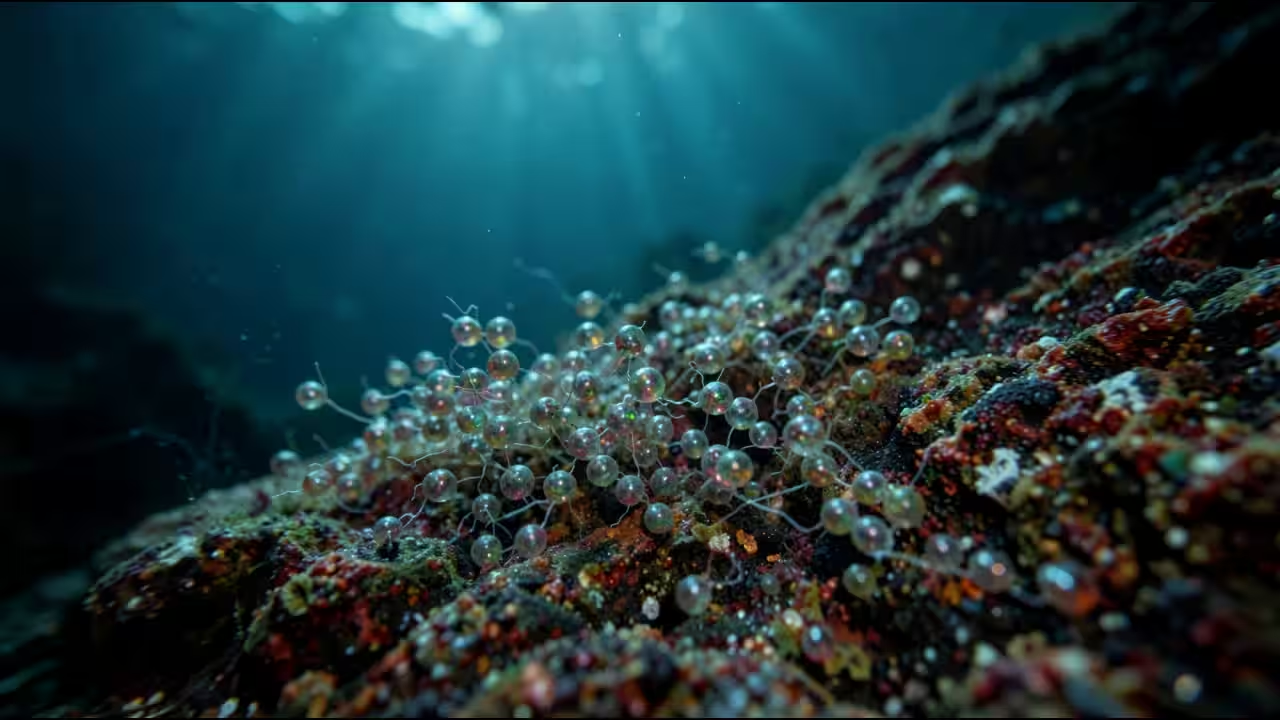
A bacterial process that uses iron minerals to remove toxic sulphide could help explain how oxygen-deprived environments regulate the compound naturally. In a study published in Nature in August 2025, an international research team identified a metabolism called MISO, in which a bacterium uses solid iron minerals while oxidising sulphide to obtain energy for growth. The finding challenges the long-standing assumption that the reaction between sulphide and iron(III) oxide is purely chemical. The researchers demonstrated the process in a cultivated bacterium and identified the genetic potential for related activity across a wider range of microbial groups. The University of Vienna, whose researchers were part of the team, said the discovery could have implications for aquatic environments and may help prevent low-oxygen dead zones from expanding. The work also adds a biological link to scientists’ understanding of how iron, sulphur and carbon cycle through oxygen-free environments.How MISO bacteria use iron minerals to remove toxic sulphideThe study’s lead author, Song-Can Chen, worked with senior researchers Marc Mussmann and Alexander Loy, along with an international team. They named the process MISO, short for microbial iron oxide respiration coupled to sulphide oxidation. It involves microorganisms transferring electrons from sulphide to solid iron(III) oxide minerals, reducing the iron while oxidising sulphide. In oxygen-free environments such as marine sediments, wetlands and freshwater aquifers, microbial activity can produce hydrogen sulphide, a toxic gas with a distinctive rotten-egg smell. Iron(III) oxide minerals, including compounds found in rust, can react with sulphide. Until this research, scientific models generally treated the reaction as a non-biological chemical process that produces elemental sulphur and iron monosulphide. The researchers showed that microorganisms can also use this reaction to obtain energy for growth. In laboratory experiments, the team studied the bacterium Desulfurivibrio alkaliphilus, which used ferrihydrite, an iron(III) mineral, as an electron acceptor while oxidising sulphide. The biological process outpaced the equivalent abiotic reaction at low sulphide concentrations of about 50 micromolar.The results depended on the amount of sulphide supplied. When fed repeated small doses of about 50 micromolar sulphide, the culture converted more than 90% of it to sulphate, with negligible elemental sulphur formation. At higher doses, some elemental sulphur also accumulated. The researchers suggest that MISO can facilitate sulphate formation without requiring elemental sulphur disproportionation, although the bacterium may also use a 2-step route in which sulphide is initially converted into elemental sulphur. The experimental findings also have limitations. D. alkaliphilus was grown at pH 9.3, and the authors described its growth with ferrihydrite as restricted, with only 2 to 3 fold increases. Because the bacterium is an alkaliphile, its behaviour should not automatically be assumed to represent microbial activity across all marine sediments or other oxygen-poor environments.Could MISO bacteria help prevent aquatic dead zones from expanding?Oxygen-free sediments can allow toxic hydrogen sulphide to accumulate. NOAA says dead zones get their name because most marine life in them dies or moves away. Nutrient pollution is a major cause of human-driven dead zones. Excess nutrients can trigger algal blooms, and when the algae die and decompose, the process consumes oxygen in the surrounding water. Marc Mussmann said in the University of Vienna’s announcement that MISO bacteria remove toxic sulphide and may help prevent low-oxygen dead zones from expanding. The study did not test whether MISO affects dead zones in the field, so its potential contribution to these ecosystems remains uncertain. The researchers estimated that MISO could account for between 1% and 7% of total sulphide oxidation to sulphate in marine sediments worldwide. This is a first estimate, not a direct measurement of the process across the world's oceans. The paper titled Microbial iron oxide respiration coupled to sulfide oxidation links its potential global contribution to the substantial supply of reactive iron reaching the oceans through terrestrial runoff.What the discovery reveals about Earth's iron, sulphur and carbon cyclesThe study identifies a specific microbial capability that had not previously been demonstrated: gaining energy from solid-phase iron(III) oxides while oxidising sulphur compounds. This does not mean that all links between iron and sulphur metabolism were unknown. Some acidophilic microorganisms, for example, can couple elemental sulphur oxidation with the reduction of dissolved iron(III). MISO is distinct because it uses solid iron(III) oxides. The researchers also found that D. alkaliphilus fixes carbon dioxide while growing through MISO. This process, known as autotrophic carbon fixation, allows the bacterium to use inorganic carbon to build the material it needs for growth. It is different from photosynthesis, but demonstrates how microorganisms can build biomass using energy from chemical reactions rather than sunlight.The team’s genomic analysis identified the genetic potential for related iron-dependent sulphur processes across 37 bacterial and archaeal phyla. The researchers said this suggests that the capacity for MISO may extend beyond the bacterium they cultivated. However, identifying genetic potential across microbial groups is not the same as experimentally confirming the metabolism in every group. By identifying MISO, the study adds another mechanism to scientists’ understanding of how iron and sulphur interact in oxygen-free environments. Further research will be needed to establish how widely the process operates in natural settings and how much it contributes to sulphide removal in different marine, freshwater and terrestrial habitats.
Topics in this story
Gathered from external sources. Rights to this text belong to whoever originally published it.