In Oklahoma, a veteran spent 5 years fighting back invasive cedars on his 400-acre ranch; now native grasses are returning and water is flowing into newly reappearing streams
Science News: Retired Marine Corps veteran Brian Heishman has been slowly turning a 400-acre ranch near Pawnee, Oklahoma, into a cedar forest for five years. An ove.
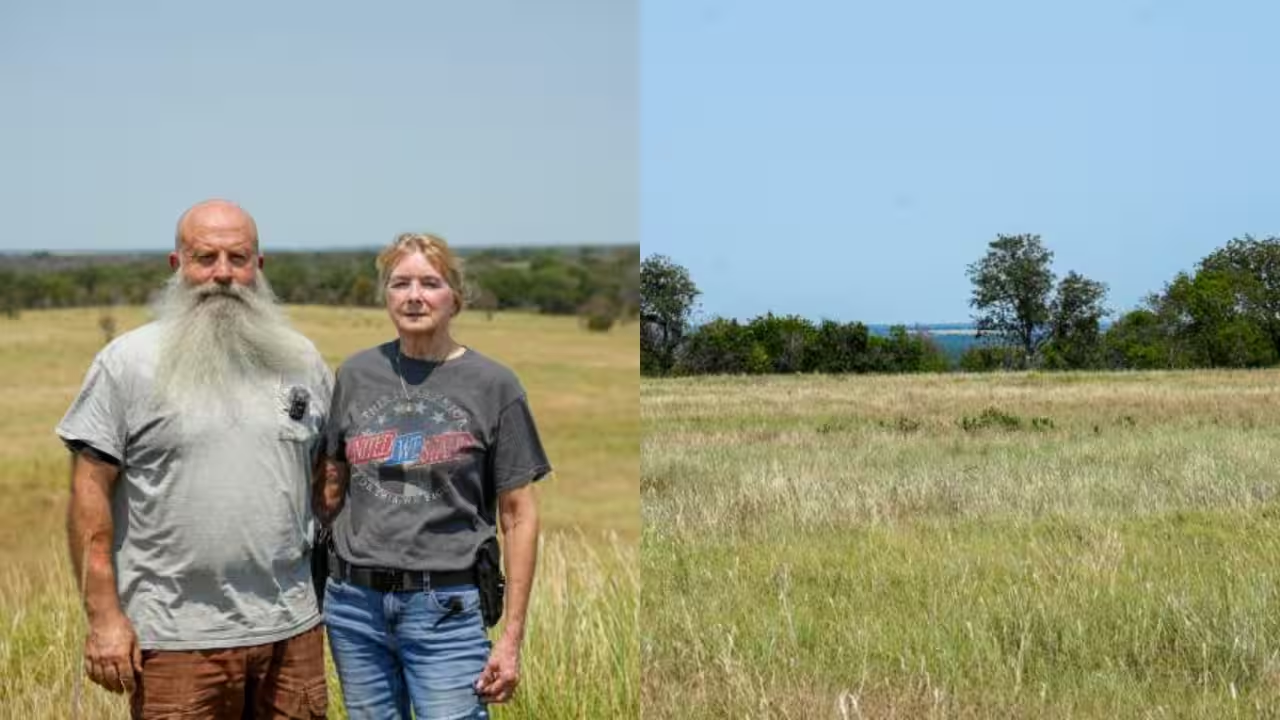
Retired Marine Corps veteran Brian Heishman has been slowly turning a 400-acre ranch near Pawnee, Oklahoma, into a cedar forest for five years. An overgrown property, choked by Eastern Red Cedars, is showing signs of ecological recovery, with native grasses returning, ponds filling up faster and streams reappearing. For Heishman and his wife, Melinda, the work has become more than just a land management project. After more than two decades of military and government service, it has given Heishman a new calling. According to a USDA report, Heishman served five years in the infantry, 16 years in Explosive Ordnance Disposal and a decade as a U.S. government contractor in Iraq. After retiring from his career of service, he searched for a meaningful way to remain active and then the chance to manage the family property was the opportunity. When Heishman and Melinda bought the land, it had three ponds and large areas thickly covered with Eastern Red Cedars. At first he wondered if he could manage the vast clearing alone, as he had never done such work before. That changed when he cleared a preliminary 500 feet to set up a firebreak for a prescribed burn. This experience gave him the confidence to take on a much larger restoration effort.Working with conservation expertsHeishman started working with Duel Brown, the Pawnee County conservationist for the Natural Resources Conservation Service, who helped find practical ways to improve the property. With the assistance of Cole Fagen of the American Bird Conservancy, Heishman inked his first contract with the NRCS in 2022. Cedar removal has been a fundamental component of his conservation plan ever since. Additional contracts with the NRCS Environmental Quality Incentives Program helped the couple install cross-fencing and grazing practices to better manage their livestock and vegetation. Also, a Farm Service Agency loan for equipment purchases also sped up the cedar-clearing effort. Water management became a priority too. With the help of conservation partners, Heishman restored the dam on the property’s largest pond, improving water availability for cattle. The Oklahoma Department of Wildlife Conservation also helped stock the ponds with fish to enhance their ecological value. And further guidance on the use of prescribed fire was provided by the Pawnee County Prescribed Burn Association.Wildfire accelerates the transitionHeishman’s efforts were accelerated unexpectedly by a wildfire in 2025. The fire also damaged other trees, including oaks and black walnuts, but it destroyed much of the cedar growth on the east side of the property. Heishman is now removing the last of the tree skeletons and allowing the recovering landscape to take hold. Native grasses are starting to come back in areas once filled with cedars. The ponds on the property are filling more quickly and streams that had dried up are starting to flow again, since there is less competition among trees for water. The changes provide a clear measure of how much the land has changed since Heishman’s restoration work began in 2022.Designing a long-term futureRestoration is not a one-time affair for Heishman. His next challenge is to keep the progress and not let the Eastern Red Cedars take back the property. He and Melinda hope to build a home on the ranch one day and enjoy the landscape they have spent years restoring. Their experience also offers a more general lesson for conservation: Landowners don’t have to do big restoration projects all alone. Heishman has transformed an unknown challenge into a long-term stewardship effort by partnering with the NRCS, wildlife agencies, conservation organizations and local prescribed-burn groups. Five years into the project, the changes are becoming more and more apparent. Native grasses are coming back, water is flowing again and a ranch once choked with cedar is slowly being transformed into better range for cattle and wildlife. Restoring the land has become a new way to serve for a veteran who spent much of his life serving others.
Topics in this story
Gathered from external sources. Rights to this text belong to whoever originally published it.