University of Maryland students build a robotic feeding device for under $300; commercial alternatives can cost more than $5,000, the team says
A team of 4 mechanical engineering students at the University of Maryland has developed a robotic feeding device designed to help people with physical
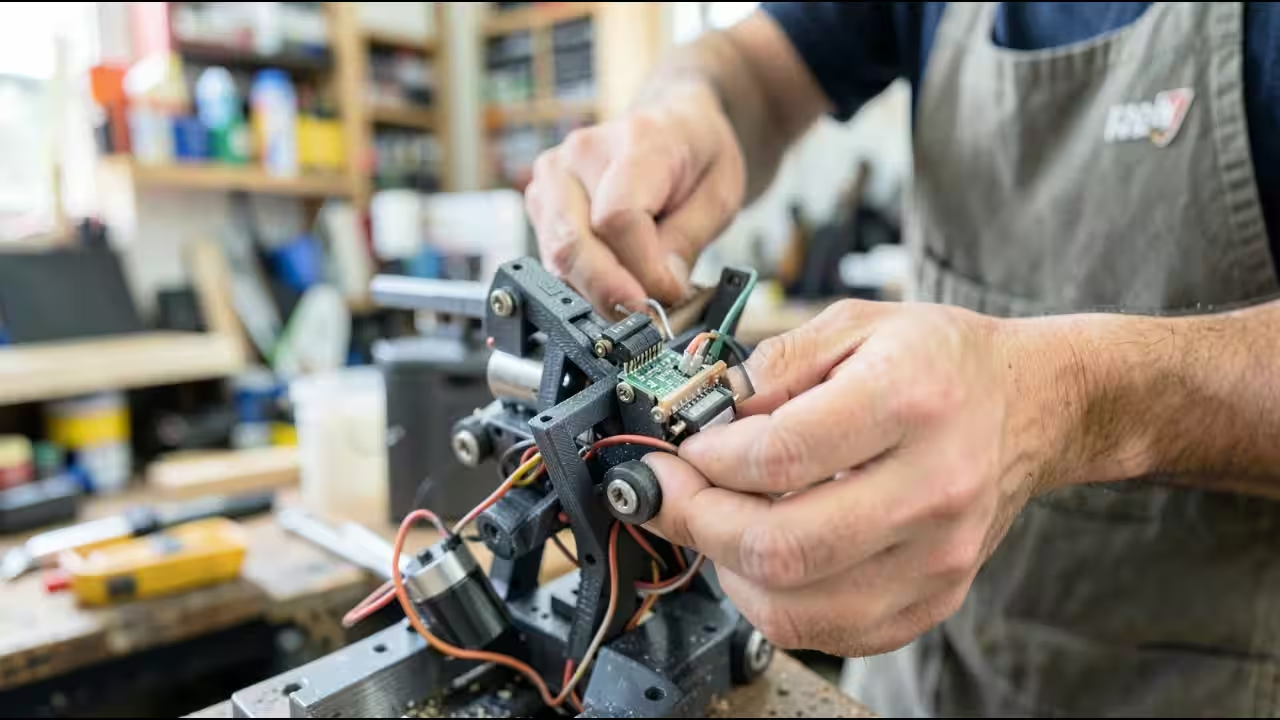
A team of 4 mechanical engineering students at the University of Maryland has developed a robotic feeding device designed to help people with physical disabilities eat more independently. Called FEEED, short for Feeding Equipment for Eating with Enhanced Dignity, the device is priced at under $300 by the team, which says commercial counterparts can cost more than $5,000. The project was presented at the A. James Clark School of Engineering Capstone Design Expo on May 6, 2026, at the XFINITY Center. It is designed for people who cannot feed themselves independently, including some people with quadriplegia or cerebral palsy. The project is sponsored by Volunteers for Medical Engineering, with Vincent Nguyen listed as the project’s adviser/instructor. The project page names the student team as Devlin Chrystal, Jacob Kiwanuka, Jordan Partlow and Ibrhima Toure. The team’s project page says the device has been tested with real users. A photo caption on the page describes a student at the BAER School using it “for the first time”, but the page does not specify the number of participants or report detailed testing results. The project aims to make assistive feeding technology more accessible to people and institutions that cannot afford existing options.Low-cost robotic feeding device for people with quadriplegia and cerebral palsyEating is a daily activity that many people take for granted, but those with significant motor impairments may need assistance with every meal. A 2023 study, Design Principles for Robot-Assisted Feeding in Social Contexts, estimated that 1.8 million Americans with motor impairments cannot eat without assistance. The researchers examined how robot-assisted feeding could help people participate more fully in social dining, highlighting the importance of inclusion and personal agency alongside the practical task of eating.Commercial robotic feeders already offer one way to support independent eating, but their cost can be prohibitive for some households, schools and care facilities. The FEEED team identifies this affordability gap as a central problem its device is intended to address. Its project description states that the feeder costs under $300 and that industry counterparts can cost more than $5,000. These figures come from the student team’s project page rather than an independent comparison of market prices. The device is intended for people who cannot feed themselves independently, including some people with quadriplegia or cerebral palsy. By focusing on a lower-cost design, the students aim to make robotic feeding a more practical option for people and settings with limited resources.How the FEEED assistive feeding device works and why it is affordable to manufactureAccording to the team’s project description, FEEED uses off-the-shelf components, 3D-printed parts and a simple assembly process. The students say this approach is intended to make the device easier to produce and potentially manufacturable at scale. It can be programmed to work with different plates, bowls and utensils, and performs a feeding action when the user provides an input.A separate study, Active Robot-Assisted Feeding With a General-Purpose Mobile Manipulator: Design, Evaluation, and Lessons Learned, evaluated a feeding system built around the Willow Garage PR2 research robot with 10 able-bodied participants and 9 participants with motor impairments. The system is substantially different from the low-cost FEEED prototype. Participants successfully ate various foods using the system, and those who operated it generally described it as comfortable, safe and easy to use. The findings offer insights into the design and evaluation of feeding robots, although the system differed from the University of Maryland students’ device.Why affordable assistive technology matters for independence and dignity at mealtimeThe University of Maryland team reports that FEEED has been tested with real users. Its project page highlights a student at the BAER School experiencing independent mealtime with the device. This provides an early example of its intended use, although wider testing would be needed to establish how consistently it performs across different users, meals and environments. For families, schools and care facilities working with limited budgets, a device priced under $300 could offer an alternative worth exploring. However, its affordability alone does not establish its long-term reliability, safety or suitability for every person who needs feeding assistance. Those questions will require further evaluation as development continues.FEEED’s central idea is straightforward: assistive technology should be designed with affordability and independence in mind. By using accessible components and a relatively simple assembly process, the 4 students are exploring how a robotic feeding device could reach people who might otherwise be unable to access one. Their project highlights an important goal for assistive engineering: making everyday activities more accessible without allowing cost to become an unnecessary barrier.
Topics in this story
Gathered from external sources. Rights to this text belong to whoever originally published it.