SpaceX's rocket testing plant overpumped 128 million gallons of groundwater in three years; now this Texas city has to pay $175,000 in penalties and fund a new monitoring system
Elon Musk's SpaceX violated groundwater rules, and a Texas city has to pay thousands of dollars for the same.
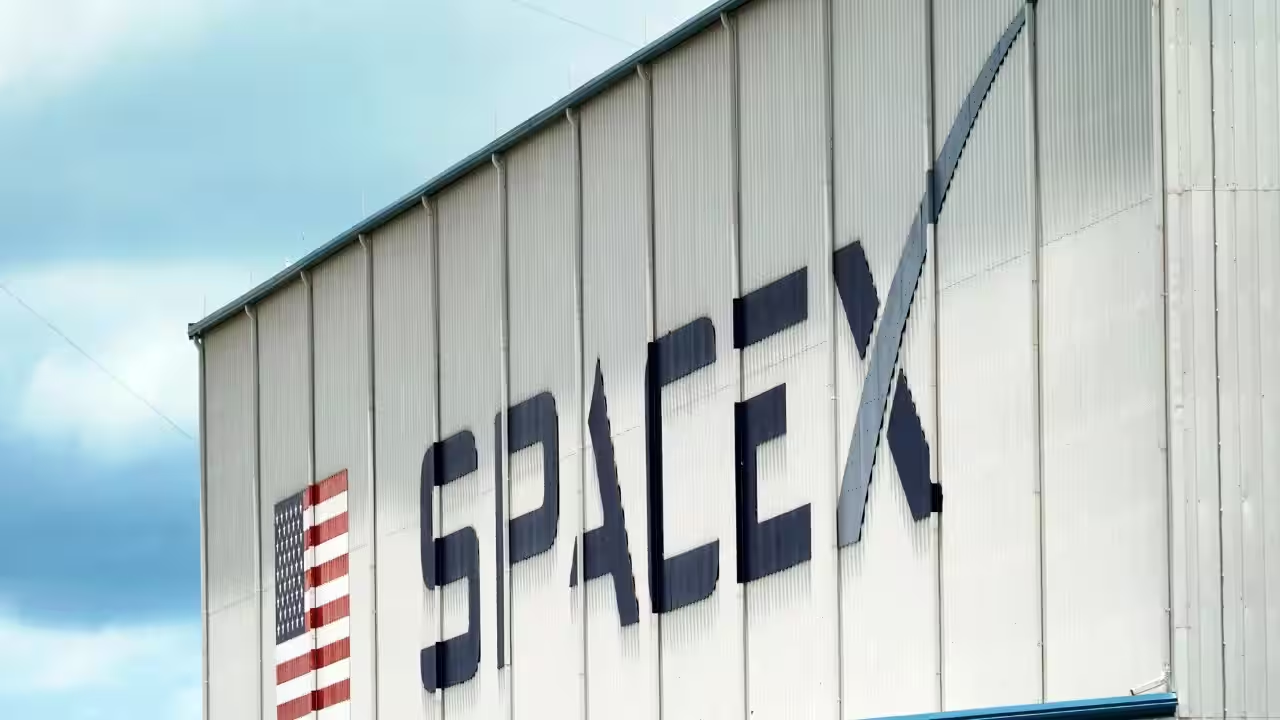
Elon Musk's SpaceX violated groundwater rules, and a Texas city has to pay thousands of dollars for the same. The US city of McGregor has agreed to pay at least $175,000 in penalties after SpaceX's rocket testing operation allegedly overpumped 128 million gallons of groundwater over three years. The city owns the site and the wells SpaceX used, making it responsible for the penalties under a settlement with the Southern Trinity Groundwater Conservation District.The deal includes a $50,000 payment due by November 1, followed by quarterly payments of $1,250 for 25 years to fund a new groundwater monitoring system. McGregor must also show “reasonable efforts to obtain additional sources of water” as concerns continue over groundwater supplies in the region.McGregor to pay SpaceX groundwater penaltiesThe McGregor City Council approved the negotiated settlement on Monday, avoiding a potential district court battle with the groundwater district.The Southern Trinity Groundwater Conservation District issued violation notices to SpaceX and McGregor for each of the past three years over groundwater use totalling 128 million gallons.McGregor City Manager Kevin Evans said the city was satisfied with the outcome and pointed to SpaceX's efforts to reduce its potable water use.“We’re very satisfied with the outcome,” McGregor City Manager Kevin Evans said Tuesday. “Water will always be an issue. We’re working with SpaceX and everyone else in the industrial park to use less potable water.”Evans said SpaceX has also been working to reuse water at its McGregor facility. The city is exploring alternative sources, including buying groundwater from other communities or obtaining Belton Lake water through Bluebonnet Water Supply Corp.New groundwater monitoring system plannedUnder the settlement, McGregor will make a one-time $50,000 payment by November 1 and then pay $1,250 every quarter for the next 25 years.The payments will help fund a new groundwater monitoring system on the well used by SpaceX. The city must also make “reasonable efforts to obtain additional sources of water.”Evans said SpaceX has already scaled back its groundwater use and expects no further conflicts with the groundwater district. He also noted that the penalty will be paid from proceeds from a sale of city property rather than tax revenue.Groundwater supply concernsMcGregor Mayor Jim Lilley suggested that concerns about groundwater depletion may be overstated.“There’s plenty of water in the aquifer,” he said. “This last year that we overpumped our permit number just proved that there’s plenty of water in the aquifer.”Southern Trinity Groundwater Conservation District president Rodney Kroll disagreed, saying the aquifer does not recharge.“Our aquifer does not recharge,” Kroll said. “We’re very unique in that regard. … What that says ultimately is that the water level is going down annually, and someday, we’ll reach a point where there’s no (ground)water.”Kroll said that point could come within about 50 years.The countywide groundwater district was formed in 2008 after state regulators determined that the region faced “critical” groundwater shortages in coming decades.Residents question why McGregor is payingThe settlement has also drawn criticism from McGregor residents because SpaceX drove most groundwater use.“SpaceX is the primary driver for overpumping these wells, and they’re not responsible for the litigation, they’re not responsible for the fees, and they’re not responsible for the attorney’s costs,” said McGregor resident Danny Campbell. “They’re not responsible for any of it, and every dollar that goes towards things like this is one dollar taken from our community.”You use AI every day. Now get your AI Quotient. Take the AIQ test.
Topics in this story
Gathered from external sources. Rights to this text belong to whoever originally published it.