In 1993, a project set out to reconnect wildlife habitat from Yellowstone to Canada's Yukon; its partnerships have now helped create 204 crossings and protect 24 million hectares
Thirty-three years after scientists began an ambitious effort to reconnect wild areas across North America, a cross-border conservation project stretching
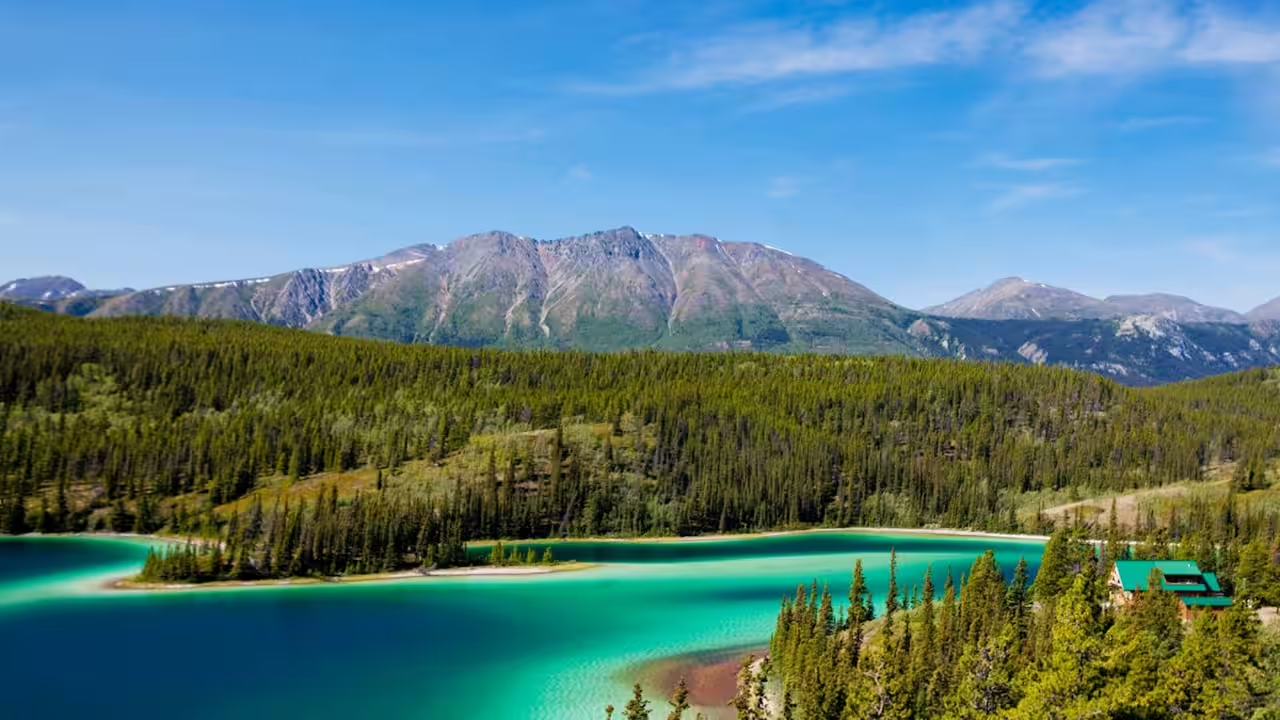
Thirty-three years after scientists began an ambitious effort to reconnect wild areas across North America, a cross-border conservation project stretching from Wyoming to northern Canada has been named a finalist for Prince William's Earthshot Prize. The Yellowstone to Yukon Conservation Initiative, launched in 1993, has helped establish 204 wildlife crossings and protect about 24 million hectares (59 million acres) of land. According to The Associated Press, the initiative is one of 15 finalists for the 2026 award, which gives five winners £1 million each to help expand their environmental work. The project brings together private landowners, Indigenous Nations, governments and scientists to protect a 3,400-kilometre corridor through the Rocky Mountains. The group builds wildlife overpasses, underpasses and fences that help large animals move safely across roads and developed areas.Inspired by a wandering wolfThe idea for the cross-border corridor grew from research on a wolf named Pluie in the early 1990s. Researchers tracked her movements by satellite after she was fitted with a tracking collar. Pluie traveled across three U.S. states and two Canadian provinces, covering a huge area. The tracking data showed scientists that separate national parks and nature reserves were not enough to protect healthy populations of animals that travel long distances. Species such as grizzly bears, caribou and wolves need connected areas where they can move between different ecosystems. "The solution is surprisingly simple," Jodi Hilty, president and chief scientist of the Yellowstone to Yukon initiative, told The Associated Press. "Animals need space to move, and they don't recognize borders. So we bring people together in this landscape to the same table. We work with them all to come up with the solution in order for animals to be able to move freely across the landscape."Engineering safer mountain corridorsBusy highways are a major danger for wildlife moving through the Rocky Mountains. Conservation groups have therefore worked with state and provincial transportation agencies to build special crossings for animals. The initiative has supported more than 200 wildlife crossings, including overpasses and underpasses. In Banff, these measures have reduced collisions between vehicles and hoofed animals by 96%, according to the Earthshot Prize. The crossings allow animals such as bighorn sheep, cougars and grizzly bear cubs to pass safely over or under busy roads. The project also works with private landowners to protect land around the crossings. Conservation agreements help make sure animals leaving a crossing reach natural habitat instead of commercial or residential areas. The larger goal is to reconnect habitats across the 2,100-mile Yellowstone to Yukon region. The Earthshot Prize describes it as one of the world's last large, mostly intact mountain ecosystems.Indigenous leadership and future targetsIndigenous communities manage or co-manage about one-quarter of the protected land within the Yellowstone to Yukon corridor. More than 75 Indigenous territories are located within the wider 1.3 million-square-kilometre region, making Indigenous participation an important part of conservation work. These partnerships have helped support the recovery of threatened wildlife. Recent work has included Indigenous-led conservation projects in British Columbia and other parts of the region, helping protect important habitats for species such as caribou and wolverines. The Earthshot Prize says a quarter of the region's protected land is now managed or co-managed by Indigenous Peoples. The initiative works with Indigenous Nations, communities, governments, scientists and landowners across the corridor. The organization also plans to expand its conservation work. By 2030, it aims to help protect another 20 million hectares and support at least 50 more wildlife crossings. Prince William launched the Earthshot Prize in 2020 to support solutions to major environmental problems. The 2026 finalists are competing across five categories. Five winners will each receive £1 million at the Earthshot Prize Awards in Mumbai on November 17.
Topics in this story
Gathered from external sources. Rights to this text belong to whoever originally published it.