Jared Isaacman’s ready to make a deal with Artemis partners
Japan and Italy have provided a model for other countries and even private organizations to more fully participate in the Artemis program.
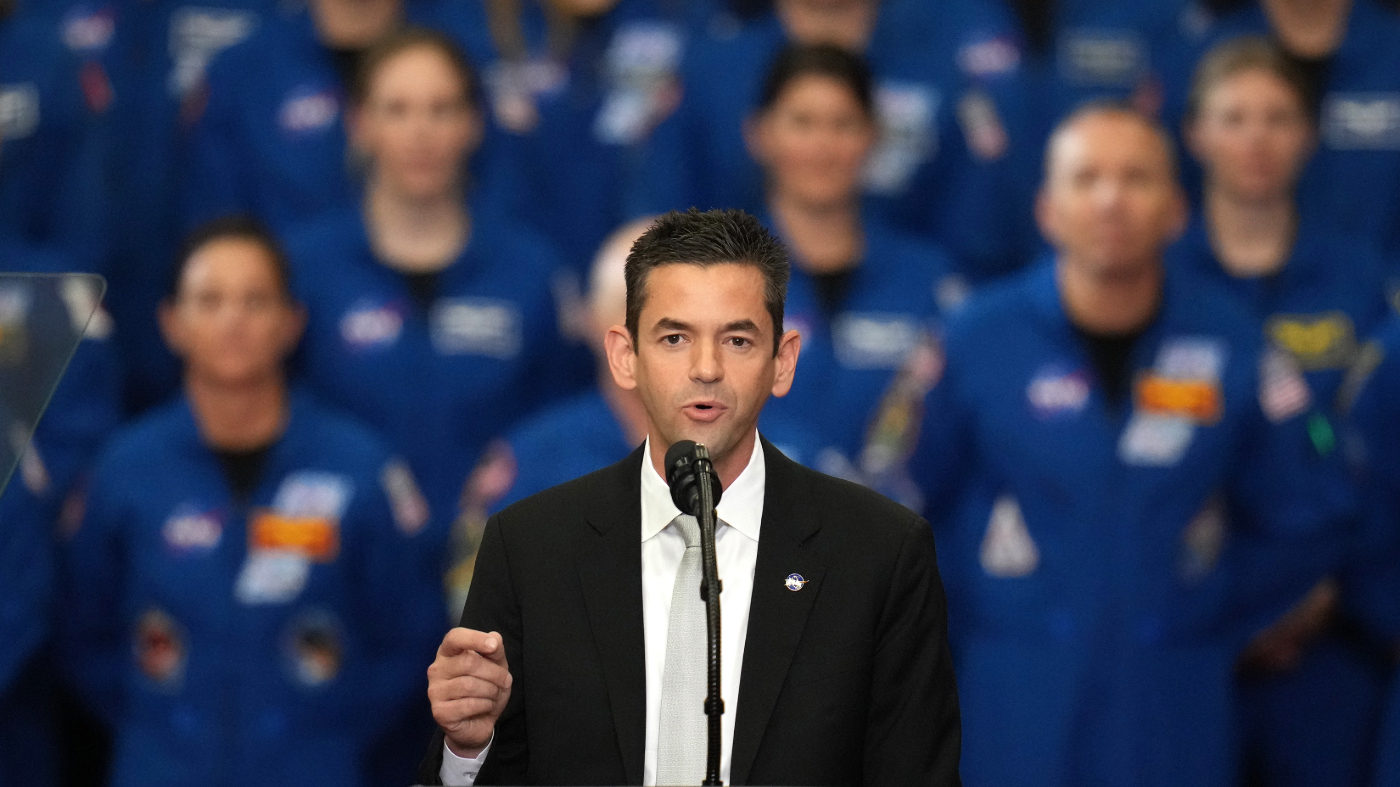
If the various nations that have signed the Artemis Accords are wondering what they need to do to more fully participate in NASA’s Artemis return to the moon program, Italy and Japan are showing the way. According to Ars Technica, NASA Administrator Jared Isaacman recently issued a challenge.
“I will tell you, though, and this is right from the top from the president of the United States: We’re only doing good deals, and we haven’t always done good deals.”
Why the new, hard-headed, business-like approach? Isaacman said , after working to “make everyone happy,” in the Artemis Accords, he now realizes that effort has been, “at times, a drag on the mission instead of accelerating it.”
“You can’t do that, and we’ve changed that now, and as a result, good deals are happening.”
One should not be surprised that Isaacman, who built nearly $2 billion in net worth out of nothing, would take that attitude. Both Italy and Japan, signatories of the Artemis Accords, have gotten the message and have made what the NASA administrator considers good deals with the American space agency.
Japan has concluded a 2024 deal with NASA to fly two of its astronauts to the moon, including one possibly on Artemis IV, the first moon landing since Apollo 17 in December 1972. In return, Japan will provide a lunar rover. Unlike the lunar rover of the Apollo missions, the Japanese rover will be an enclosed vehicle that can sustain astronauts for up to 30-day journeys across the lunar surface. Astronauts would live in the lunar cruiser, as the vehicle will be called, in shirt sleeves. The lunar cruiser will be capable of operating autonomously, as well.
Italy will also fly astronauts to the moon on board future Artemis missions. In return, the Italian Space Agency is contributing a habitat capable of supporting two astronauts for seven to 30 days. The habitat may have wheels that will allow it to be positioned precisely on any location on the lunar surface.
Japan and Italy have provided a model for other countries and even private organizations to more fully participate in the Artemis program. But which are best positioned to seize that opportunity?
Canada, despite current tensions with the U.S., is certainly well positioned. Indeed, that country already had an astronaut, Jeremy Hansen, fly around the moon as part of Artemis II . Some of the larger and richer European countries could get their own astronauts on a lunar mission. These include the United Kingdom, France, Germany and perhaps Poland.
As for Asian countries, India and South Korea have their own space programs, which could make deals to see their astronauts walk on the moon. In the Middle East, Saudi Arabia and the United Arab Emirates are wealthy, technologically advanced Gulf states that are friendly to the United States. And, of course, Israel is in play as well.
The path to joining NASA on the Artemis program is the precedent for how the International Space Station was organized. When the ISS was still Space Station Freedom, the European Space Agency and Japan each contributed a module and Canada a remote servicing robot arm. Later, Russia became a partner by providing its own module plus rides for astronauts on their Soyuz spacecraft . In return, all of these entities were able to send their personnel on tours of the ISS.
NASA is not the only path for a country eager to send its citizens to the moon. India, which has an active lunar exploration program with its Chandrayaan probes, plans to send its own astronauts to the moon by 2040. South Korea would like to establish its own lunar base by 2045.
There is always the option of signing on to China’s International Lunar Research Station , as have Pakistan, Egypt and the former space superpower Russia. But, as the Rand Corporation points out , aligning with China brings a number of downsides with it, including technology espionage and far less control and benefit than initially expected.
Eventually, organizations and people who desire to go to the moon will not need the good will of a national space agency to do so. As the moon is economically developed, commercial companies such as SpaceX and Blue Origin will develop a transportation infrastructure to get people and cargo to and from Earth’s nearest neighbor. Thus, a true commercially centered space age will begin.
Mark R. Whittington, who writes frequently about space policy, has published a political study of space exploration entitled “ Why is It So Hard to Go Back to the Moon? ” as well as “ The Moon, Mars and Beyond ” and, most recently, “ Why is America Going Back to the Moon? ” He blogs at Curmudgeons Corner.
Topics in this story
Gathered from external sources. Rights to this text belong to whoever originally published it.