Can odors from our bodies signal Alzheimer's, cancer and other diseases?
When social anthropologist Hanna Marie Ihlebæk interviewed nurses at a Norwegian cancer ward for her PhD dissertation, she was surprised to learn that many o...
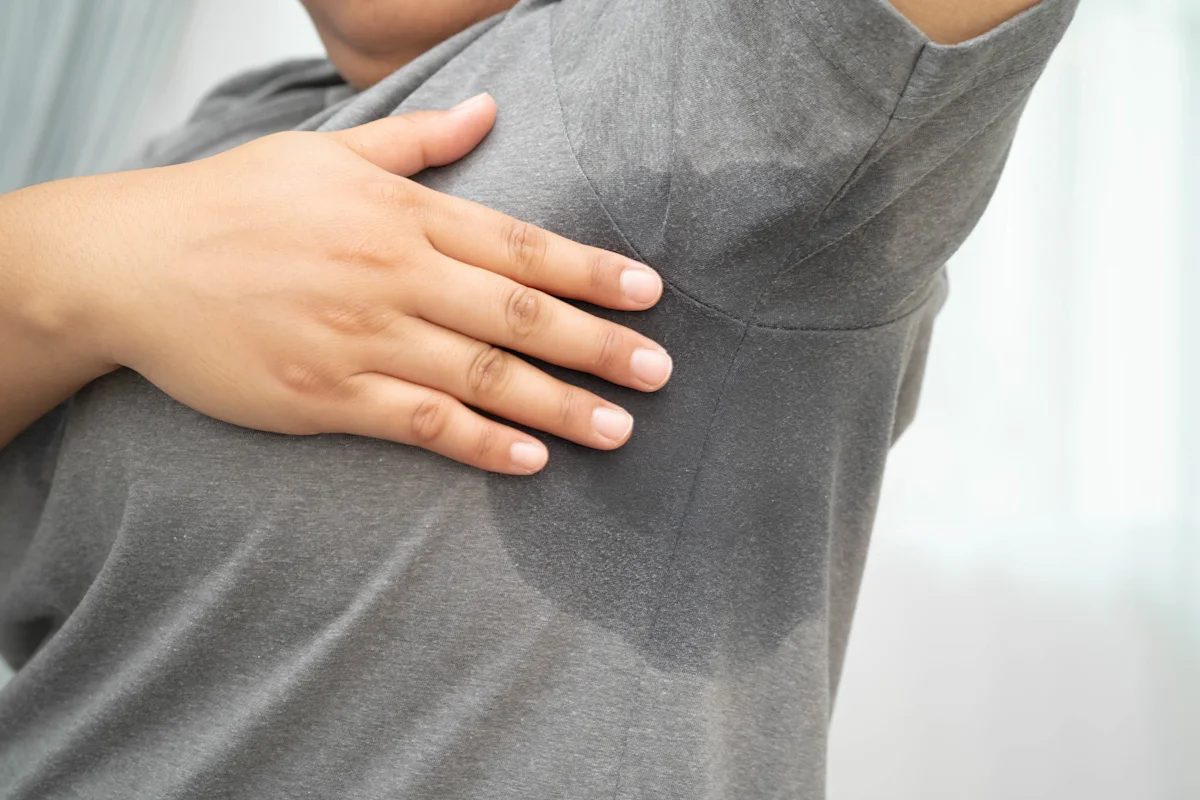
When social anthropologist Hanna Marie Ihlebæk interviewed nurses at a Norwegian cancer ward for her PhD dissertation, she was surprised to learn that many of them relied on their sense of smell in their work. "Urine infection is really distinct, I can recognize that smell in the corridor!" one of the nurses said. Another claimed to be able to pick out digestive bleeding and cell necrosis. "I don't know what I would have done without my ability to smell," said a third.
Long ago, in the 5th century B.C., the Greek physician-philosopher Hippocrates held that disease could be identified by body odor. In modern times, we have stories of Oscar the cat who seemed to perceive which residents would soon die at a Rhode Island nursing home, and dogs that have been used to detect bladder cancer, malaria and covid. In Africa, giant pouched rats are employed to sniff out tuberculosis.
For years, scientists have explored how the molecules that waft from our breath or skin might be harnessed to sniff out a laundry list of diseases - Parkinson's, Alzheimer's, certain cancers, the flu and the common cold. Yet the field has struggled to bring such tests to the clinic. Now, with new tools that can detect tiny amounts of molecules, as well as advances in machine learning, that goal appears within reach. A variety of ailments might soon be efficiently diagnosed with noninvasive tests that employ devices as simple as Breathalyzers.
"It's really, really exciting," says Mark Woollam, a chemical biologist at the University of Indianapolis.
A handful of breath-based tests are already in use, such as one that detects gastric infection by Helicobacter pylori , a major cause of stomach ulcers. Patients drink a solution spiked with urea containing a "heavy" version of carbon; if H. pylori is present, the bacterium will use the urea to make carbon dioxide and the test will detect that heavy-carbon CO2 in the patients' breath. But tests like that require swallowing a special substance and shipping a sample to a lab for analysis. Today, researchers are also working to develop tests that could give results directly at home, or at a doctor's office. They are designed to sniff out volatile organic compounds (VOCs). Such compounds are mostly in gas form at room temperature and can be emitted from breath, sweat, urine, blood and fecal matter.
To collect breath for analysis, for example, volunteers breathe into small, lab-grade plastic bags that resemble juice pouches, or into syringe-like breath samplers. Such samples are then analyzed in a lab with a technique called gas chromatography-mass spectrometry. Other tests employ cheaper and more portable electronic noses, which are made of a series of sensors that can pick out various molecules.
Figuring out what molecules are significant and what conclusions can be drawn from an individual sample makes the development of such tests "very, very challenging," Woollam says. Breath can contain contaminants from the surrounding air (think pollution or cigarette smoke), and the composition of breath can vary from one moment to another, making it hard to standardize tests and interpret single measurements.
"From sitting to lying, you change your breath profile. You hold your breath, you change your breath profile. You take a drug, you change your breath profile. … So how do you want to sort that out?" says chemist Wolfram Miekisch, of the University Medical Center Rostock in Germany.
But researchers have made progress in pinpointing molecules that are markers of specific diseases. When tumors grow, for example, oxidative stress in the body increases, which leads to the breakdown of fatty molecules within cells into smaller, volatile compounds, Woollam says.
In one study, testing the breath of patients before and after a surgery to remove lung tumors identified 16 such compounds that might serve as lung cancer breath biomarkers, including pentanal, foul-smelling butyric acid, woody hexanal and decanal, which smells like orange peel. In other research, analyses of molecules emitted from melanoma biopsy samples suggested that compounds such as the pungent chemical called 4-methyl decane could serve as a biomarker.
Molecules in urine could also offer clues to cancer. Woollam and colleagues analyzed molecules wafting from the urine of men undergoing a prostate cancer biopsy and found that a panel of six molecules could detect the disease in 75 percent of cases. While it's less sensitive than the prostate-specific antigen (PSA) blood-based test, the VOC method gave fewer false positives, which could help patients avoid unnecessary treatment.
Some cancer tests based on volatile compounds emanating from urine may soon hit the market. One such test by the biotech company TOBY - named after the trail-sniffing dog in Sherlock Holmes books - is designed to detect bladder cancer. Rather than looking for a single biomarker, TOBY's test uses AI to analyze patterns of molecules wafting from urine. It was granted Breakthrough Device designation (which can speed up approval) by the Food and Drug Administration (FDA) in 2026, validating its potential; its developers say it is about a year away from commercial launch. The TOBY team is also working on a similar test for Alzheimer's, which received the FDA's Breakthrough Device designation in May.
Clues to disease also reside in sebum, an oily, sticky substance produced by tiny glands in hair follicles. Researchers are investigating the link between volatiles emanating from sebum and Parkinson's disease, which tends to be diagnosed late, meaning patients go longer without their symptoms being properly managed.
Hints of the sebum signal emerged many years ago: A woman named Joy Milne noticed that her husband's body odor had turned unpleasantly woody and musky. Fourteen years later, Les Milne was diagnosed with early-onset Parkinson's disease, and at a Parkinson's awareness lecture, Joy Milne noticed that the other Parkinson's patients seemed to have a similar odor. She connected with scientists at the University of Edinburgh, and then with Parkinson's researcher Perdita Barran. Barran and her team ran an experiment and found that Milne's nose could distinguish T-shirts worn by Parkinson's patients from those worn by healthy people.
Since then, Milne and Barran, at the University of Manchester, have worked together to identify a Parkinson's signal in the sebum molecules. "If I swabbed your back, I would find about 20,000 compounds. And if you had Parkinson's, about 2,000 of them - so, 10 percent - would be different to people who don't have Parkinson's," Barran says. These compounds include acyl-carnitines - molecules that shuttle fatty acids into mitochondria for energy production - and others linked to perturbations in fatty acid metabolism.
The sebum signature can correctly identify over 84 percent of people with Parkinson's when the disease is well underway. But the test also may help spot Parkinson's early on, before clear-cut symptoms appear. In a 2025 report, Barran and her colleagues, including Milne, studied the sebum of people who have REM sleep behavior disorder, in which they physically act out their dreams - kicking their spouse in bed while dreaming of playing soccer, for example. This condition has been strongly linked to the later development of neurodegenerative conditions. Sebum VOC profiles in this group were somewhere in between those with diagnosed Parkinson's disease and healthy volunteers, the researchers reported.
And other tests may be on the horizon. Researchers are probing potential breath signatures for the flu for example; one 2022 study, examining 235 patients, found that some breath biomarkers could distinguish the flu from similar infections with 78 percent accuracy. Exhaled breath might also be used to diagnose infections with the common cold: Another team found that concentrations of compounds such as waxy-smelling 3,8-dimethylundecane in breath correlate with rhinovirus viral loads in the nose and throat.
"What the virus does, it goes to a cell, enters the cell, replicates itself, and then blasts the cell," Miekisch says. Parts of the destroyed cell may then be emitted in a sick person's breath, he explains, while other biomarkers come from the changes within our own metabolism in response to the infection.
Still other researchers are looking for ways to discern viral infections from bacterial ones. Bacteria emit their own VOCs, which can be picked up in human breath ( Helicobacter pylori , the bacterium behind stomach ulcers, smells sulfurous, for example). Ilaria Belluomo, a medical biotechnologist at Imperial College London, and her colleagues are running a study on bacterial and viral signatures in the breath of children hospitalized for severe lung infections. "A test that can discriminate the two types of infections can be completely transformative," she says. By revealing whether an infection is bacterial, it would help discern whether taking antibiotics makes sense, potentially reducing antibiotic overuse, Belluomo says.
One of the most promising applications of research on volatile biomarkers of infection would be in the ICU, Miekisch says. It could make it possible to continuously monitor the breath of intubated, critically ill patients to spot early signs of danger. For example, distinguishing between sepsis, which is caused by bacteria, and the autoimmune reaction called systemic inflammatory response syndrome is "an important question," he says.
Yet obstacles remain. One is a lack of standardization, so it is difficult to compare results between different studies. Another hurdle is not having a good grasp on where these biomarkers are coming from, Miekisch says. And some tests that looked promising went on to fail in larger studies or lacked the funding to get to market.
But many VOC scientists remain optimistic. "Although VOC research has faced numerous challenges, the field continues to make remarkable progress," Woollam says. Perhaps patients won't have to hold their breath for too long, after all.
Marta Zaraska is a Canadian-Polish-French science journalist based in France. This article was produced in collaboration with Knowable Magazine .
Topics in this story
Gathered from external sources. Rights to this text belong to whoever originally published it.