Court allows Army to go forward with planned detonation of toxic drums in Iowa
A U.S. appeals court said Monday that it would allow the Trump administration and the Army to move forward with the detonation of lead azide in Iowa, denying an emergency request by environmental groups to halt the Army’s permit.
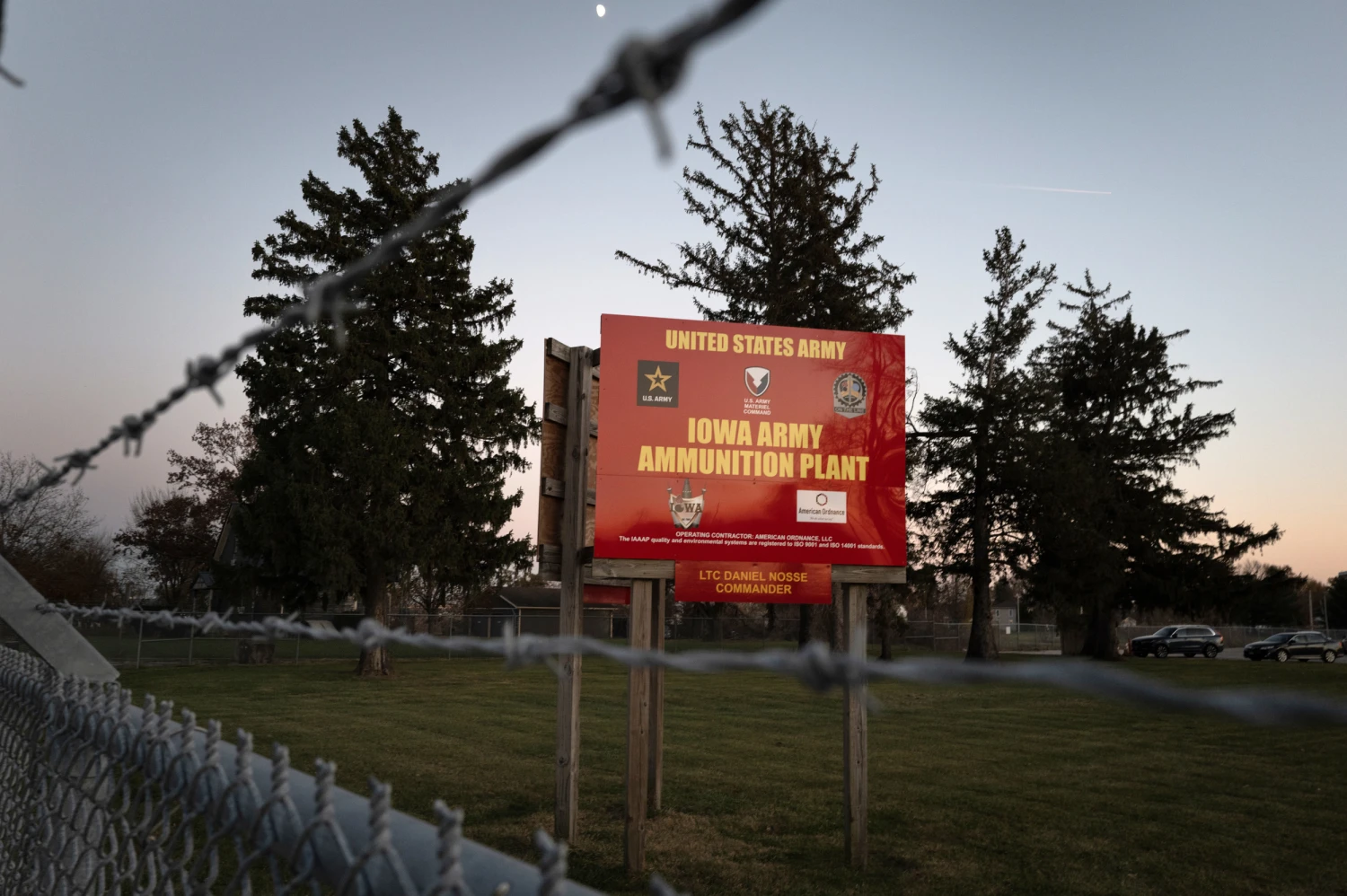
A U.S. appeals court said Monday that it would allow the Trump administration and the Army to move forward with the detonation of lead azide in Iowa, denying an emergency request by environmental groups to halt the Army’s permit. It is not clear when the detonation, which was most recently set for Wednesday, will happen. “We are mindful of the very real risks presented by the Army’s planned detonation of the stores of degraded lead azide,” the order from the 8th Circuit U.S. Court of Appeals said. “However, we must acknowledge the realities of the situation: the degraded explosives present a risk of an uncontrolled and unplanned explosion, which would occur without the benefit of the safety measures that the Permit puts in place.” The court said that the Environmental Protection Agency had adequately incorporated safeguards to minimize the dispersal of lead and that the Army had considered a full range of alternatives. “A controlled detonation with attendant safety measures better alleviates the risk of irreparable harm than the risk of an uncontrolled explosion,” the court said in lifting an administrative stay on the permit. The detonation, which would send a plume of lead dust across Iowa and likely into neighboring states, has raised fear and concern from residents who said they had not had enough time to prepare. Earlier Monday, President Donald Trump ordered the Army to pause its planned detonation until the court weighed in. “I feel the proper course is to get rid of this longterm problem but, at the same time, have ordered the Military not to do so until such time as the Eighth Circuit agrees that we can go forward, and am further making this decision fully subject to the incoming Governor Elect, Rob Sand, agreeing to the operation,” Trump said in a Truth Social post. The detonation was initially scheduled for Friday. After public outcry and a lawsuit from environmental groups last week, the Army delayed the detonation until Monday and then later pushed it again to Wednesday. The court last week gave an administrative stay in the case, putting the Army’s environmental permit to detonate on hold. But the Army told the court it could go forward with a detonation in an emergency without the court’s ruling. The Eighth Circuit ruling, released on Monday afternoon, will clear the way for the Army to go forward with the court’s blessing. The outcry over the federal government’s handling of the situation and the decision of whether to detonate had become something of a political football earlier on Monday afternoon. In his Truth Social post before the appeals court ruling, Trump seemed intent on deferring responsibility to Sand, who has not taken office yet. “If he or the Courts do not agree,” Trump said of Sand, “we will have no choice but to not proceed with the controlled removal of these hazardous materials, and be forced to hold the incoming Governor responsible for any and all death or destruction caused by this very unfortunate, and longterm, situation.” Trump said military leaders had advised him that detonating the material soon was the safest option and that the weather forecast for Wednesday was optimal. “The Experts, who know it well, and have been studying it for many years, feel there is a substantial chance that this material will explode of its own volition, perhaps sometime in the near future,” Trump wrote. “The weather, right now, is optimal for this planned response to take place.” The Army has said it must detonate the 68 drums of deteriorating, toxic lead azide — a chemical used to make bomb triggers — at the Iowa ammunition plant because the chemical has undergone a process of “recrystallization” that has made it highly unstable and dangerous. The Army has said that it is unsafe to move the drums and that cold weather will further destabilize the material and could cause a spontaneous explosion. The Army had told Middletown residents that the blast could break windows and shake their homes. But residents elsewhere in Iowa — and in the plume’s potential path outside the state — said they didn’t learn about it until last week and were concerned for their families’ well-being, crops and pets. Lead is a potent neurotoxin for which there is no safe level of exposure. Airborne lead is an acute health risk, experts said, and once the metal gets deposited in soil or on surfaces, it can remain there forever unless it’s physically removed. Exposure to lead is associated with learning disabilities, reproductive problems, mental health issues and increased risk of hearing loss, among other effects. The long-term risks are particularly pronounced for young children. The Army said it had covered the bunker with two stories of sand in collapsible, modular barriers to dampen the effects of the explosion. Meanwhile, scientists, politicians and residents have been trying to figure out how the situation got so sideways and why the Army feels its only choice is a detonation, whether planned or unplanned. In a statement on X before the court’s ruling, Sand said the administration should make its decision “based on the information they have from the people they brought in to do the job months ago” and who have been in Middletown for weeks. Sand implied that the administration might have information about the urgency of the situation that is not known publicly. “Everyday Iowans are entitled to know how Middletown came to this situation, and learn why the administration believes this is the best path forward,” Sand said. “That means they should have the same access to the information I’ve received in briefings from the administration, straight from the source. I’ve asked the federal government to share that information with the public as soon as possible.” An Army spokesperson did not immediately respond to a request for comment. Iowa residents said they were growing frustrated with the twists and turns of the detonation saga. Debra Ott, who works at Fat Annie’s August Tap, which is about a quarter-mile from a gate that leads into the ammunition plant, said she was planning to stay inside for a full day if and when the detonation takes place. “I have some heart issues, and I have a hard enough time breathing anyway. So whenever they do it, I plan on staying in the house 24 hours because I don’t want to be out,” Ott said. “The bean dust and corn dust around here is bad enough without lead.” Ott, who lives in Augusta, Iowa, about 5 miles from Middletown, said she was growing tired of the scheduling changes for detonation and increasingly concerned about a spontaneous explosion. “I don’t want to be sitting at home at midnight and have it go off and not have a clue what’s going on without anybody up there to try to control it. If they’re going to do it, I wish they just do it and quit changing it every day,” she said. Ott lives with her granddaughter and her granddaughter’s three young children, who are 13, 4 and 2. “We’ll hose down all the outside stuff and wipe off, you know, wipe down the doorknobs and anything the vehicles, anything the kids can touch with their hands, where they could get it in their mouth,” Ott said. “We just don’t know what to expect because we don’t know when they’re going to do it.” The trajectory of the dust plume depends on the direction and strength of the wind, so each delay puts a new group of people in the path of the expected hazard. “It’s just very frustrating,” said Jill Holler, who lives about 50 miles from Middletown, in Muscatine, Iowa, which could be in the path of the lead dust plume, depending on the wind. Holler, whose family has a farm about 20 miles west of Middletown where they raise cattle and grow soybeans and corn, said she was racing to gather soil samples ahead of the blast Sunday night. Understanding the lead content present in soil before the blast could help determine if a property is affected and what remediation might be needed. “We thought it would be tomorrow. So I was down in the dark getting the soil samples and it just, it’s frustrating,” Holler said on Monday. “It’s just strange, and you just never know what the next day is going to bring, and so you never. You’re, you’re pretty confident there’s going to be something else changing, and we can’t really believe what the next thing they say is going to happen.” Holler said she was most sympathetic to the people of Middletown, who are essentially living with a threat in their backyards that the Army has indicated could spontaneously explode. “If there really is an imminent threat and it’s very dangerous to explode at any time,” Holler said. “But it seems like they’re delaying, so it just isn’t adding up. It doesn’t make sense. So I think there’s going to have to be some explanation of what’s been going on.”
Topics in this story
Gathered from external sources. Rights to this text belong to whoever originally published it.