There's mind-blowing math behind a thunderstorm's raindrops
Whether you consider an afternoon storm lovely or a nuisance, have you ever really stopped to consider the amount of water within it?
1 inch of rain falling over 1 square mile equals 17.4 million gallons of water, which weighs about 143 million pounds, or roughly 72,000 tons.
An average thunderstorm cloud carries about 275 million gallons of water, equivalent to 1.1 million tons, or roughly 2,300 fully loaded Boeing 747s.
A single 1-inch rainfall over Atlanta delivers about 2.28 billion gallons of water, which, when broken down into individual raindrops, amounts to tens of trillions of drops falling on the city, more than there are known stars in the Milky Way.
As you watch a summer downpour from the window, you may be thinking about how many raindrops are actually falling. It's hard to conceptualize because the numbers are staggering.
Let's start small. Just 1 inch of rain, falling over 1 square mile, comes out to 17.4 million gallons of water, the National Weather Service says. That water weighs about 143 million pounds, or roughly 72,000 tons. That's equivalent to about 145 fully loaded Boeing 747s.
The cloud holds even more than that before the first drop falls. An average thunderstorm cloud carries about 275 million gallons of water, according to National Center for Atmospheric Research calculations. That's 1.1 million tons, or roughly 2,300 fully loaded Boeing 747s.
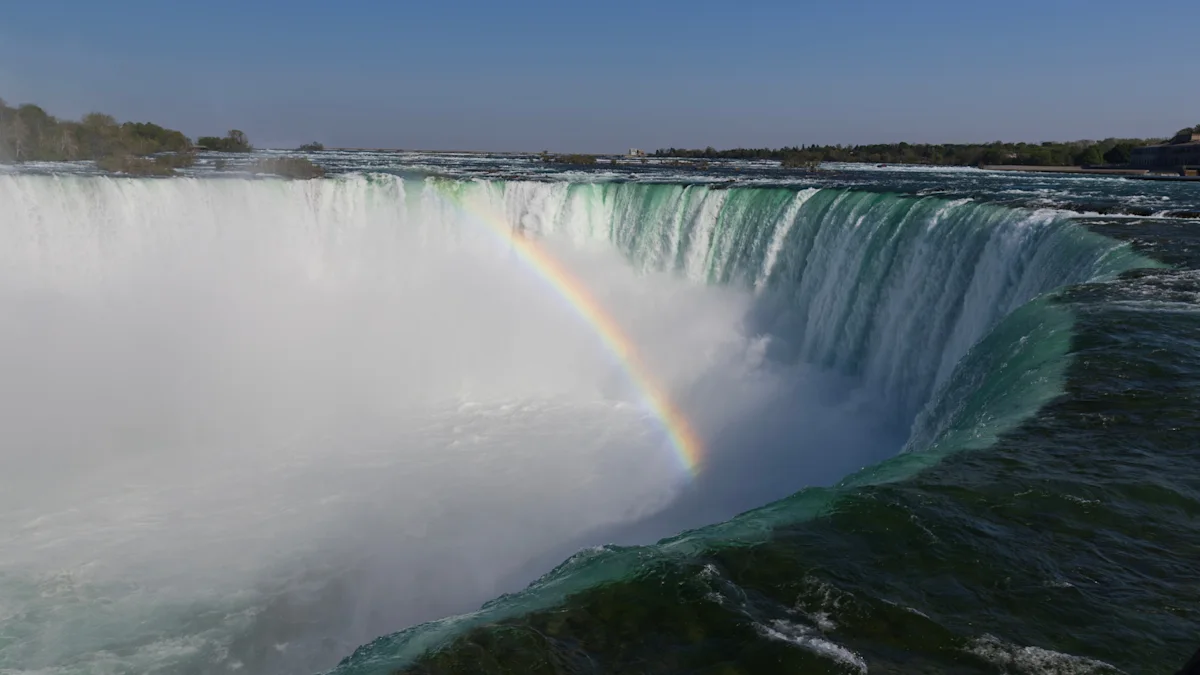
If you take the 750,000 gallons of water that pours over Niagara Falls every second, it would take Niagara six minutes to move as much water as one ordinary thunderstorm is already holding in the sky.
Now let's think about it in terms of an actual city. Atlanta's city limits cover roughly 84,100 acres. Using the USGS conversion of 27,154 gallons per acre-inch, a single 1-inch rainfall over Atlanta delivers about 2.28 billion gallons of water.
Break that into individual raindrops, and you get a number that is pretty wild. NASA's Global Precipitation Measurement mission has measured raindrop sizes from space.
Drops range from cloud droplets thinner than a tenth of a millimeter up to nearly 6 millimeters across. NASA's data also shows a storm is layered: The smallest drops gather near the top and edges of the cloud, and the biggest ones concentrate in the core near the bottom.
Considering the volume of rain and the drop size, one citywide rain event contains raindrops in the tens of trillions. That's more individual drops falling on one city, in one storm, than there are known stars in the Milky Way.
Topics in this story
Gathered from external sources. Rights to this text belong to whoever originally published it.