Rare Bird of Prey Nests Again in Secret U.K. Location After Years with No Successful Breeding
The Montagu’s Harrier had shown no evidence of successful breeding in the U.K. between 2020 and 2024
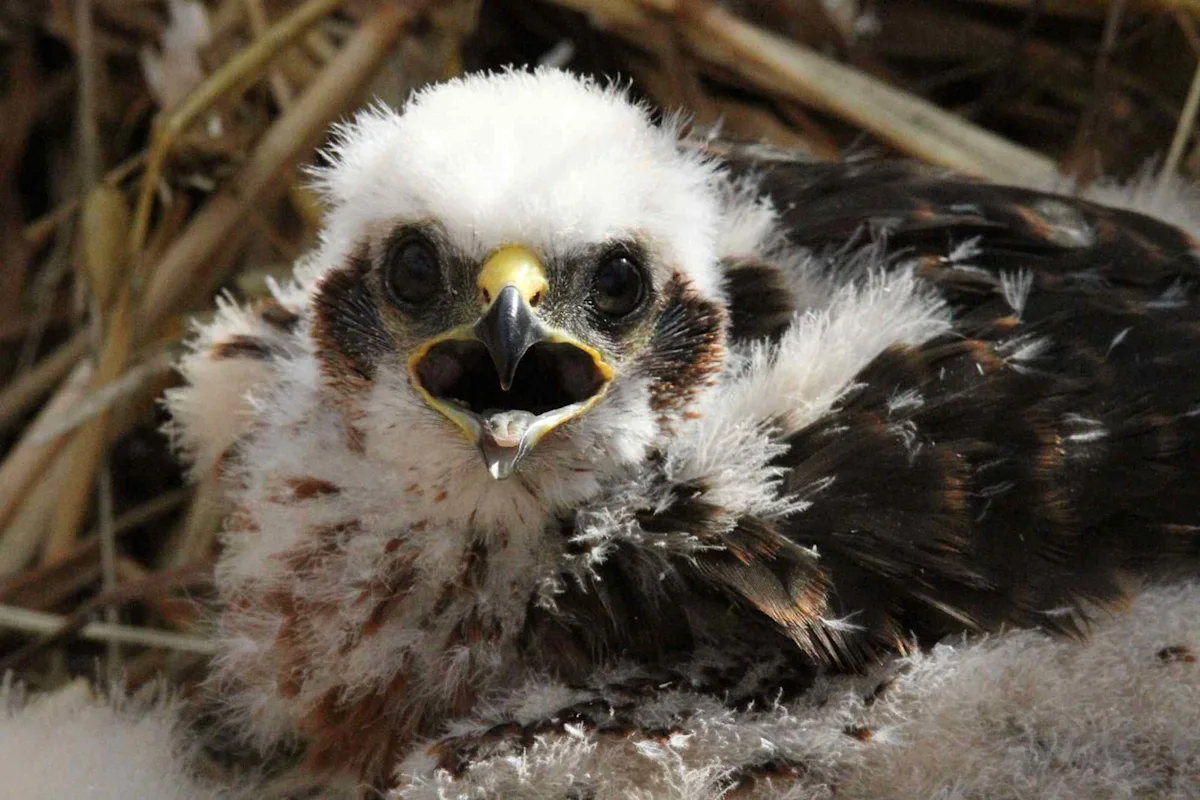
A male Montagu's Harrier raised six chicks across two nests, marking a rare conservation success in the U.K.
Conservationists fitted two chicks with satellite tags to study their migration and improve protection efforts
The species faces threats from climate change and farming practices as their nests are hidden on the ground
The United Kingdom's rarest bird of prey has pulled off a rare conservation win!
According to the Royal Society for the Protection of Birds (RSPB), a male Montagu's Harrier, also known as "AU" by conservationists, bred with two females this year and reared six chicks across two nests on an English farmland. Per the BBC , this marks the second year that the species has successfully nested in the same undisclosed location, where four chicks hatched last year.
The milestone matters because the birds have come perilously close to vanishing from the U.K. Montagu's Harriers were added to the Red List of the country's most at-risk birds in 2021, and successful nests dropped from a high of nine in 2011 to no evidence of successful breeding at all between 2020 and 2024.
"We are doing our absolute utmost to save this iconic species in the U.K. and are delighted with six flying juveniles this year," an RSPB spokesperson told the BBC.
Officials say keeping the chicks alive took a group effort. The organization highlighted careful monitoring, carried out with the farmers whose land the birds nested on, which allowed the nests to be fenced off from ground predators like foxes.
The lone male, meanwhile, worked overtime to feed both nests of hungry chicks. Granted exclusive access to the nest, the BBC witnessed some of the raptors' striking feeding behavior, in which the male drops prey in midair and the female rolls upside down to snatch it in her talons.
Experts note that the slender, long-winged birds make an annual migration to Africa for the winter before returning to Europe to nest over the summer, often in agricultural fields. However, little is known about what juveniles do once they leave the nest, which is why, for the first time, the RSPB fitted two of this year's chicks with satellite tags.
"It will allow us for the first time ever to work out where they're going, what migration route, how long they'll spend there, and will they come back to the U.K. in the first year or the second year," said Mark Thomas, head of investigations at the RSPB. "All of that information is the bit that's missing from the jigsaw."
The tags may also help protect the birds, whose nests sit on the ground, hidden among crops, and are vulnerable to farm machinery.
"This is a species right on the brink, and climate change is not helping that," Thomas added, noting the local harvest came about a month earlier this year than in the past. "It almost puts any Montagu's harrier nest at the peril of inadvertently being destroyed by farm machinery."
Conservationists have asked birders to watch for the young harriers and report any sightings to the RSPB.
Topics in this story
Gathered from external sources. Rights to this text belong to whoever originally published it.