A ‘zero gravity, zero taxes’ strategy to replace the International Space Station
Congress could revive the zero gravity, zero taxes legislation in the current era, pass it and send it to the president to sign into law.
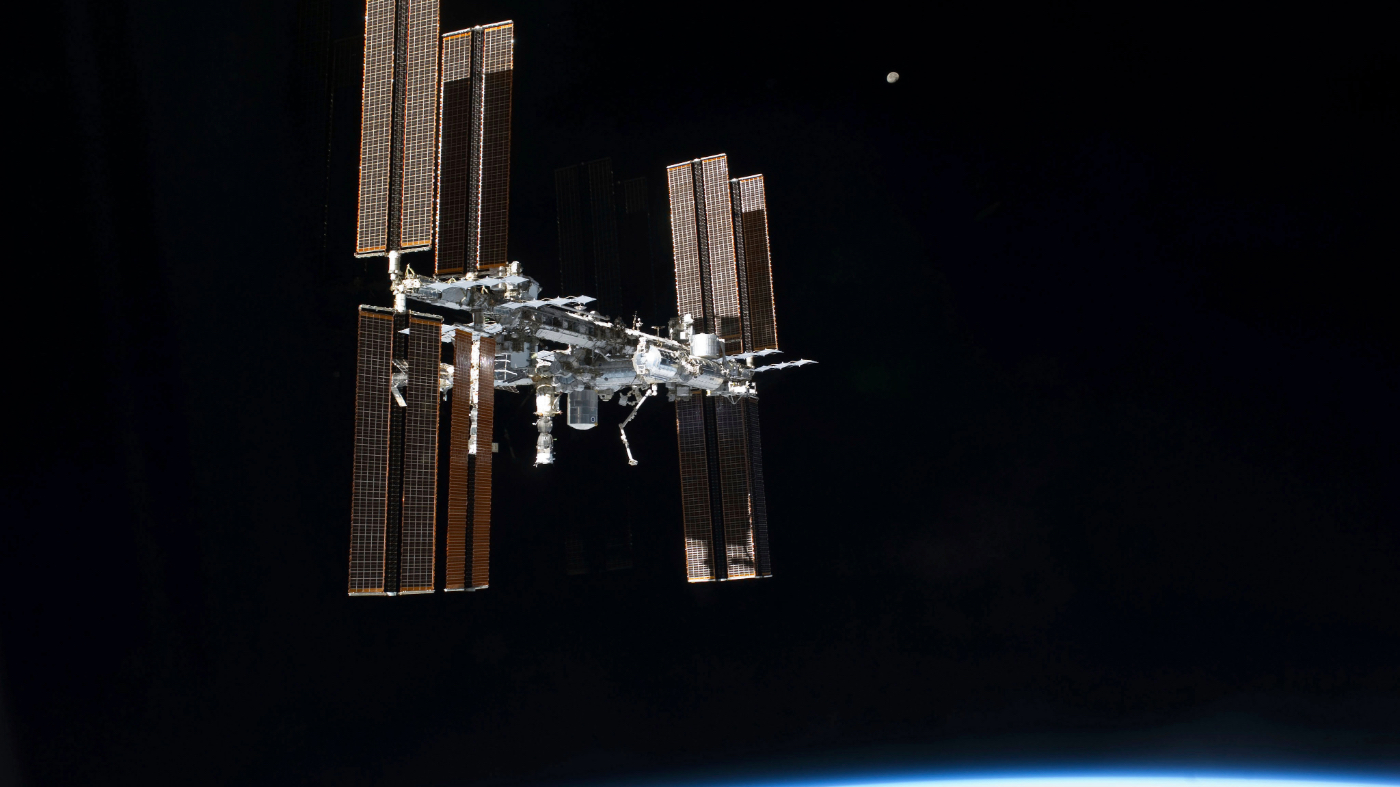
A frank exchange of views has broken out concerning the future of low-Earth-orbit infrastructure.
Phil McAlister, a retired senior NASA manager who was heavily involved in both the Commercial Crew and Commercial Orbital Transportation Systems programs, is on one side. NASA Administrator Jared Isaacman is on the other .
McAlister notes that when the International Space Station retires in 2030, SpaceX CEO Elon Musk intends to end the Falcon 9 and the Crew Dragon. At that point, neither NASA nor anyone else in America will have a way to take astronauts to and from low Earth orbit. A number of private companies are planning commercial space stations with no certain way of getting to them.
McAlister finds the alternatives to the Crew Dragon, particularly the Boeing Starliner, to be wanting, to put it mildly. In response, he suggests that NASA start a low Earth orbit strategy that involves paying private astronauts to perform experiments and other work on commercial space stations.
Isaacman responded with salient points. Although NASA has not given up on low Earth orbit and commercial space stations, he found problems with too much space agency involvement. A commercial space station with NASA as a principal customer is likely, in his view, to be one with the space agency as the only significant customer and thus commercial in name only.
According to Isaacman, if a company proposes to build and deploy its own space station, it must raise the capital and find the customers to do so. With the SpaceX Dragon disappearing, they may have to build their own transportation system. Then and only then can NASA become just one customer among many and not defeat the purpose of commercialization.
Given these differing opinions, what, if anything, can be done to give development of a commercial space infrastructure in low Earth orbit an extra boost?
One way that the government might encourage economic development of low Earth orbit is an old idea that was once dubbed “zero gravity, zero taxes.” The idea, according to a 2007 analysis , was that the federal government would provide a 20-year tax holiday for goods and services created in space. Thus, the commercial sector would be incentivized to build space manufacturing facilities and other infrastructure that would lead to the creation of economic growth and jobs in space.
Congress attempted to pass a bill incorporating the idea in 2000, 2001 and 2005. Preexisting space commercial ventures such as communications satellites and Earth observation were not entitled to the tax cut. Unfortunately, though, the legislation went nowhere. That was because an analysis by the Congressional Budget Office suggested that the federal government would lose $10 billion in tax revenues over the 20-year period of the bill.
Of course, since there is no commercial space infrastructure in 2026 aside from communication satellites and Earth observation, tax revenues from the nonexistent orbital space industries are still zero. More importantly, had the zero-gravity, zero-tax legislation passed at the beginning of this century, taxes on wages of employees of such industries, most of whom would live on Earth, would have more than made up for the alleged loss in corporate taxes.
The top corporate tax rate decreased to 21 percent from 35 percent during the year that analysis was written, but the principle still stands.
Congress could revive the zero-gravity, zero-taxes legislation in the current era, pass it and send it to President Trump to sign into law. Such a law might well provide the stimulus needed to jump-start a commercial space infrastructure in low Earth orbit, even as the International Space Station ends its operational life and NASA concentrates its efforts on going back to the moon.
The greater possibility of private space stations might well enable the creation of a more widespread Earth to low Earth orbit transportation industry. Who knows? Musk might be persuaded to reverse his decision to retire that Crew Dragon, perhaps spinning it off into a separate company. Call it “Dragon Space Line.”
The current push to return to the moon and go on to Mars and beyond is an exciting, world historic undertaking. It will capture the attention of the world.
But commercializing low Earth orbit is important too. McAlister is right about that. And Isaacman is also right that NASA need not assume more than a supporting role. That is something to be celebrated, not deplored.
Mark R. Whittington, who writes frequently about space policy, has published a political study of space exploration entitled “ Why is It So Hard to Go Back to the Moon? ” as well as “ The Moon, Mars and Beyond ” and, most recently, “ Why is America Going Back to the Moon? ” He blogs at Curmudgeons Corner.
Topics in this story
Gathered from external sources. Rights to this text belong to whoever originally published it.