These states are scrambling to become home to a US Space Academy
The states vying for it know that it will provide a great many construction jobs initially in addition to other jobs and economic benefit after the place is built.
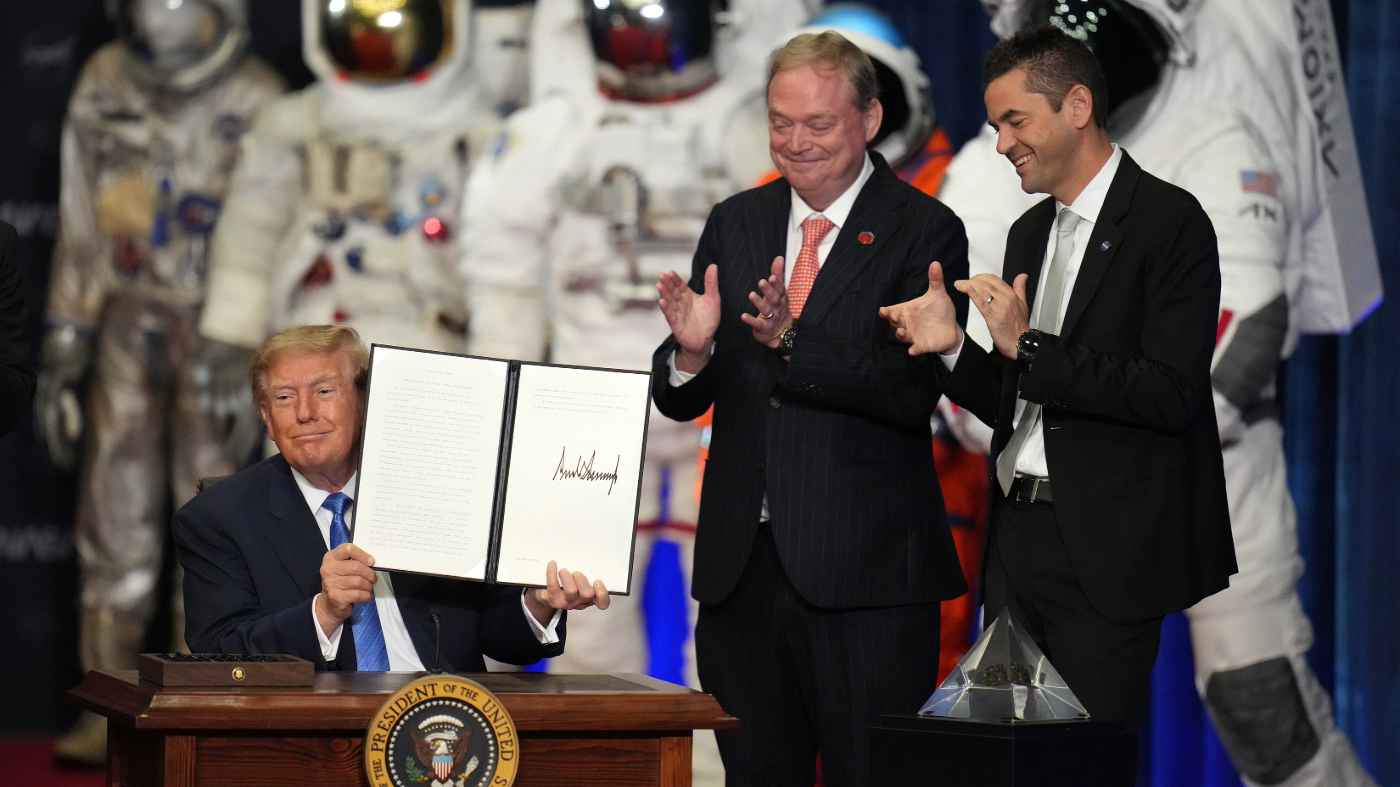
Recently, the White House announced the establishment of a U.S. Space Academy. It is not a traditional service academy like West Point or Annapolis, as some graduates will go into the Space Force, while others will go to NASA or the civilian sector.
The exact framework of the proposed Space Academy is still a work in progress, where curriculum, the faculty, partnerships and, one supposes, even the name of the football team have yet to be determined. A committee chaired by NASA Administrator Jared Isaacman will present a proposal within 120 days.
In the meantime, several U.S. states are scrambling to be selected as the site for the Space Academy. The states vying for it know that it will provide a great many construction jobs initially in addition to other jobs and economic benefit after the place is built.
According to Payload Space , the states would have to provide at least 300 acres with proximity to a NASA facility or an institution of higher learning, and be able to accommodate 1,200 students, eventually increasing to 4,000. Proposals are expected by Oct. 26.
Of the states that might become the site of the Space Academy, at least three would seem to be the front runners: Texas, Florida and Alabama. Each has an important NASA center along with a strong academic and commercial space presence.
Currently, Texas is exerting the maximum effort to attract the Space Academy. Gov. Greg Abbott (R) has established a leadership team to formulate the state’s proposal. State Rep. Greg Bonnen (R-Texas) is in charge of the effort that will include the Texas Space Commission. Sen. Ted Cruz (R-Texas) and Rep. Brian Babbin (R-Texas) issued a joint press release touting Texas as the site of the Space Academy.
“If America is going to build the world’s premier academy for space, Texas has all the right stuff — the talent, institutions, infrastructure, and experience to launch the next generation of American space leaders.”
It should be noted that Cruz is the chair of the Senate Commerce Committee and Babbin is the chair of the House Science, Space and Technology Committee , which would have crucial roles in approving Space Academy legislation.
Other possibilities include Ohio, New Mexico, Mississippi, Louisiana, Maryland and California, all of which have NASA and/or military and commercial facilities that would be a good match for the Space Academy.
Ohio’s Gov. Mike Dewine (R) has formed a working group similar to Texas’s proposing Ohio as the site for the Space Academy.
Florida’s two senators are making a serious effort to attract the Space Academy to their state, filing legislation, working on a request for information response with Space Florida, and leading a bipartisan congressional delegation letter to the White House. Alabama is making its case as well, with their own bipartisan congressional delegation letter to the White House touting their state.
Expect a lot of arguments over which state would be the best site, coupled with the usual backroom political wheeling and dealing.
Reaction to the Space Academy proposal is nearly universally positive, which is remarkable for a proposal coming from the Trump White House. However, one person is pleased to dissent. According to Ars Technica, Lori Garver, the former deputy administrator of NASA during the Obama administration, has voiced some objections, not necessary to the concept of the Space Academy, but who gets to attend.
Garver points out that, since the Eisenhower administration, a bright line has been drawn between civilian space, as represented by NASA, and military space, as currently represented by the Space Force. The reason was to contrast the way the United States does space with the way its enemies, such as the old Soviet Union during the Cold War, and China now pursue space activities.
The objection is not likely to be listened to, especially by the states squabbling to get the Space Academy prize. It could be argued that the bifurcation Garver is defending is not only a relic of the Cold War, considering the increasing importance of space for national security, but often honored more in the breach than the observance, with military pilots serving as NASA astronauts and NASA itself undertaking military missions during the shuttle era.
The future of the American space program will likely involve joint efforts among NASA, other space agencies, the commercial sector and the Space Force. The Space Force will provide security for the planned lunar base, for example. The U.S. Space Academy will be a great way to facilitate such cooperation.
Mark R. Whittington, who writes frequently about space policy, has published a political study of space exploration entitled “ Why is It So Hard to Go Back to the Moon? ” as well as “ The Moon, Mars and Beyond ” and, most recently, “ Why is America Going Back to the Moon? ” He blogs at Curmudgeons Corner.
Topics in this story
Gathered from external sources. Rights to this text belong to whoever originally published it.